Physical Address
304 North Cardinal St.
Dorchester Center, MA 02124
Physical Address
304 North Cardinal St.
Dorchester Center, MA 02124

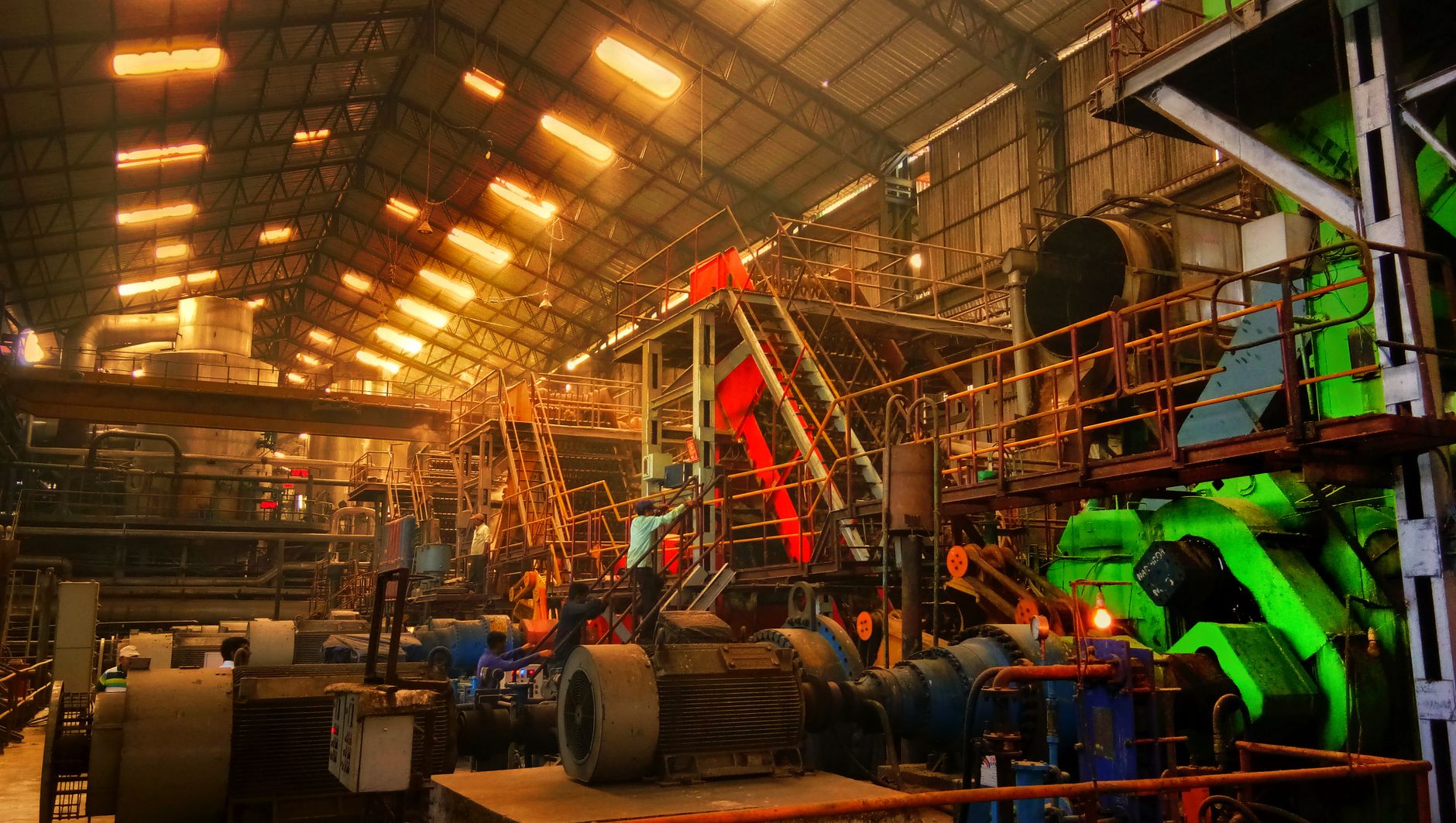
China's export controls on advanced technologies, designed for US competition, are constraining India's manufacturing ambitions and industrial development. This dynamic reveals fundamental tensions between Beijing's desire for Indian market access and its strategic interest in limiting India's technological rise.
China’s evolving export control regime, ostensibly designed to protect advanced technologies in its competition with the United States, is producing significant secondary effects on India’s capacity to develop indigenous industrial capabilities. This dynamic reflects a broader tension within the Asian economic order: while China benefits substantially from access to Indian consumer markets, its technology export restrictions create structural impediments to India’s manufacturing modernisation. Understanding this contradiction reveals fundamental asymmetries in how Beijing approaches economic engagement across the Indo-Pacific region.
India’s stated ambition to become a global manufacturing hub—articulated through initiatives like Make in India and the Production-Linked Incentive (PLI) scheme—depends critically on access to advanced manufacturing technologies, precision components, and specialised materials. Many of these inputs currently flow through China or require Chinese intermediate processing. Beijing’s tightening of export controls on semiconductors, rare earth elements, advanced materials, and dual-use technologies therefore directly constrains India’s industrial trajectory in ways that extend beyond conventional bilateral trade friction.
China’s export control framework has been substantially reoriented since 2018, driven primarily by competition with the United States over semiconductor dominance, artificial intelligence capabilities, and advanced manufacturing. The export controls on rare earth elements, implemented through China’s Ministry of Commerce and the State Administration for Industry and Commerce, represent the most visible manifestation of this strategy. However, the system extends far beyond headline-grabbing restrictions on chips and rare earths.
China’s Foreign Trade Law, amended in 2016, provided the legal infrastructure for expanded export controls. The regime encompasses items on the “Catalogue of Prohibited and Restricted Exports,” which includes technologies related to quantum computing, advanced semiconductors, satellite communications, and precision manufacturing equipment. While these controls target primarily Western technological competitors, their implementation affects all trading partners, including India.
The most consequential restrictions for India concern dual-use technologies—items with both civilian and military applications. China classifies numerous manufacturing inputs and components as dual-use, requiring export licenses and subjecting them to discretionary approval. This creates uncertainty for Indian manufacturers attempting to source critical inputs. The approval process can extend timelines by 6-12 months, creating supply chain vulnerabilities for Indian firms competing in time-sensitive sectors like automotive, electronics, and pharmaceuticals.
Rare earth elements exemplify this challenge. China controls approximately 70% of global rare earth element production and 90% of processing capacity. While China has not implemented outright bans on rare earth exports to India, the licensing regime creates administrative friction and price volatility. Indian manufacturers in renewable energy, defence electronics, and consumer electronics face unpredictable input costs and delivery schedules.
India’s industrial policy under Prime Minister Narendra Modi’s administration has prioritised domestic manufacturing capability as central to economic growth and strategic autonomy. The Make in India initiative, launched in 2014, targets $1 trillion in manufacturing output by 2030 and aims to increase manufacturing’s share of GDP from approximately 16% to 25%. The PLI scheme, implemented from 2020 onwards, provides production-linked incentives across 14 sectors including semiconductors, electronics, pharmaceuticals, and automotive components.
However, these ambitions confront a fundamental constraint: India currently lacks domestic capacity in advanced semiconductor manufacturing, precision materials science, and specialised component production. Indian firms must therefore source these inputs internationally. China remains the dominant supplier for numerous categories of manufacturing inputs due to its established supply chains, competitive pricing, and production scale. This creates a structural dependency that China’s export controls can weaponise.
India’s electronics manufacturing sector illustrates the vulnerability clearly. India aims to produce 5% of global semiconductor output by 2030 as part of the National Semiconductor Mission. Yet India’s semiconductor fabrication plants require imported equipment, rare materials, and advanced components—many subject to Chinese export licensing. Similarly, India’s renewable energy sector, which targets 500 gigawatts of renewable capacity by 2030, depends on rare earth elements for wind turbine generators and solar photovoltaic cells.
The pharmaceutical sector, where India holds significant global market share, depends on Chinese imports of active pharmaceutical ingredients and specialised chemical precursors. Export controls on dual-use chemicals create production bottlenecks for Indian manufacturers serving global markets.
China’s approach to India reflects competing strategic objectives. India represents a market of 1.4 billion people with rising consumer purchasing power. Indian middle-class consumption is projected to reach 550 million people by 2030, creating substantial opportunities for Chinese exporters. Chinese firms dominate Indian markets in electronics, chemicals, and raw materials, generating significant export revenues.
Simultaneously, Beijing perceives India as a potential technological and manufacturing competitor. India’s demographic advantages, English-language workforce, and democratic institutional stability create long-term competitive advantages that could challenge China’s manufacturing dominance. Chinese policymakers assess that constraining India’s technological development through export controls serves long-term strategic interests, even if it reduces short-term export opportunities.
This calculation occurs within the context of India-China border tensions and strategic rivalry. The 2020 border clashes in Ladakh and subsequent military buildups have intensified India’s strategic autonomy imperative. Indian policymakers increasingly view technological self-sufficiency as inseparable from national security. China’s export controls thus function as both an economic constraint and a geopolitical signal of Beijing’s unwillingness to support India’s technological advancement.
India’s deepening strategic partnerships with the United States, Japan, and Australia—articulated through frameworks like the Quad (Quadrilateral Security Dialogue)—further complicate China’s calculation. Beijing must weigh whether export restrictions that slow India’s development serve long-term interests if they accelerate India’s integration into Western-led technological and security architectures.
China’s export control regime is accelerating India’s search for alternative suppliers and domestic substitutes. India is strengthening technology partnerships with Japan, South Korea, and Taiwan to reduce Chinese input dependencies. The India-Japan Bilateral Crewed Space Mission and semiconductor collaboration agreements represent efforts to build alternative supply chains. Vietnam and Indonesia are emerging as alternative sources for certain manufacturing inputs, though they cannot fully replace Chinese capacity in the near term.
India’s push for “Atmanirbhar Bharat” (self-reliant India) reflects this strategic imperative. However, achieving genuine technological self-sufficiency requires 15-20 years of sustained investment and institutional development. During this transition period, India remains vulnerable to Chinese export restrictions.
India’s experience with Chinese export controls parallels challenges facing other regional economies. Vietnam, South Korea, and Taiwan all confront similar constraints on accessing Chinese inputs while competing with China in manufacturing. The cumulative effect is reshaping regional supply chains, with ASEAN nations increasingly coordinating on technology partnerships and diversification strategies. India’s industrial challenges thus intersect with broader Indo-Pacific efforts to reduce technological dependencies on China.
China’s export control regime represents a deliberate strategic choice to constrain India’s technological advancement, even at the cost of reduced market access. This approach reflects Beijing’s assessment that long-term competitive advantage in manufacturing and technology justifies short-term economic costs. For India, the response must combine three elements: accelerated domestic technological development, diversified international partnerships, and strategic patience in building alternative supply chains.
The trajectory of India-China economic relations will depend substantially on whether India can reduce its technological dependencies faster than China can weaponise its export controls. This competition will define industrial leadership in Asia for the next two decades. The outcome remains uncertain, but the strategic significance is unambiguous: control over technological inputs increasingly determines which economies can sustain manufacturing leadership in the Indo-Pacific region.