Physical Address
304 North Cardinal St.
Dorchester Center, MA 02124
Physical Address
304 North Cardinal St.
Dorchester Center, MA 02124

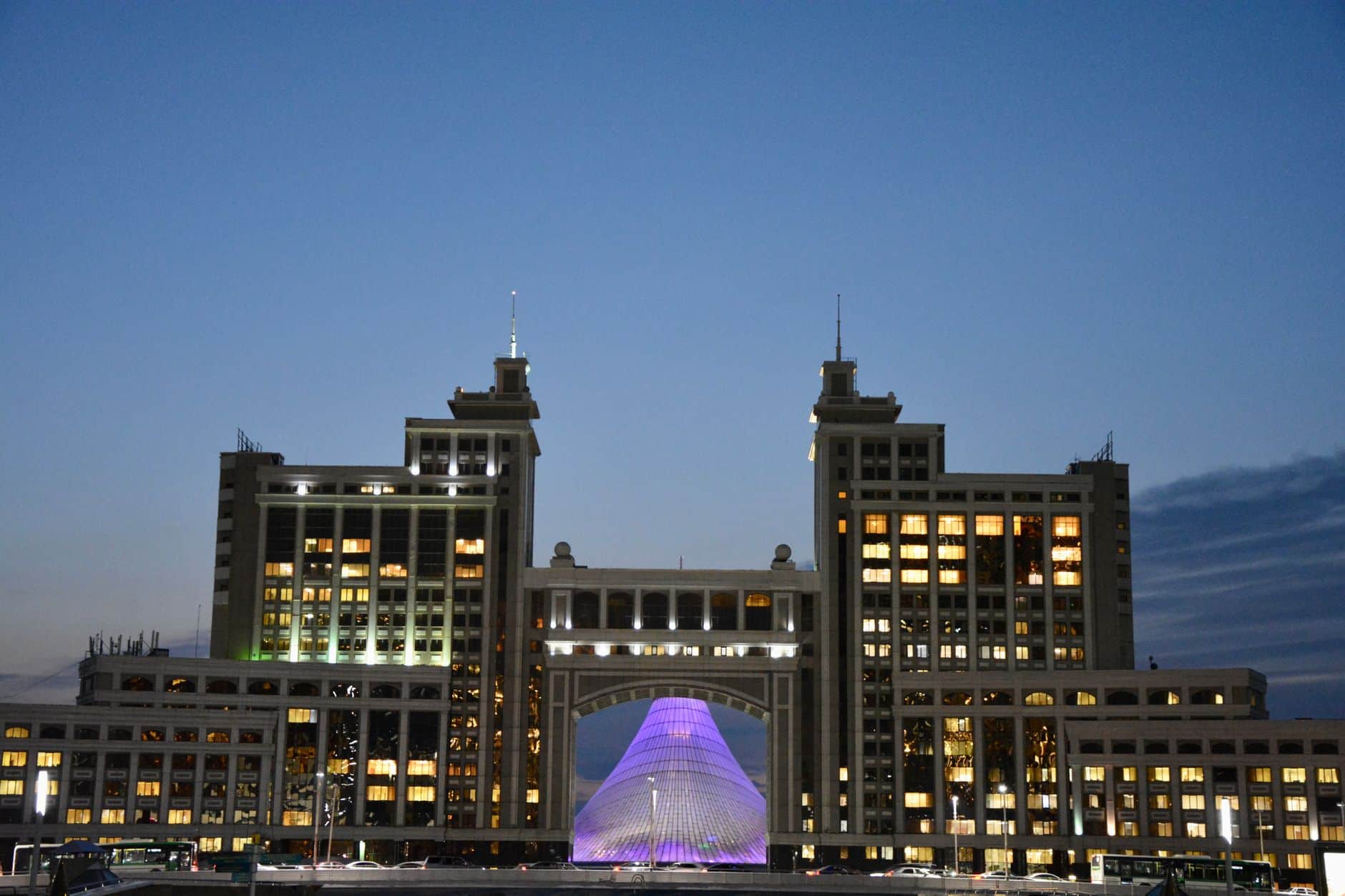
Central Asia is transitioning from a passive buffer zone to an active geopolitical player. Supply chain disruptions, nuclear energy demand, and critical minerals discoveries have given Kazakhstan, Uzbekistan, and other regional states genuine leverage to negotiate independently with major powers.
For centuries, Central Asia has been defined by external powers—first through the 19th-century Great Game between British and Russian empires, then through Soviet domination, and more recently as a perceived battleground for influence between China, Russia, and the West. This characterization, however, fundamentally misrepresents the region’s contemporary strategic position. The five post-Soviet Central Asian states—Kazakhstan, Kyrgyzstan, Tajikistan, Turkmenistan, and Uzbekistan—along with Azerbaijan, are no longer passive actors in a geopolitical chess game. Instead, they have accumulated sufficient structural leverage to articulate independent policy preferences and negotiate from positions of genuine strength with major powers. The critical shift lies not in whether external powers can “win over” Central Asia, but whether regional capitals can translate geographic advantages into sustained collective bargaining power.
Central Asia’s strategic importance has been fundamentally reshaped by disruptions to global maritime trade. The ongoing Iran-U.S. tensions and recent blockade of the Strait of Hormuz have exposed the vulnerability of traditional sea routes that account for the bulk of global energy commerce. Simultaneously, Western sanctions on Russia have severed Moscow from integrated supply chains with developed economies, forcing a strategic reorientation toward overland connectivity through Central Asia.
While Chinese President Xi Jinping’s 2013 declaration of the “Silk Road Economic Belt” at Nazarbayev University in Astana has dominated narratives about Central Asian connectivity, the reality is more complex. China’s tens of billions of dollars invested in Kazakhstan’s energy, transport, and agricultural sectors since 2013 represent only one dimension of the region’s supply chain significance. The geographic positioning of Central Asia creates a natural convergence point: energy-rich West Asia and the Arabian Gulf to the southwest, India’s densely populated and rapidly growing economy to the south, China’s manufacturing base to the east, and Russia’s resource-rich but isolated economy to the north.
Kazakhstan and Azerbaijan have emerged as the primary beneficiaries of this logistical reconfiguration. The Trans-Caspian International Transport Route (Middle Corridor) and the International North-South Transport Corridor (INSTC)—which connects Russia, the Caspian Sea, Iran, and India through Turkmenistan’s Turkmenbashi seaport—have become critical alternatives to maritime chokepoints. Russia has committed substantial financial resources to modernizing rail and port infrastructure along the INSTC, while India and Pakistan have both courted the region through the Ashgabat Agreement, signed in the 2010s alongside Turkmenistan, Uzbekistan, Iran, and Oman.
The strategic implication is clear: Central Asian capitals now exercise genuine optionality. Rather than forced alignment with any single power, governments in Astana, Tashkent, and Baku can calibrate engagement with Russia, China, India, and Turkey based on specific economic and security interests—a flexibility that was unthinkable during the immediate post-Soviet period.
While Central Asia’s hydrocarbon reserves remain substantial—Kazakhstan ranks among the world’s top 15 oil producers with the Tengiz, Kashagan, and Karachanganak fields, while Turkmenistan holds the world’s fourth-largest natural gas reserves—the region’s strategic energy importance is increasingly defined by the global nuclear transition.
Kazakhstan has dominated global uranium production since 2009, accounting for 40 percent of worldwide output in 2025. This dominance reflects both geological advantage and strategic positioning: the country benefits from joint ventures with three nuclear powers (China, France, and Russia) as well as Canada, while possessing the sparse population density necessary for safe nuclear development. The Kazakh government’s decision to introduce nuclear energy, approved by public referendum in October 2024, signals recognition that nuclear capacity serves both energy security and economic growth objectives. Similarly, Uzbekistan announced construction of its own nuclear power plant in May 2024, indicating broader regional commitment to nuclear energy infrastructure.
This pivot toward nuclear energy carries profound implications for Asia-Pacific security. As maritime energy disruptions continue to affect ASEAN and East Asian economies, demand for alternative energy sources from reliable suppliers will intensify. Central Asian uranium production and nuclear technology partnerships will become increasingly valuable assets for regional governments to leverage in negotiations with larger powers.
In 2025, Kazakhstan reported the discovery of the world’s third-largest rare earths reserves, potentially offering a viable alternative to the current duopoly of China and Brazil in global rare earths supply. However, as analyst Ernest Scheyder has observed, reserves alone do not determine strategic advantage in the “war below” for critical minerals. Rather, the asymmetric concentration of mining, processing, and refining technologies determines actual leverage.
Currently, China dominates rare earths processing, with Baotou in Inner Mongolia serving as the global hub for downstream processing. Central Asian governments recognize this constraint and possess meaningful maneuvering room. Kazakhstan, in particular, could develop indigenous processing capacity or negotiate joint ventures that capture greater value from raw material extraction. Such positioning would require coordinated regional policy and technology partnerships, but the potential returns—both economic and strategic—justify the investment.
The discovery of substantial rare earths reserves in Kazakhstan coincides with intensifying Western efforts to diversify supply chains away from China. This creates a window of opportunity for Central Asian capitals to negotiate favorable terms for technology transfer and processing infrastructure development, transforming their role from raw material exporters to value-added processors.
The structural trends that have elevated Central Asia’s strategic importance—supply chain diversification, energy transition, and critical mineral demand—have fundamentally altered the region’s negotiating position. The era when Central Asia could be treated as a sphere of influence to be “won” by Moscow, Beijing, or Washington has definitively ended.
This does not mean the region has achieved complete autonomy from great power interests. Rather, Central Asian states have developed sufficient leverage to resist coercive pressure and maintain genuine policy independence. The seventh Consultative Meeting of the Heads of State of Central Asia in Tashkent in November 2025, attended by leaders from Azerbaijan, Kyrgyzstan, Kazakhstan, Tajikistan, Turkmenistan, and Uzbekistan, demonstrates the region’s capacity for collective coordination on shared interests.
The critical challenge facing Central Asian governments is whether they can translate individual leverage into collective regional agency. Persistent bilateral disputes—particularly between Kyrgyzstan and Tajikistan over border demarcation—continue to complicate regional cooperation. However, shared interests in supply chain diversification, energy security, and critical minerals development create powerful incentives for institutional coordination.
Central Asia’s geographic position, long characterized as a constraint forcing dependence on larger neighbors, has become a strategic asset. The convergence of maritime trade disruptions, energy transition, and great power competition for critical minerals has created conditions where Central Asian governments can exercise genuine agency in regional affairs.
The region’s ability to translate this structural advantage into sustained influence depends on three factors: first, the capacity to develop indigenous processing and refining capacity for critical minerals rather than remaining raw material exporters; second, coordinated regional policy that prevents individual states from being picked off through bilateral great power pressure; and third, investment in infrastructure and technology that reduces dependence on any single external power.
For Indo-Pacific policymakers, Central Asia’s rising autonomy carries direct implications. Energy supply diversification, critical minerals access, and alternative logistical routes through the region will become increasingly central to regional security architecture. Australia and other Indo-Pacific powers should recognize Central Asian governments not as objects of great power competition, but as independent actors whose cooperation on supply chain resilience, nuclear energy, and critical minerals will shape regional stability for decades to come.
Comments are closed.





Great content! Keep up the good work!