Physical Address
304 North Cardinal St.
Dorchester Center, MA 02124
Physical Address
304 North Cardinal St.
Dorchester Center, MA 02124

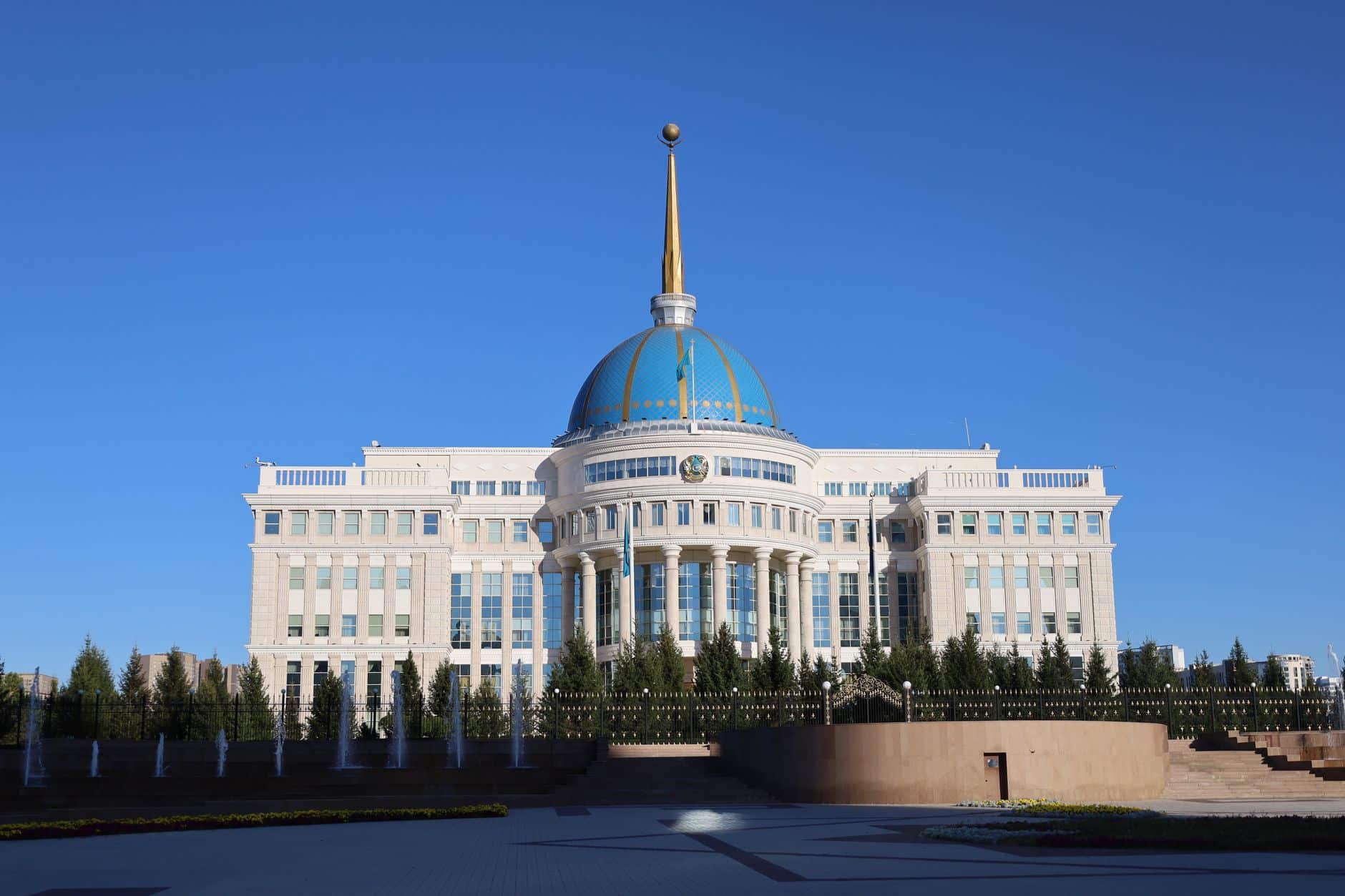
Kazakhstan's August 2024 Kurultai election tests whether the country can institutionalize its regional diplomacy through a functioning parliament. The new legislature must translate commitments on infrastructure, energy, and water cooperation into sustained legislation and budget oversight to maintain Kazakhstan's geopolitical influence.
On August 23, 2024, Kazakhstan held elections for the Kurultai, a 145-seat unicameral legislature established under a new constitution that entered force in July 2024. Seven political parties contested the election through proportional representation in a single nationwide constituency, with no directly appointed seats. While domestic observers focused on seat distribution and party composition, the election carries strategic significance extending far beyond Kazakhstan’s borders. It represents a critical test of whether Central Asia’s most economically dynamic state can institutionalize the regional and international commitments its leadership has accumulated through diplomatic initiatives.
The Kurultai election matters because Kazakhstan’s geopolitical agency depends on more than presidential summitry and bilateral agreements. Sustained regional influence requires domestic institutions capable of translating diplomatic commitments into legislation, allocating multi-year budgets, enforcing regulatory frameworks, and maintaining continuity across political cycles. This institutional foundation has become essential as Central Asia shifts from a space where external powers compete for influence to a region where states actively shape their own positions on connectivity, energy, trade, and resource management.
Kazakhstan’s central role in the Trans-Caspian International Transport Route—known as the Middle Corridor—illustrates why parliamentary capacity matters for foreign policy effectiveness. The Middle Corridor is positioned as an alternative to traditional Suez-dependent shipping routes, connecting China through Central Asia to the Caucasus, Turkey, and Europe. Yet diplomatic declarations alone cannot transform this corridor into a commercially competitive trade route.
Realizing the Middle Corridor’s potential requires sustained investment in railways, ports, logistics hubs, and border infrastructure. It demands legislative action on customs procedures, tariff harmonization, digital documentation standards, and public-private partnership frameworks. These measures extend across multiple government budgets and require coordination between transport ministries, customs authorities, and regional partners. A parliament capable of scrutinizing infrastructure priorities, assessing financing arrangements, and monitoring implementation can convert isolated projects into a durable economic strategy. Without such oversight, infrastructure investments risk becoming politically vulnerable, subject to cancellation or deprioritization when individual officials change or when government priorities shift.
The continuity function is particularly critical for transport corridors. International logistics operators require predictable regulatory environments and confidence that infrastructure investments will be maintained regardless of which party controls government. A functioning legislature provides this assurance by distributing responsibility for major commitments across multiple political actors and embedding them in law rather than executive decree.
Kazakhstan’s pursuit of economic diversification—moving beyond oil and gas exports toward manufacturing, agriculture, value-added processing, and digital services—depends heavily on foreign direct investment. International investors conduct due diligence that extends well beyond headline agreements. They examine tax stability, contract enforcement, customs administration, regulatory transparency, and whether government commitments survive political transitions.
The Kurultai’s legislative and oversight functions directly influence whether economic agreements produce predictable domestic rules. Parliamentary examination of budgets, taxation, and sectoral legislation identifies gaps between international commitments and their implementation. This scrutiny is particularly important for large infrastructure and industrial investments with time horizons extending beyond a single government program. A manufacturer considering a ten-year facility investment needs confidence that tax incentives will persist, that labor regulations will remain stable, and that supply-chain infrastructure commitments will be honored across multiple electoral cycles.
The transition from a bicameral parliament to the unicameral Kurultai was designed to create clearer political responsibility and streamlined legislative processes. With all deputies elected through national party lists, the system encourages parties to develop programs addressing countrywide economic priorities rather than localized interests. This structure may enhance accountability for major economic policies and make it easier for international partners to identify which political actors are responsible for implementing agreements.
Kazakhstan’s role in the global energy transition presents complex institutional demands. The country remains a significant supplier of uranium and oil while simultaneously seeking investment in renewable energy, electricity infrastructure, and mineral processing for energy transition technologies. International partnerships in these sectors raise intricate questions about environmental standards, infrastructure financing, risk allocation between state and private investors, and the balance between resource extraction and economic diversification.
A more coherent legislative system can establish stable regulatory frameworks while ensuring that energy agreements contribute to genuine economic diversification rather than simply expanding unprocessed resource exports. Parliamentary involvement in energy legislation ensures that environmental standards are embedded in law, that financing arrangements are transparent, and that long-term infrastructure investments receive sustained budgetary support. This is particularly important for renewable energy projects and mineral-processing facilities, which require multi-year capital commitments and regulatory consistency.
Water management may present the most demanding test of the Kurultai’s capacity to translate regional agreements into domestic implementation. Central Asia’s major river systems—the Amu Darya and Syr Darya—cross national borders, creating inherent coordination challenges. Climate change, population growth, and aging irrigation infrastructure are simultaneously increasing pressure on available water supplies across the region. Regional water-sharing agreements are essential, but their effectiveness depends on domestic decisions concerning agriculture, reservoir management, water pricing, irrigation infrastructure, and environmental protection.
Parliamentary involvement in water legislation connects regional negotiations with the domestic sectors and communities affected by them. It provides continuity for investments in water-saving technology and infrastructure that may require sustained funding across multiple government administrations. Without this institutional mechanism, water agreements risk becoming disconnected from implementation, with regional commitments failing to translate into domestic resource allocation or behavioral change among agricultural users.
Kazakhstan’s foreign policy has historically been guided through presidential and professional diplomacy, balancing relationships with Russia, China, the European Union, and the United States while maintaining strategic autonomy. A fully elected legislature creates a new arena in which the principles underlying this multivector approach—sovereignty, strategic autonomy, economic openness, and cooperation with competing partners—can be articulated and debated publicly.
This broader domestic constituency matters in an environment where relations with major powers intersect with supply-chain security, technological standards, and critical mineral access. Greater parliamentary involvement makes Kazakhstan’s international positioning more comprehensible domestically and more resilient internationally, demonstrating that it rests on functioning institutions rather than executive preference alone. When major powers understand that a country’s foreign policy enjoys institutional support and legislative backing, they are more likely to view commitments as durable and reliable.
The Kurultai also enables parliamentary diplomacy—direct engagement between Kazakhstani legislators and foreign lawmakers through parliamentary friendship groups and interparliamentary organizations. Foreign legislators frequently influence decisions concerning trade preferences, export controls, investment financing, and international agreements. Sustained parliamentary engagement provides Kazakhstan with an additional channel to explain policies, address misunderstandings, and develop constituencies supportive of cooperation within other countries’ legislatures.
The election included mechanisms intended to broaden representation. Women, young people, and persons with disabilities together account for more than two-fifths of registered candidates. Parties must meet a collective 30 percent quota for these groups both on their lists and in seat allocation. While greater diversity cannot by itself guarantee legislative effectiveness, it can widen the range of experience and perspectives brought into debates on economic policy, infrastructure priorities, and international agreements. This diversity may enhance the legislature’s capacity to identify implementation gaps and unforeseen consequences of major policies.
The Kurultai election represents a critical juncture in Central Asian geopolitics. Kazakhstan’s ability to sustain its role as a regional convenor and bridge between major markets depends on translating diplomatic achievements into institutional capacity. The new legislature will be tested immediately on major issues: Middle Corridor infrastructure financing, energy transition legislation, water cooperation frameworks, and economic diversification incentives. Success on these fronts will require the Kurultai to move beyond ceremonial functions toward substantive legislative scrutiny and budget oversight.
The broader implication extends to Central Asia’s positioning in international politics. If Kazakhstan can demonstrate that a functioning parliament strengthens rather than constrains geopolitical agency, it establishes a model that other Central Asian states may consider. Conversely, if the Kurultai becomes a rubber-stamp institution or fails to provide meaningful continuity for major commitments, it will reinforce the perception that Central Asian statecraft depends primarily on executive decision-making rather than institutional depth.
For international partners—whether China, the European Union, the United States, or Gulf states—a functioning Kazakhstani parliament provides greater assurance that agreements will be implemented consistently and that commitments will survive political transitions. This institutional foundation is not an alternative to strong executive leadership; it is a complement that makes regional diplomacy more durable and credible. The August 2024 election was therefore not merely a domestic political event. It was a test of whether Central Asia’s most influential state can build the institutional infrastructure necessary to sustain its growing regional and international ambitions.




