Physical Address
304 North Cardinal St.
Dorchester Center, MA 02124
Physical Address
304 North Cardinal St.
Dorchester Center, MA 02124

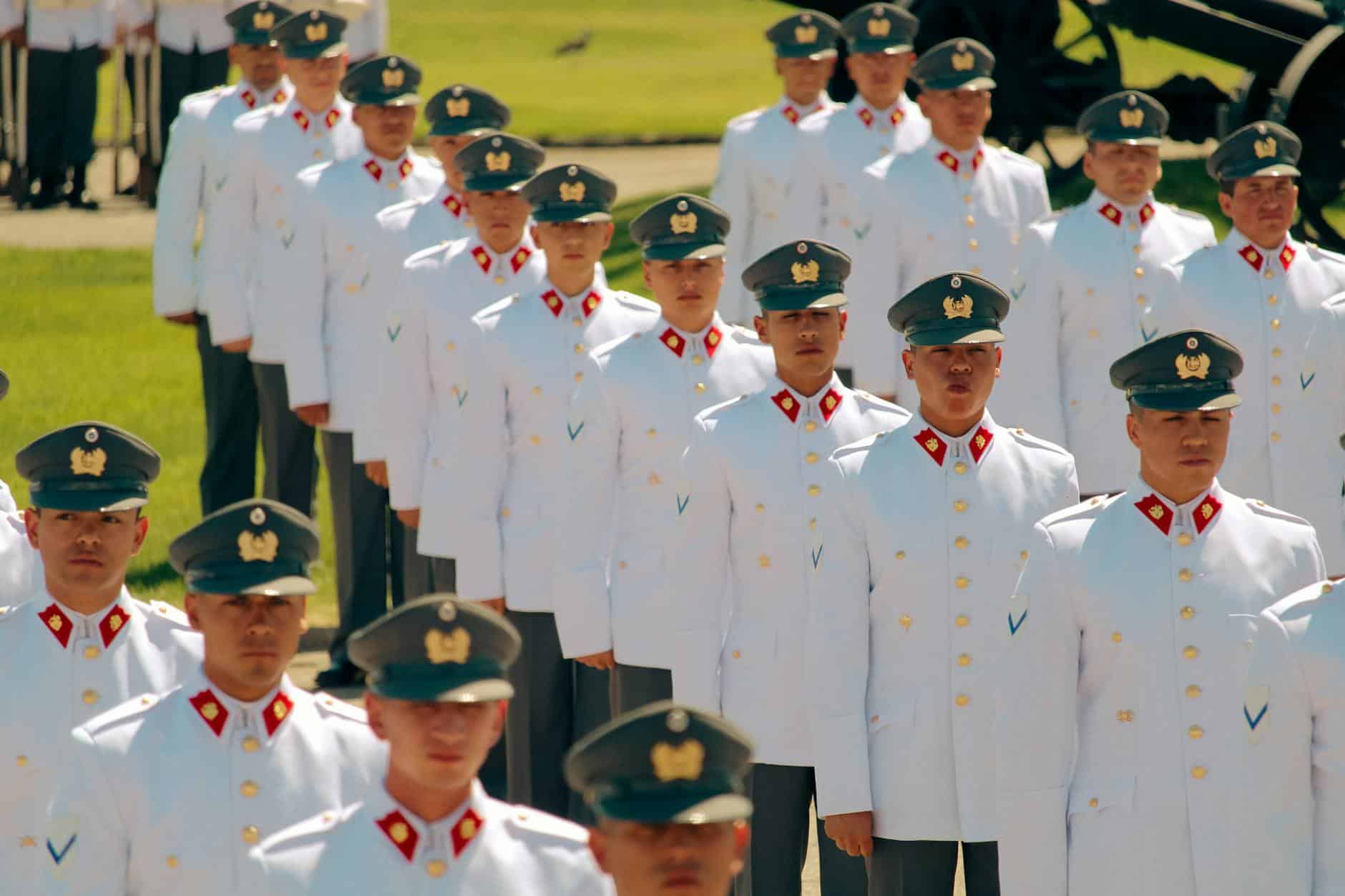
China's suspended death sentences for former Defense Ministers Wei Fenghe and Li Shangfu mark an escalation in Xi Jinping's military purge. This analysis examines why Xi imposed such severe punishments and what they reveal about the PLA's transformation into a fear-driven institution.
On May 7, 2024, China’s legal system delivered a watershed moment in the People’s Liberation Army’s anti-corruption campaign: former Defense Ministers Wei Fenghe and Li Shangfu were sentenced to death with a two-year reprieve, along with complete confiscation of personal assets. This development marks a critical inflection point in Xi Jinping’s consolidation of military authority. For the first time since the anti-corruption drive began, two sitting members of the Central Military Commission—China’s highest military decision-making body—have received suspended death sentences. The severity of these punishments signals far more than routine corruption enforcement; it represents a deliberate political strategy to reshape the PLA’s officer corps through fear and coercion.
A death sentence with two-year reprieve in China’s legal framework is reserved for the gravest offences: major corruption, premeditated murder, and large-scale drug trafficking. Wei Fenghe faced charges of accepting bribes, while Li Shangfu was convicted of both accepting and dispensing bribes. The severity of these sentences cannot be separated from their political context. The last comparable case involved Gu Junshan, former deputy director of the General Logistics Department, whose corruption reportedly exceeded 600 million yuan (approximately $98 million USD). Gu’s cooperation with investigators—”exposing others” in official terminology—resulted in a suspended death sentence rather than immediate execution, and he is now believed to serve a life sentence in military confinement.
Critically, suspended death sentences are rarely carried out after the reprieve period expires. Instead, they are commuted to life imprisonment. This legal mechanism serves a distinct political function: it inflicts maximum psychological and career damage while preserving the offender’s life. For the PLA’s officer corps, the distinction between execution and life imprisonment becomes secondary to the public humiliation and permanent removal from power. Wei and Li’s sentences therefore represent not merely judicial outcomes but calculated demonstrations of Xi’s authority over even the most senior military figures.
Gu Junshan’s 2012 conviction triggered what analysts describe as an “avalanche of investigations” within the PLA. His case precipitated the downfall of former CMC Vice Chairmen Guo Boxiong and Xu Caihou, and subsequently the fall of PLA Chief of Staff Fang Fenghui in 2017. Xu died while awaiting sentencing; Guo and Fang received life sentences—notably, without the added severity of suspended death sentences. The pattern is unmistakable: each high-profile conviction generates pressure on subordinates and associates to cooperate with investigators or face escalating consequences.
Wei Fenghe and Li Shangfu initially resisted cooperation with anti-corruption authorities, according to available reporting. However, their eventual capitulation—likely motivated by the threat of execution—means both former defense ministers have almost certainly provided “critical information on former colleagues.” This cooperation, while sparing them from actual execution, implicates additional PLA officers across multiple ranks. The named targets of future investigations already include former CMC members Miao Hua, He Weidong, Zhang Youxia, and Liu Zhenli, all of whom face the prospect of lengthy prison sentences based on the precedent Wei and Li have established.
Why did Xi Jinping impose suspended death sentences rather than life imprisonment, the fate of Guo Boxiong and Fang Fenghui? Three intersecting strategic considerations explain this escalation.
First, corruption magnitude: Wei and Li’s cases almost certainly involved sums exceeding Gu Junshan’s 600 million yuan threshold. Wei led the Rocket Force (the PLA’s strategic nuclear command) and Li oversaw the Equipment Development Department—positions with direct authority over procurement, personnel placement, and resource allocation. Corruption at these levels compounds exponentially in financial and operational impact. The severity of punishment must therefore match the scale of financial theft.
Second, institutional stability: Executing high-ranking officers outright risks destabilizing PLA morale and fragmenting the officer corps. A suspended death sentence achieves deterrence through uncertainty and fear while avoiding the organizational shock of actual executions. This represents a calculated middle ground: punishment severe enough to inspire “fear-based compliance” among remaining senior officers, but calibrated to prevent the kind of institutional trauma that could undermine military effectiveness.
Third, political consolidation timing: China’s 21st Party Congress was scheduled for late 2022 (the article references “next year” from its May 2024 perspective, indicating the timeline of Xi’s political calendar). At that Congress, Xi sought to extend his tenure for an additional five-year term—a break from the two-term precedent established by Deng Xiaoping. Firm control over the PLA was not merely advantageous but essential. The anti-corruption campaign, as Xi has wielded it, functions as a tool of political control rather than institutional reform. A climate of fear among senior military officers—what the Chinese saying captures as “accompanying an emperor is like accompanying a tiger”—ensures compliance during critical political moments.
China’s military courts operate within a political framework rather than an independent judicial system. Sentencing decisions in high-profile cases require explicit approval from the commander-in-chief operating under the CMC chairman responsibility system—in practice, Xi Jinping himself. This concentration of authority means military justice is fundamentally subordinate to political objectives.
The implications for PLA leadership are stark. High rank provides no protection; indeed, seniority increases vulnerability by expanding one’s network of potential accusers and subordinates. Wei Fenghe and Li Shangfu held positions at the apex of military authority. Their convictions demonstrate that even former defense ministers—positions second only to the CMC chairman—face existential career and personal risk. The message to remaining senior officers is unambiguous: loyalty supersedes competence as the primary criterion for survival.
This dynamic creates a perverse incentive structure within the officer corps. Officers seeking advancement must prioritize demonstrating unwavering loyalty to Xi rather than developing military expertise, strategic innovation, or institutional reform. The resulting organizational culture prioritizes political reliability over professional merit—a shift with measurable consequences for PLA operational readiness and strategic capability.
The suspended death sentences of Wei Fenghe and Li Shangfu represent a watershed in Xi’s control of the PLA, but at a potential cost to military effectiveness. An officer corps operating under conditions of pervasive fear exhibits certain predictable pathologies: risk-aversion, reluctance to challenge superior officers’ decisions, and prioritization of political positioning over operational planning. These characteristics are antithetical to military innovation and adaptive strategy.
For regional security in the Indo-Pacific, the implications are ambiguous. On one dimension, a PLA leadership preoccupied with political survival and internal purges may exhibit reduced capacity for coordinated strategic action. Conversely, an officer corps unified by fear and loyalty may prove more responsive to Xi’s strategic directives, regardless of their rationality or feasibility. The ongoing cases of Miao Hua, He Weidong, Zhang Youxia, and Liu Zhenli will further consolidate Xi’s control while deepening the institutional culture of fear.
The broader pattern is clear: the PLA’s upper echelon has become an extraordinarily dangerous zone where high rank offers no protection and where the threat of catastrophic punishment remains perpetually suspended. This represents a fundamental shift in civil-military relations in China, with consequences extending well beyond military administration into questions of strategic decision-making, institutional risk assessment, and the PLA’s capacity to serve as an effective instrument of national strategy in the Indo-Pacific region.




