Physical Address
304 North Cardinal St.
Dorchester Center, MA 02124
Physical Address
304 North Cardinal St.
Dorchester Center, MA 02124

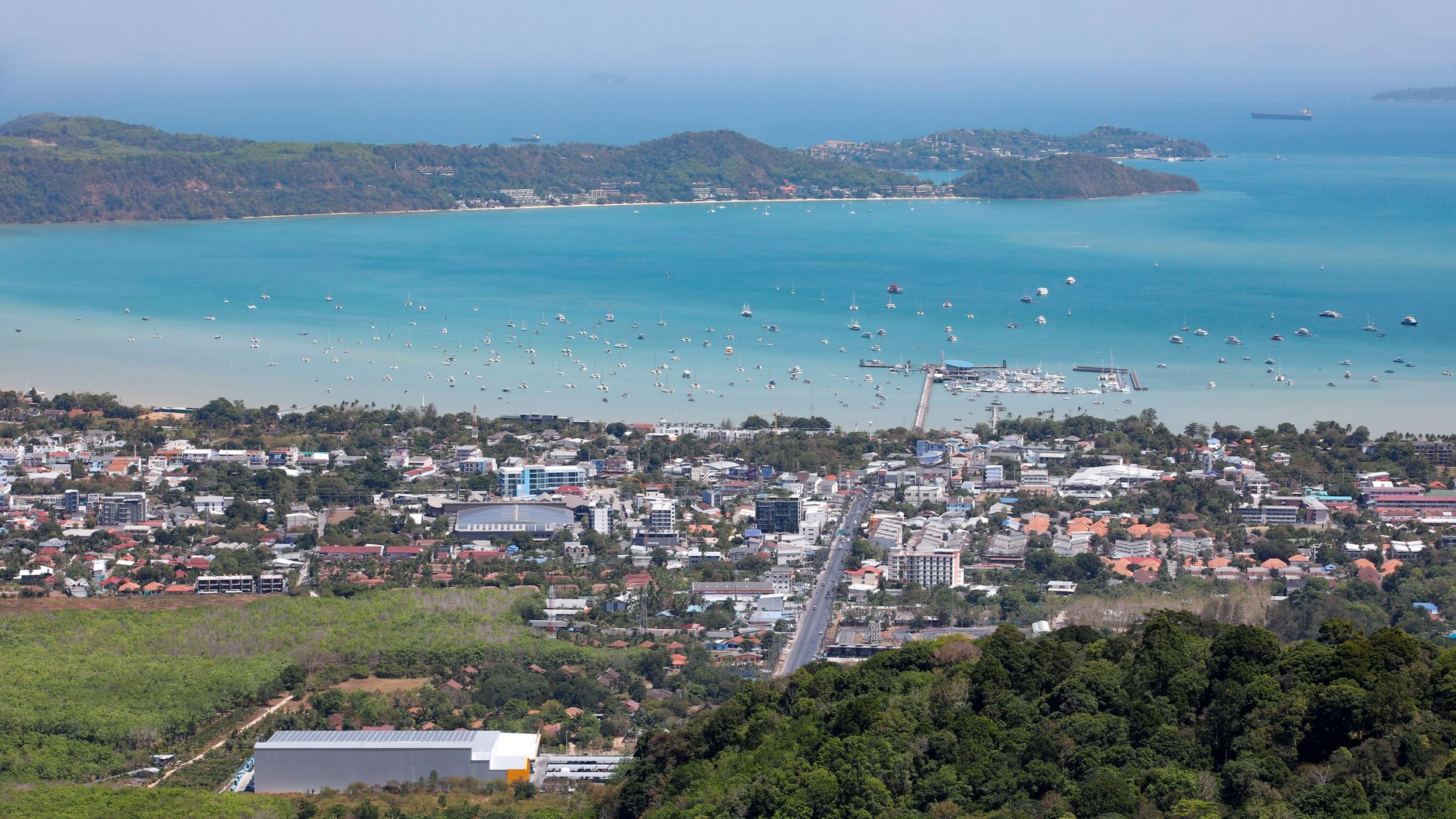
Thailand shelved its one-trillion-baht 'land bridge' megaproject in July 2024, citing unfavorable feasibility findings and environmental concerns. The strategic pivot toward Ranong Port modernization reflects pragmatism but exposes Thailand's broader infrastructure execution challenges.
In July 2024, Thailand’s Deputy Prime Minister and Finance Minister Ekniti Nitithanprapas announced the indefinite shelving of the country’s ambitious “land bridge” megaproject—a one-trillion-baht infrastructure initiative designed to bypass the Strait of Malacca. The announcement, made verbally without fanfare, marked a significant reversal for successive Thai administrations that had promoted the scheme since 2023 as a geopolitical imperative amid regional volatility. The decision reflects not merely fiscal prudence but deeper tensions between Thailand’s infrastructure ambitions, environmental constraints, and the government’s credibility in delivering transformative projects.
The land bridge concept represented a 90-kilometer transport corridor linking two deep-sea ports via dual-track railway and six-lane motorway across southern Thailand’s Ranong and Chumphon provinces. While framed as a strategic necessity to reduce dependency on Malacca Strait chokepoint transit, the project faced insurmountable technical and environmental obstacles that a government feasibility study ultimately deemed unviable.
Thailand’s decision to abandon the land bridge rested on three fundamental problems identified in the feasibility assessment. First, the operational economics proved untenable. Repeated loading and unloading of cargo at both ports would consume more time than the supposedly “longer” Malacca route transit, eliminating the project’s core efficiency argument. The logistics disadvantage rendered the massive capital expenditure strategically counterproductive.
Second, environmental costs were catastrophic. The project required approximately 13,000 rai of seaward land reclamation—7,000 rai in Ranong on the Andaman Coast and 6,000 rai in Chumphon facing the Gulf of Thailand. This scale vastly exceeded Thailand’s existing reclamation precedent: Laem Chabang Port, the country’s primary deep-sea terminal in the Eastern Economic Corridor (EEC), utilized only 5,257 rai across all phases. The land bridge would have inflicted unprecedented ecological damage across two ecologically sensitive provinces, generating fierce domestic opposition rooted in legitimate conservation concerns.
Third, the project had attracted significant public backlash beyond environmental activism. Thai citizens feared excessive foreign capital inflows accompanying the megaproject, reflecting broader anxieties about economic sovereignty and foreign ownership of strategic infrastructure. This domestic resistance proved politically consequential for Prime Minister Anutin Charnvirakul’s government, despite its action-oriented reputation and previous high-profile promotion of the scheme.
Rather than abandoning southern port development entirely, Thailand has redirected investment toward a more modest but strategically coherent alternative: modernization of Ranong Port with direct rail connectivity to the national train network already serving Chumphon. This recalibration represents sound infrastructure logic grounded in geographic and administrative realities.
Ranong possesses structural advantages justifying prioritization. The port enjoys superior connectivity to Bangkok—the nearest coastal distance of any Andaman province—combined with proximity to Myanmar, positioning it as Thailand’s most viable Indian Ocean logistics gateway. Critically, Ranong Port operates under the Port Authority of Thailand, the state administrator of key commercial ports including Laem Chabang. This institutional alignment ensures operational consistency and strategic alignment with Thailand’s broader port development framework.
Phuket, despite being the region’s tourism flagship, lacks expansion capacity and remains tourism-oriented rather than cargo-focused. Its deep-sea port, while proximate to the Royal Thai Navy’s Third Naval Area Command, serves limited commercial logistics functions. Chumphon, conversely, offers inland connectivity but lacks the coastal infrastructure advantages necessary for a primary port facility.
The Ranong-centric approach thus represents a rational consolidation of Thailand’s southern port strategy around geographic and administrative efficiency rather than grand-scale megaproject ambitions.
While Deputy Prime Minister Ekniti correctly noted that project cancellation incurs no monetary loss—no land acquisition or construction commenced—the reputational damage to Thai government credibility is substantial and cumulative. The land bridge shelving occurs within a troubling pattern of delayed or stalled major infrastructure initiatives that undermines Thailand’s capacity to execute transformative projects.
The high-speed rail linking three Bangkok airports (U-Tapao, Suvarnabhumi, and Don Mueang), contracted in 2019 as a critical EEC component, remains unbuilt. The proposed Andaman airport in Phang Nga province to alleviate Phuket congestion remains at planning stage. The Phuket light rail transit system, proposed decades ago, similarly languishes unexecuted. While individual projects face legitimate complications—COVID-19 disruptions, structural complexities like Phuket’s single-highway bottleneck—the cumulative effect creates an impression of systematic execution failure.
Thai government credibility depends on demonstrated delivery, not aspirational planning. International investors and regional partners assess Thai reliability through project completion rates, not announcement frequency. The land bridge reversal, while environmentally and economically justified, reinforces perceptions of ambitious rhetoric disconnected from implementation capacity.
Notably, the Anutin government’s decision to cancel rather than persist with a questionable project could be interpreted positively as responsive governance. Some Thai social media commentary reflected this perspective, viewing cancellation as evidence of government responsiveness to public opposition. However, this credibility benefit remains marginal against the broader infrastructure execution deficit.
The land bridge project represented a modern iteration of a centuries-old concept: a canal across Thailand’s Kra Isthmus to bypass the Malacca Strait entirely. This idea resurfaces periodically in Thai strategic discourse, most recently during periods of perceived Strait vulnerability or geopolitical volatility. The land bridge, while strategically safer than canal construction, derived from identical geographic logic—reducing transit dependence on a chokepoint vulnerable to disruption or great power contestation.
The concept’s recurring reappearance suggests the underlying strategic impulse—reducing Malacca Strait dependency—remains persistent in Thai strategic thinking, particularly amid Indo-Pacific tensions. However, the land bridge’s failure to achieve viability may redirect Thai focus toward more modest but achievable alternatives: enhanced port capacity, improved inland connectivity, and diversified logistics infrastructure rather than transformative megaprojects.
The Kra Isthmus concept will likely resurface in future Thai administrations, particularly during periods of heightened regional tension. The land bridge’s shelving should not be misinterpreted as permanent abandonment of the underlying strategic objective, but rather as recognition that current technological and economic constraints render grand-scale solutions unviable.
Thailand’s decision reflects pragmatic assessment of project viability rather than abandonment of strategic positioning. The Ranong Port modernization represents a more defensible infrastructure investment aligned with geographic advantage and administrative capacity. However, the land bridge cancellation exposes the gap between Thailand’s strategic ambitions and its infrastructure execution capability.
The underlying geopolitical concern—Malacca Strait dependency amid great power competition—remains unresolved. Thailand’s pivot to incremental port upgrades rather than transformative infrastructure indicates acceptance that comprehensive alternatives to Malacca transit remain economically and technically unfeasible under current conditions. This represents a strategic acceptance of vulnerability rather than vulnerability elimination.
For regional observers, the land bridge reversal demonstrates that even ambitious, well-resourced governments face hard constraints on infrastructure transformation. Thailand’s decision-making process—feasibility assessment, environmental evaluation, public consultation—provides a model for rigorous project evaluation. However, the cumulative pattern of delayed megaprojects suggests Thailand requires enhanced institutional capacity for infrastructure delivery to translate strategic vision into operational reality. The Ranong modernization will serve as a critical test of this capacity.




