Physical Address
304 North Cardinal St.
Dorchester Center, MA 02124
Physical Address
304 North Cardinal St.
Dorchester Center, MA 02124

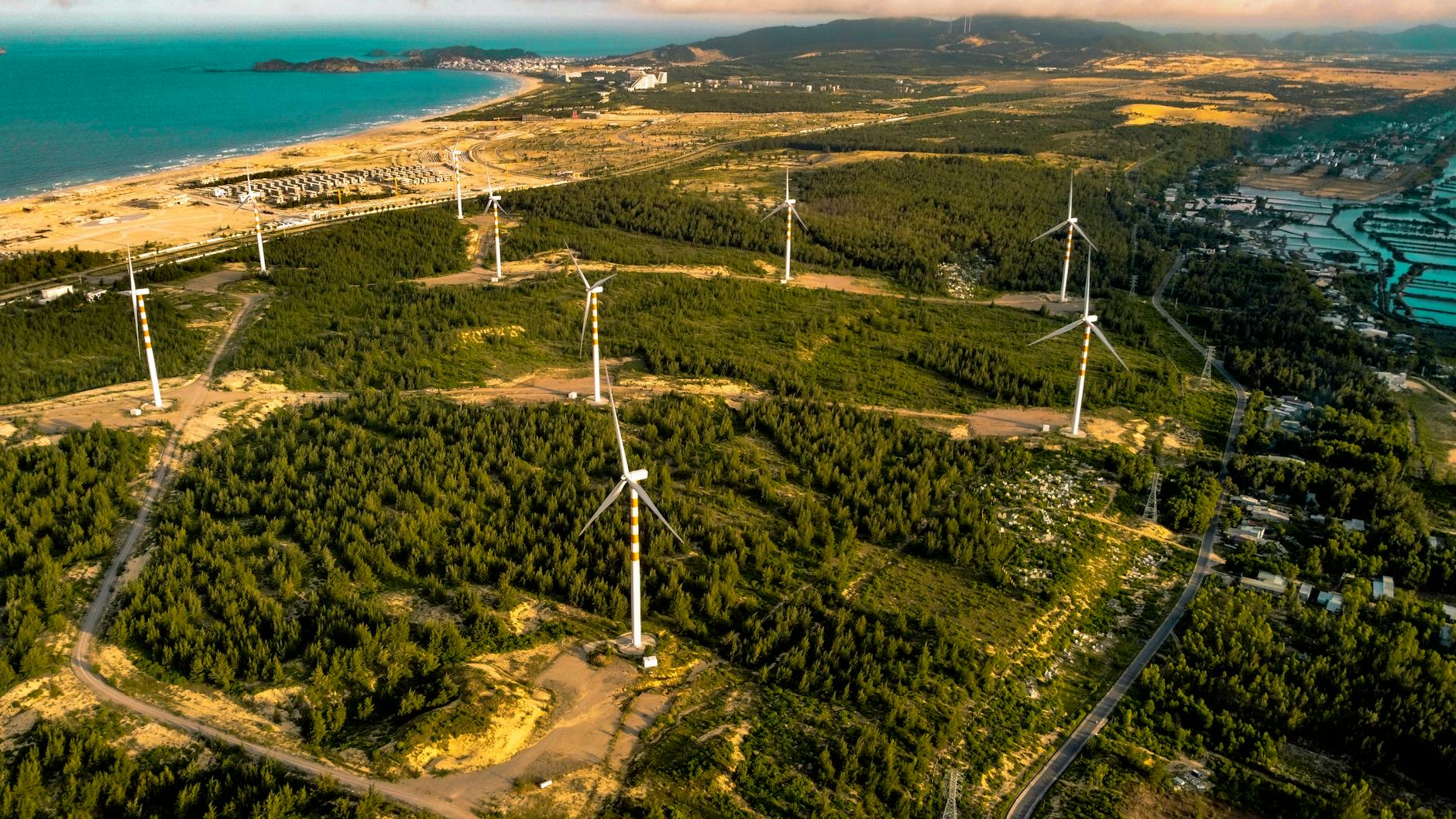
Southeast Asia's response to global fuel price surges has exposed a fundamental paradox: while governments temporarily increase fossil fuel capacity, private investment and consumer demand continue shifting toward renewables. The region's energy transition will likely proceed unevenly across ASEAN, constrained not by capital or technology but by grid infrastructure and regulatory capacity.
The surge in global fuel prices following geopolitical disruptions around the Strait of Hormuz has exposed a critical vulnerability in Southeast Asia’s energy infrastructure: the region remains heavily dependent on imported fossil fuels despite years of renewable energy policy commitments. The crisis has triggered a coordinated but concerning response across the region’s major economies, with governments prioritizing short-term energy security over long-term decarbonization objectives.
In the Philippines, President Ferdinand Marcos Jr.’s administration declared a “national energy emergency” in late March 2024, introducing measures to secure and stabilize fossil fuel supplies. Coal-fired power plants increased production, while lower-grade petroleum products were permitted to ease shortages. This response mirrors actions taken across the region: Thailand restarted decommissioned coal plants, Vietnam secured additional coal supplies, and Indonesia increased coal production. The pattern is unmistakable—energy security first, climate commitments second.
Economy Secretary Arsenio Balisacan explicitly articulated this trade-off during an April Senate hearing, suggesting the Philippines suspend its coal moratorium, which has been in place since 2020. Balisacan argued that delaying the transition to renewables may be necessary to preserve industrial competitiveness, citing precedents from Japan and Germany. This reasoning reveals the fundamental tension facing Southeast Asian policymakers: the renewable energy transition, while strategically necessary, creates near-term economic vulnerabilities that elected governments cannot ignore.
Yet beneath the surface of short-term policy retreats, a more complex picture emerges. Investment data suggests that the region’s renewable energy transition is not being derailed by the current crisis, but rather repositioned within a broader energy security framework.
In the Philippines, clean energy investment has grown from $2.6 billion in 2015 to $3.4 billion in 2024—a 31 percent increase over nine years. Gerry Magbanua, president of Philippine renewable energy firm Alternergy, points to his company’s investment of nearly 25 billion pesos ($404 million) over the past two years as evidence that capital is flowing toward renewables, not away from them. Alternergy targets one gigawatt of renewable capacity by 2030, with multiple projects scheduled for completion in 2024. Magbanua’s assessment is direct: “I have yet to see significant new capital flowing into non-renewables. The shift has already been made.”
This observation aligns with analysis from Alnie Demoral, Southeast Asia analyst at Ember, a global energy policy institute. While Demoral acknowledges that short-term fossil fuel investments may still occur, she assesses that “renewables are becoming the more attractive and resilient investment pathway.” The distinction is critical: governments may be temporarily increasing coal capacity to manage immediate shocks, but private capital and long-term investment decisions are moving decisively toward renewable energy.
Consumer behavior reinforces this trend. Solar installers across the Philippines report increased inquiries from homes and small businesses, while demand for electric vehicles remains unmet. This grassroots momentum suggests that the transition is driven not solely by government mandates but by economic logic and consumer preference—factors that tend to prove more durable than policy reversals.
The ASEAN Plan of Action for Energy Cooperation (APAEC) establishes renewable energy as central to the region’s long-term energy security and decarbonization strategy. However, implementation across ASEAN’s 10 member states is far from uniform, reflecting divergent economic interests and structural constraints.
Vietnam has emerged as the regional leader, with solar capacity reaching approximately 18 gigawatts, driven by earlier feed-in tariffs and strong commercial demand. Vingroup, Vietnam’s largest conglomerate, announced in 2024 that it would halt construction of the country’s largest liquefied natural gas-fired power plant in favor of a renewable energy project—a symbolic shift in corporate strategy. Malaysia and Thailand have also expanded solar capacity through auction systems and incentive schemes, demonstrating that competitive mechanisms can accelerate deployment when political commitment exists.
Indonesia presents a contrasting case. Despite accounting for approximately 40 percent of Southeast Asia’s population, Indonesia has lagged significantly in renewable energy deployment. Coal supplies roughly 65 percent of Indonesia’s electricity, and as one of the world’s largest coal exporters, Indonesia faces fewer import pressures than its neighbors. This structural advantage paradoxically reduces the urgency for energy transition.
Indonesian President Prabowo Subianto has announced ambitious targets, including plans to install 100 gigawatts of solar capacity within two years. However, Putra Adhiguna, managing director of the Energy Shift Institute in Jakarta, assesses that implementation remains uncertain. His observation is telling: “On paper, clean energy dominates future investment plans. But realization is still patchy.” This gap between stated ambition and practical execution characterizes much of Southeast Asia’s renewable energy transition.
The current energy crisis may be temporary, but the structural obstacles impeding renewable energy deployment are systemic and require sustained policy attention. These barriers operate at multiple levels: regulatory, infrastructural, and financial.
In the Philippines, renewable energy developers identify slow permitting processes as a major bottleneck. As Magbanua notes, “The challenge is not just funding or technology. It’s navigating multiple government agencies. That delays everything.” This administrative friction is not unique to the Philippines—it reflects broader governance capacity constraints across Southeast Asia.
Infrastructure constraints present a more fundamental problem. Renewable energy projects are typically located far from existing transmission networks, leaving substantial potential capacity stranded. The Institute for Climate and Sustainable Cities, a Manila-based NGO, concludes that the Philippines possesses more than sufficient localized renewable energy to support an affordable, reliable, and secure power mix. The bottleneck is not generation capacity but grid integration. As the institute’s executive director Angelo Kairos dela Cruz explains, “What the grid requires now is flexibility, variable renewable energy, complemented by storage and responsive systems that can meet peak and shifting demand.”
Alnie Demoral identifies the policy agenda required to overcome these constraints: “To accelerate renewables deployment, you need grid expansion, storage, and market reforms, alongside aligning policy. But those systems are still developing.” This assessment reveals that the transition requires not just investment capital or technology, but institutional and regulatory innovation—areas where Southeast Asian governments have shown uneven capacity.
Existing fossil fuel infrastructure creates additional inertia. Many coal plants operate under long-term contracts that make accelerated phase-outs financially difficult. As Demoral notes, “These contracts incentivize continued operation to ensure cost recovery. Even when cleaner alternatives are available.” If governments attempt to accelerate coal phase-outs, the financial costs are likely to be passed to consumers, creating political resistance to decarbonization policies.
The current energy crisis has clarified rather than resolved the fundamental strategic question facing Southeast Asia: how to achieve energy security and economic competitiveness while transitioning away from fossil fuels. The region’s immediate response—temporarily increasing coal capacity—is a rational short-term adjustment to an external shock. It is not evidence of a broader reversal in energy policy direction.
Three factors suggest the renewable transition will continue despite current headwinds. First, private investment flows indicate that market actors assess renewables as the more resilient long-term pathway. Second, consumer demand for clean energy solutions persists even during periods of energy insecurity. Third, the structural logic of energy security has shifted: renewable energy increasingly represents resilience against import price volatility and geopolitical supply disruptions, not merely an environmental imperative.
However, the transition will likely proceed at different speeds across ASEAN. Vietnam and Malaysia will continue advancing, driven by earlier policy investments and commercial momentum. Indonesia will face pressure to accelerate, but structural factors—coal abundance and export interests—will constrain the pace. The Philippines and Thailand will navigate between near-term pressures and long-term commitments, with outcomes dependent on whether governments address the permitting, grid, and storage constraints that currently limit deployment.
For policymakers, the lesson is clear: energy security and decarbonization are not competing objectives but intertwined imperatives. The Strait of Hormuz disruptions have demonstrated the cost of import dependency. The challenge now is whether Southeast Asian governments will invest in the grid infrastructure, regulatory systems, and storage capacity required to make renewables the foundation of regional energy security—or whether they will remain trapped in cycles of short-term fossil fuel responses to external shocks.