Physical Address
304 North Cardinal St.
Dorchester Center, MA 02124
Physical Address
304 North Cardinal St.
Dorchester Center, MA 02124

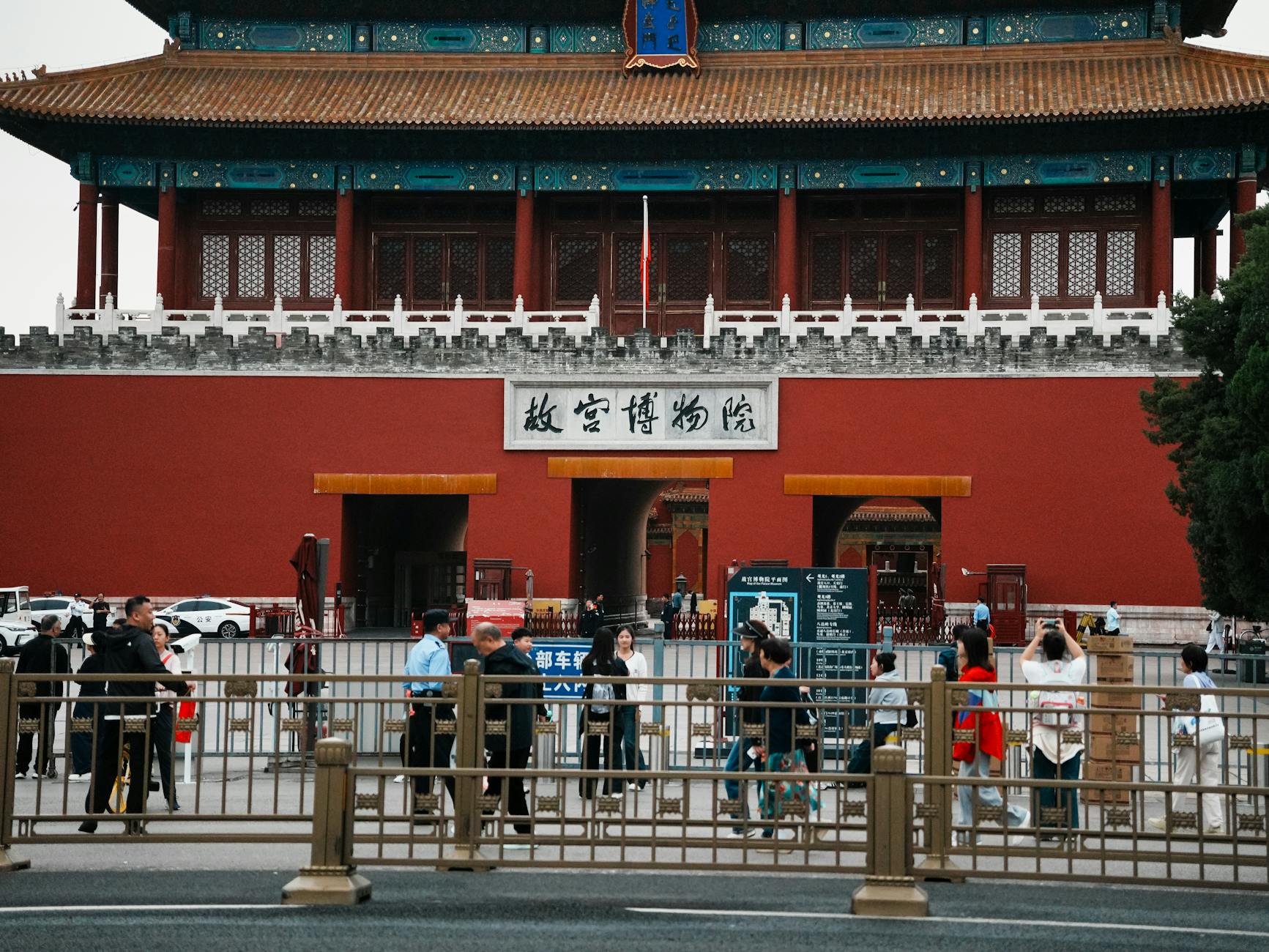
Chinese dissident artist Gao Zhen faces indefinite imprisonment on retroactively applied charges, while his American-citizen son remains trapped in China without access to school or his father. The case exposes how Beijing weaponizes national security laws to suppress artistic expression and employs collective family punishment as a tool of political control.
The detention of Chinese artist Gao Zhen since August 2024 on charges of “slandering heroes and martyrs” represents a critical case study in how authoritarian governments weaponize vaguely-defined national security legislation to suppress independent cultural expression. Gao, one half of the internationally recognized Gao Brothers artistic duo, now faces an indefinite prison sentence for satirical sculptures created nearly a decade before the law used against him was enacted. His case illuminates a broader pattern within China’s legal system: the retroactive criminalization of artistic and intellectual dissent through the 2018 Law on the Protection of Heroes and Martyrs.
What distinguishes Gao’s prosecution from routine cases of political imprisonment is its expansion beyond the accused individual. Gao’s wife, Zhao Yaliang, and their 7-year-old son, Gao Jia—both lawful residents of the United States with American citizenship—have been effectively detained in China without charge since Gao’s arrest. This represents a deliberate application of collective punishment against family members who committed no offense, a practice that violates international humanitarian norms and China’s own ratified obligations under the UN Convention on the Rights of the Child.
The Law on the Protection of Heroes and Martyrs, enacted in 2018, provides Chinese authorities with sweeping powers to criminalize any expression deemed to “slander” historical figures deemed heroic by the state. In Gao Zhen’s case, the specific artworks cited—including “Miss Mao,” “The Execution of Christ,” and “Mao’s Guilt”—were created in 2015 and 2016, predating the law’s passage by two to three years. Chinese authorities have used this temporal gap to retroactively apply criminal sanctions, a practice the UN Human Rights Office explicitly flagged as violating “the principle of legality.”
This retroactive application is not incidental to Gao’s case; it is emblematic of how Beijing has systematized the use of the Heroes and Martyrs Law since 2018. Writers, scholars, online commentators, and artists whose historical interpretations diverge from official state narratives have become targets of prosecution. The law effectively grants the Chinese government monopolistic control over historical memory, treating any critical examination of figures like Mao Zedong as a criminal act rather than legitimate intellectual discourse.
Gao’s sculptures were specifically designed to interrogate what scholars call the “cult of personality” surrounding Mao—the transformation of historical figures into sacred, unquestionable icons immune from moral scrutiny. By creating satirical works that deconstruct this mythology, Gao engaged in precisely the kind of cultural critique that democratic societies protect as fundamental free expression. In China’s legal framework, this same critique constitutes a criminal offense.
The detention of Gao Jia and his mother in China without criminal charges represents a deliberate strategy of collective punishment that extends state coercion beyond the individual dissident to his entire family unit. Since Gao Zhen’s arrest on August 26, 2024, Chinese authorities have barred his wife and son from departing China, effectively converting the country into a detention facility for family members. This strategy serves multiple purposes: it maximizes psychological pressure on the detained individual, creates leverage for extracting confessions or cooperation, and demonstrates to other potential dissidents the costs of political nonconformity.
Gao’s wife has reported constant surveillance, denial of regular communication with her husband since May 2025, and the psychological trauma of raising a young child under conditions of state control. Gao Jia, who holds American citizenship and was born in the United States, has been prevented from attending school in New York and separated from his father for nearly two years. According to family accounts, the child repeatedly asks when he can return home—questions that expose the human cost of using family separation as a political tool.
This practice violates multiple international instruments. The UN Convention on the Rights of the Child, which China ratified, explicitly protects children’s rights to family unity, education, and freedom of movement. Article 9 of the convention prohibits separating children from parents “unless such separation is necessary for the best interests of the child.” No credible argument can be made that preventing an American child from returning to his home and school serves his best interests; the separation serves only the interests of state punishment.
Human rights advocates monitoring Gao Zhen’s case have documented severe physical deterioration during his detention. According to reports from his legal representatives, Gao now suffers from severe knee problems requiring wheelchair use, complete vision loss in both eyes, and respiratory illness. Chinese authorities have reportedly blocked essential medications and denied him regular medical care—a pattern consistent with documented cases of political prisoners in China’s detention system.
Gao’s health crisis is particularly significant given his age: he turned 70 years old while imprisoned in May 2026, marking a milestone birthday spent in custody awaiting trial. The combination of his age, documented health conditions, and reported denial of medical treatment raises serious concerns about whether he will survive his detention in adequate physical condition. The single-day trial conducted in March 2026 has yielded no verdict, leaving Gao in an indefinite state of legal limbo.
This pattern of medical neglect in political cases is not anomalous within China’s detention system; it reflects a deliberate strategy of using incarceration conditions as an additional punishment mechanism. The psychological impact on Gao’s family—particularly his young son—of knowing his father is imprisoned, aging, and denied adequate medical care compounds the trauma of forced separation.
The Gao Zhen case presents a challenge to the international legal and diplomatic frameworks that have governed state behavior since the post-World War II era. When a government detains an American citizen’s family members without charge to pressure a political prisoner, it crosses a threshold that historically has triggered diplomatic intervention and sanctions. The fact that Gao Jia is an American citizen—not a Chinese national—makes this case particularly significant for US foreign policy.
The case also demonstrates how China’s legal system has evolved to criminalize categories of expression—artistic, historical, intellectual—that democratic governments explicitly protect. The Heroes and Martyrs Law functions as a mechanism for enforcing historical orthodoxy, transforming what would be protected speech in liberal democracies into criminal conduct. This represents a fundamental incompatibility between China’s legal norms and international human rights standards.
For the broader Indo-Pacific region, the Gao case illustrates how authoritarian governance models extend state control into intimate family relations and use collective punishment as a normalized tool of political control. This has implications for how democratic states in the region—Australia, Japan, South Korea, and others—assess the risks of Chinese legal jurisdiction and the vulnerability of their citizens and residents to retroactive criminalization and family-based coercion.
The case of Gao Jia—a 7-year-old American boy separated from his home, school, and father by Chinese state action—transcends the categories of trade disputes, military competition, and technological rivalry that typically dominate US-China policy discussions. It represents a direct violation of humanitarian norms and international law by a state actor against a US citizen.
The Chinese government possesses the immediate capacity to resolve this situation: it could allow Gao Jia and his mother to depart China freely, reuniting the family and allowing the child to resume his education in New York. Such action would not weaken China’s position; no great power should fear the departure of a child to school. The continued detention of Gao Jia without charge serves only to demonstrate the reach of state coercion into family relations and to normalize collective punishment as a tool of political control.
For the United States and allied democracies, the case demands sustained diplomatic pressure and public advocacy. The normalization of family separation as a punishment mechanism for political dissent represents a threshold violation of international humanitarian norms. American policymakers should make clear that the release of Gao Jia and his mother is a non-negotiable condition for normalized relations with Beijing, regardless of progress on other bilateral issues. Democratic societies are built on the principle of individual responsibility and the protection of family unity; accepting the collective punishment of a child violates foundational commitments to human dignity and the rule of law.




