Physical Address
304 North Cardinal St.
Dorchester Center, MA 02124
Physical Address
304 North Cardinal St.
Dorchester Center, MA 02124

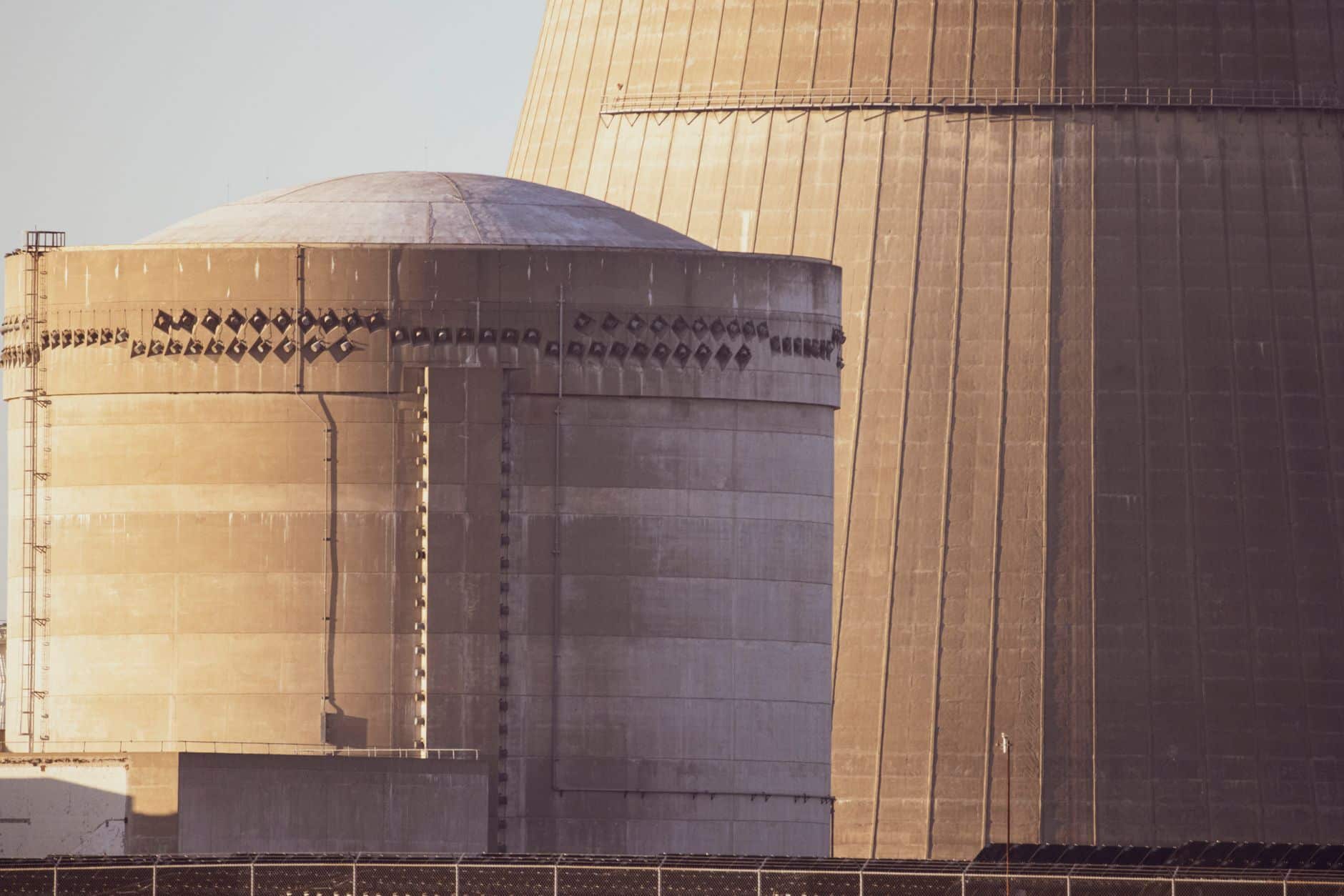
China and a US-led coalition of Japan and South Korea are competing intensely to supply nuclear reactors to Southeast Asia, with profound geopolitical implications. The region's surging electricity demand and binding 2035 operational targets for first reactors have created a decisive window for great power influence over Southeast Asian energy infrastructure and long-term alignment.
Southeast Asia stands at a critical juncture in its energy infrastructure development, with nuclear power emerging as a central battleground in great power competition. As China accelerates its civil nuclear ambitions through its 15th Five-Year Plan and the United States mobilises its allies Japan and South Korea to deploy small modular reactors (SMRs) across the region, Southeast Asian nations face a consequential choice about which technological pathway and political alignment will shape their energy security for the next century.
The stakes extend far beyond commercial competition. A nuclear reactor imported today commits a purchasing nation to 100 years of political, logistical, educational, and legal alignment with the supplying power. This reality transforms reactor procurement from a technical procurement decision into a fundamental geopolitical commitment, making Southeast Asia’s nuclear choices a proxy for broader Indo-Pacific alignment patterns.
Southeast Asia faces an acute energy security crisis that creates urgency around nuclear adoption. The region’s dependence on imported oil is precarious: approximately 60 percent of Southeast Asia’s crude oil passes through the Strait of Hormuz, a chokepoint vulnerable to disruption. This vulnerability became apparent during recent global energy crises, forcing several Southeast Asian governments to implement demand-suppression measures—temporary fixes that cannot address structural energy deficits.
Electricity demand in Southeast Asia is projected to increase by more than 100 terawatt-hours (TWh) by 2030, driven by three converging trends: explosive growth in data centre construction, accelerating electric vehicle adoption, and expanding industrial capacity. This demand surge cannot be met through renewable energy alone within the required timeframe, creating a genuine rationale for nuclear expansion rather than a purely geopolitical preference.
Three Southeast Asian nations have already set binding national targets to operate their first nuclear reactors before 2035: Indonesia, the Philippines, and Vietnam. Malaysia, Myanmar, Singapore, and Thailand are actively evaluating nuclear energy as a core component of their energy mix. Notably, all these countries have focused their interest specifically on small modular reactors rather than large conventional plants, a preference shaped by geographical constraints, grid capacity limitations, and the desire to build nuclear capacity incrementally.
Three state-led nuclear powers dominate global reactor exports: Russia, China, and the United States. Each brings distinct advantages and constraints to Southeast Asian markets.
Russia’s Position Under Strain: Rosatom, Russia’s state-owned nuclear corporation, has historically led in reactor export numbers. Its integrated business model—covering the entire fuel cycle and operating reactors on behalf of client nations—proved attractive to countries lacking domestic nuclear infrastructure. However, international sanctions following Russia’s 2022 invasion of Ukraine have severely compromised Rosatom’s financing capabilities and logistical networks, resulting in significant construction delays across multiple projects. Russia’s position in Southeast Asia has weakened correspondingly.
China’s Structural Advantages: China’s two state-owned nuclear champions—China National Nuclear Corporation (CNNC) and China General Nuclear Power Group (CGN)—have demonstrated consistent ability to complete reactor construction on schedule and within budget, a capability that Western competitors have failed to replicate. This construction competence represents China’s primary strategic advantage in Southeast Asia, where countries face firm 2035 deadlines for first reactor operation.
China’s Linglong One small modular reactor became the world’s first IAEA-approved land-based SMR design, positioning China as the technological leader in the specific reactor category Southeast Asian nations prefer. The Linglong One’s approval by the International Atomic Energy Agency lent credibility to Chinese nuclear technology in the eyes of safety-conscious Southeast Asian regulators.
However, China faces a critical credibility problem: the commercial operation timeline for its first Linglong One unit has slipped repeatedly, and the opacity of Chinese information disclosure means potential client nations cannot verify whether the first unit will operate successfully. This uncertainty undermines China’s otherwise compelling cost and schedule advantages. Additionally, despite ambitious plans to construct 30 reactors across Belt and Road Initiative countries by 2030, China has to date built reactors only in Pakistan—a modest track record that falls short of its stated ambitions.
The US Approach: Technology and Financing Without Construction Capacity: The United States pursues nuclear energy exports through private sector companies supported by government programs rather than state-owned enterprises. This approach reflects the US private nuclear industry’s dominance but creates structural disadvantages in competing with state-backed Chinese and Russian competitors.
The US government has deployed multiple support mechanisms: the Foundational Infrastructure for Responsible Use of Small Modular Reactor Technology (FIRST) programme builds regulatory and safety capacity in partner nations; the Export-Import Bank’s SMR Financing Toolkit and the International Development Finance Corporation provide concessional financing to offset high upfront capital costs. These programmes address genuine barriers to nuclear adoption in developing economies.
Yet the United States confronts a fundamental constraint: American and European nuclear industries have largely abandoned domestic reactor construction, resulting in lost expertise, extended licensing timelines, and cost overruns that have made new-build reactors rare in the West over the past decade. This construction bottleneck directly undermines US competitiveness in Southeast Asia, where countries face binding timeline commitments.
Recognising the construction capacity gap, the United States has mobilised Japan and South Korea as force-multipliers in its nuclear competition strategy. In June 2024, the three nations announced a Memorandum of Cooperation at the NATO Summit specifically targeting SMR deployment across the Indo-Pacific, beginning with Southeast Asia.
South Korea’s Korea Hydro & Nuclear Power (KHNP) has emerged as a credible alternative to Chinese competitors. KHNP successfully completed four large reactors in the United Arab Emirates on schedule and within budget—a achievement that won subsequent contracts with Egypt and Czechia. Critically, KHNP has signed SMR cooperation memoranda of understanding with Singapore, the Philippines’ Meralco utility, and Thailand, directly competing for the same Southeast Asian market segments China targets.
Japan contributes essential supply-chain capabilities rather than reactor construction. Japan Steel Works supplies approximately 80 percent of the world’s heavy manufacturing components for nuclear reactors, making Japanese industrial capacity essential to any major reactor deployment globally. This supply-chain leverage provides Japan and its allies significant influence over reactor projects, regardless of which nation supplies the reactor design.
The United States has achieved notable regulatory progress in Southeast Asia despite lacking indigenous construction capacity. In 2025, US-based Thorcon International received a first-stage license from Indonesia’s nuclear regulator BAPETEN for its molten salt reactor design. This regulatory approval represents a significant milestone, as it demonstrates that US technology can meet Southeast Asian safety and nonproliferation standards.
The US government has systematically aligned its regulatory and commercial strategies. The US Trade and Development Agency funded the Philippines’ Manila Electric Company (Meralco) to conduct a comprehensive feasibility study on integrating US small modular reactors into Philippine electricity infrastructure. Simultaneously, the US Department of Commerce established an SMR export working group tasked with facilitating private sector communications with Southeast Asian governments, effectively creating a unified public-private export strategy.
Five Southeast Asian nations have already signed bilateral 123 Agreements with the United States—the foundational diplomatic instrument for US nuclear cooperation. Indonesia, the Philippines, Vietnam, Singapore, and Thailand have all completed these agreements, while Malaysia has secured a Memorandum of Understanding to begin formal negotiations. These agreements establish the legal and regulatory framework within which US nuclear technology can be deployed, representing significant diplomatic groundwork.
Southeast Asian policymakers must grapple with a reality that transcends conventional technology procurement: importing a nuclear reactor creates century-long dependencies across multiple domains.
According to the International Atomic Energy Agency, establishing a complete nuclear energy infrastructure—including regulatory frameworks, trained workforce, safety culture, and operational protocols—requires 10 to 15 years of intensive capacity building. A reactor’s operational lifespan extends 60 to 80 years. Decommissioning and waste management require an additional 10 to 25 years. Across this 100-year horizon, a Southeast Asian nation must maintain political, legal, educational, and logistical alignment with its reactor supplier.
This extended timeline means that nuclear partnerships embed themselves into institutional structures, professional networks, and regulatory systems in ways that transcend normal commercial relationships. Engineers trained on Chinese reactor designs will carry that expertise throughout their careers. Regulatory frameworks aligned with US standards will shape safety culture across generations. Fuel supply chains create ongoing dependencies that cannot be easily redirected.
Southeast Asian nations recognise these stakes implicitly, even if not always articulated explicitly. Their simultaneous pursuit of 123 Agreements with the United States and engagement with Chinese nuclear companies reflects an attempt to preserve optionality while hedging geopolitical risk. However, as nations move from preliminary discussions toward concrete reactor commitments, this hedging strategy becomes impossible to maintain.
The nuclear competition across Southeast Asia will intensify significantly over the next 24 to 36 months. Indonesia’s regulatory approval of Thorcon’s molten salt reactor and the 2035 operational targets set by Indonesia, the Philippines, and Vietnam create concrete decision points that will determine which technological pathways and geopolitical alignments prevail in the region.
China’s primary vulnerability remains the unproven commercial operation of its Linglong One design. If China successfully demonstrates that the Linglong One operates reliably and cost-effectively, Chinese nuclear companies will likely capture a substantial share of Southeast Asian reactor procurement, leveraging cost and schedule advantages. Conversely, if the Linglong One encounters further delays or operational problems, Southeast Asian nations will shift toward the US-Japan-South Korea coalition, accepting longer construction timelines in exchange for proven technology and reduced geopolitical risk.
The US strategy of leveraging South Korean construction capacity and Japanese supply-chain dominance represents a pragmatic response to American industrial constraints. This trilateral approach may prove more competitive than purely bilateral US-Southeast Asian arrangements, particularly if South Korea can replicate its UAE success in Southeast Asia.
What remains certain is that nuclear energy decisions will reshape Southeast Asia’s geopolitical orientation for the remainder of this century. These are not merely energy infrastructure choices—they are commitments to technological ecosystems, regulatory frameworks, and political partnerships that will define regional alignment patterns well beyond the current great power competition.