Physical Address
304 North Cardinal St.
Dorchester Center, MA 02124
Physical Address
304 North Cardinal St.
Dorchester Center, MA 02124

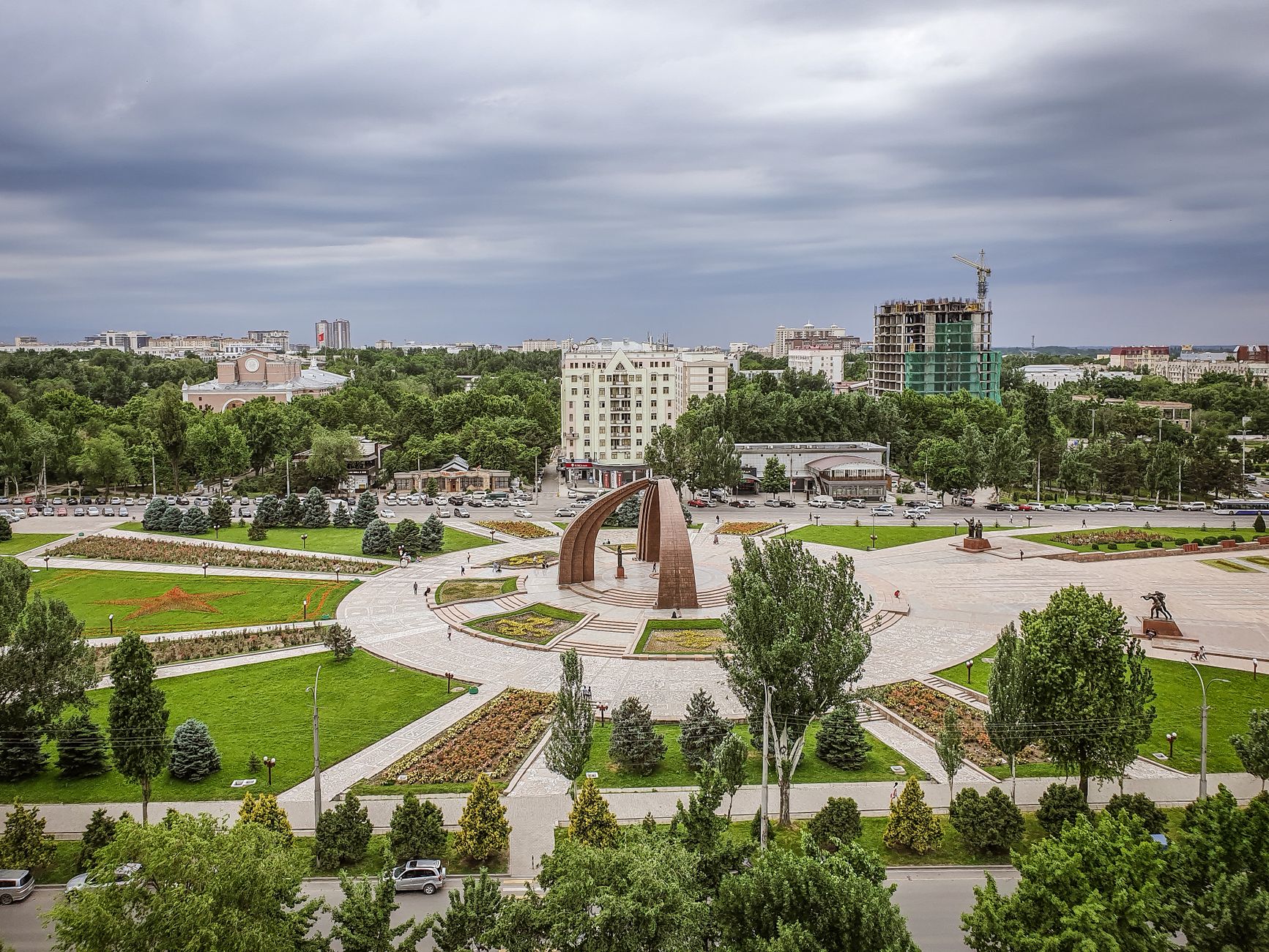
Kyrgyzstan's approach to language policy offers insights into how post-Soviet states can strengthen national languages while preserving multilingual advantages. Dr. Mahabat Sadyrbek's research demonstrates that practical institutional capacity-building, not ideological debate, determines linguistic futures in Central Asia.
The linguistic landscape of Kyrgyzstan presents a complex case study in how newly independent states manage the legacy of empire while building modern national institutions. Three decades after independence from the Soviet Union, Kyrgyzstan remains caught between two powerful linguistic realities: Russian continues to dominate higher education, science, and business sectors, while Kyrgyz has become an increasingly visible symbol of national sovereignty and cultural identity. This tension reflects not merely academic interest but fundamental questions about state capacity, soft power competition, and the role of language in shaping national futures across Central Asia.
Dr. Mahabat Sadyrbek, a political scientist, legal anthropologist, and linguist based in Kyrgyzstan, offers a framework for understanding this dynamic that moves beyond the zero-sum framing often applied to post-Soviet language politics. Her work—including the publication of the first comprehensive grammar references of Kyrgyz in German (2023) and English (2024)—demonstrates that the real challenge facing Kyrgyzstan is not choosing between languages but ensuring Kyrgyz develops the institutional and technological infrastructure necessary to function across all spheres of modern life.
Walking through Bishkek’s markets and streets reveals the linguistic reality that political debates often obscure. Conversations flow seamlessly between Kyrgyz and Russian, sometimes within single sentences. A discussion may begin in Kyrgyz, shift into Russian when addressing technical subjects or professional matters, then return to Kyrgyz moments later. This code-switching is not evidence of linguistic confusion or incomplete national consolidation; rather, it reflects rational language choice by speakers who have internalized the functional distribution of languages across different social domains.
This pattern emerged directly from Kyrgyzstan’s Soviet legacy. Seven decades of Soviet rule established Russian as the language of administration, higher education, and scientific advancement. Even after 1991, these institutional structures remained largely intact. Russian continues to provide access to vast intellectual resources: university curricula, scientific publications, professional networks, and an extensive Russian-language internet ecosystem. For a young Kyrgyzstani seeking a university degree in engineering or medicine, or an entrepreneur building international business connections, Russian remains the pragmatic choice—not because of political pressure but because the infrastructure exists in Russian.
Simultaneously, since independence, Kyrgyz has steadily expanded its institutional footprint. Government administration increasingly operates in Kyrgyz. Media production has grown substantially. Educational curricula have been revised to elevate Kyrgyz’s role. This represents not a rejection of Russian but a deliberate process of state-building in which the national language assumes functions previously monopolized by the colonial language.
External observers often frame Russian language promotion in Central Asia as an aggressive geopolitical strategy designed to maintain Moscow’s regional dominance. This framing contains truth but obscures more than it reveals. Russia is not unique in using language as an instrument of soft power; every state promotes its language through education, media, and cultural institutions. The distinction lies in the depth of Russia’s institutional presence and the historical legitimacy many Central Asians grant to Russian-language knowledge.
Russia’s advantage in Kyrgyzstan stems from accumulated infrastructure rather than active coercion. Russian universities attract Kyrgyzstani students through established reputation and scholarship programs. Russian-language scientific journals remain the default publication venues for many fields. Russian cultural institutions maintain active programming. These advantages persist because they deliver tangible benefits—educational credentials, professional networks, access to knowledge—that individuals rationally pursue.
Yet this soft power architecture faces structural challenges. The internet and digital technologies are creating new pathways for knowledge distribution outside Russian-language channels. English increasingly competes with Russian as a language of international commerce and technology. Young Kyrgyzstanis increasingly consume content in multiple languages simultaneously. The monopoly Russia once held over access to advanced knowledge and professional opportunity is fragmenting, though Russian remains formidable.
A critical shift is occurring among younger Kyrgyzstanis. They increasingly create and consume content in Kyrgyz across digital platforms—YouTube, Instagram, TikTok—in contexts that barely existed a generation ago. This represents a fundamental change in how language functions in society. Previous generations encountered Kyrgyz primarily in family settings and basic education; professional and intellectual life occurred in Russian. Today’s youth can pursue advanced discussions, build professional identities, and access educational content in Kyrgyz through digital channels.
This transformation matters because language vitality depends on functional utility across multiple life domains. A language confined to domestic and cultural spheres faces long-term decline regardless of official status. Conversely, a language that enables education, career advancement, and participation in contemporary discourse achieves self-sustaining vitality. The emergence of Kyrgyz-language digital content creation represents the beginning of this functional expansion, though significant gaps remain in scientific publishing, technical documentation, and professional networks.
Artificial intelligence and language technologies present both opportunities and risks. Languages well-represented in digital training data and with functional applications in AI systems gain new avenues for development. Languages absent from these domains risk technological marginalization. Kyrgyz currently faces a deficit in digital representation compared to Russian or English, creating a potential vulnerability that requires deliberate institutional investment.
Sadyrbek’s publication of comprehensive Kyrgyz grammar references in German (2023) and English (2024) addresses a fundamental requirement for language development that often escapes policy discussions: a language requires more than native speakers to flourish. It requires standardized references, pedagogical materials, and integration into international scholarly networks.
The absence of comprehensive Kyrgyz grammar texts in major international languages represented a significant institutional gap. Linguists, educators, and language technology developers working outside Kyrgyzstan had limited access to authoritative sources for understanding Kyrgyz linguistic structure. This gap had practical consequences: it complicated efforts to develop Kyrgyz-language software, created barriers for international scholarly collaboration, and limited the ability of diaspora communities to maintain linguistic competence.
These grammar texts serve multiple functions simultaneously. They provide pedagogical resources for non-native learners and language teachers. They establish standardized linguistic analysis that can support language technology development. They integrate Kyrgyz into international scholarly discourse on linguistic structure. They signal to the international community that Kyrgyz is a language worthy of serious study and investment. In this sense, they represent a form of institutional capacity-building as consequential as any government language policy.
Kyrgyzstan’s linguistic future will be determined not primarily by policy debates but by practical opportunities available to speakers. People naturally choose languages that enable education, career advancement, and full participation in contemporary society. The policy implication is clear: Kyrgyzstan’s interest lies in ensuring Kyrgyz achieves functional parity with Russian across education, research, public institutions, and digital domains—not through suppressing Russian but through systematic investment in Kyrgyz-language institutional capacity.
This requires sustained effort across multiple fronts. Universities must expand Kyrgyz-language instruction in technical and scientific fields. Publishing industries must develop capacity for academic and technical translation into Kyrgyz. Technology companies must invest in Kyrgyz-language software development and AI training data. Media institutions must continue expanding Kyrgyz-language content. International partnerships must support these efforts through funding and technical cooperation.
The false choice between Russian and Kyrgyz obscures the actual strategic challenge: ensuring Kyrgyz develops the institutional foundations necessary to serve all functions of modern statehood while preserving the educational and international advantages that Russian-language knowledge provides. This is not a problem to be solved through ideological commitment but through sustained institutional investment and pragmatic recognition of how language actually functions in contemporary society.
For broader Central Asian policy, Kyrgyzstan’s experience demonstrates that post-Soviet states can manage linguistic transition without destabilizing interethnic relations or sacrificing access to valuable knowledge resources. The key is rejecting zero-sum framing and instead building multilingual societies in which each language fulfills its distinct role. This approach offers lessons for other post-colonial and post-imperial contexts navigating similar linguistic inheritances.