Physical Address
304 North Cardinal St.
Dorchester Center, MA 02124
Physical Address
304 North Cardinal St.
Dorchester Center, MA 02124

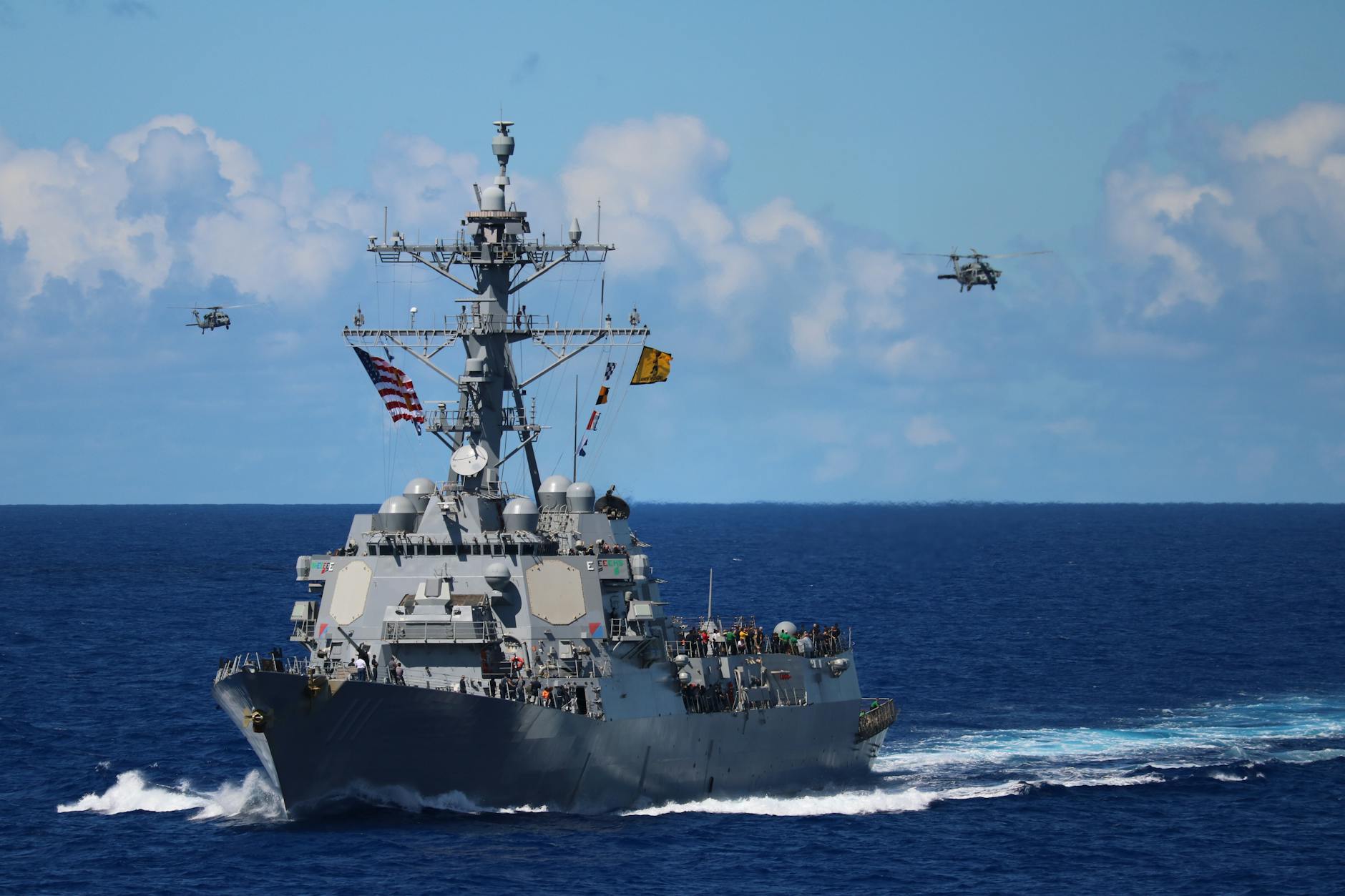
Japan's military modernization, arms export liberalization, and strategic repositioning represent a fundamental shift from post-war restraint to active regional power balancing. China interprets these moves as preparations for confrontation, creating a dangerous escalation spiral with significant implications for Indo-Pacific security and global supply chains.
The relationship between China and Japan has entered a qualitatively different phase. For decades, despite deep historical grievances and recurring territorial disputes, Beijing and Tokyo maintained robust economic ties that created mutual incentives for restraint. That equilibrium has fractured. The trigger was Prime Minister Takaichi Sanae’s November 2025 statement that a Chinese military attack on Taiwan could constitute a “survival-threatening situation” for Japan—language that carries specific legal weight under Japan’s constitutional framework and could authorize Self-Defense Forces deployment. When Beijing demanded retraction and Tokyo refused, the two powers crossed a threshold. What distinguishes this escalation from previous friction is its structural foundation: Japan is fundamentally repositioning itself as an active military actor in the Western Pacific, not merely a passive alliance partner. China views this transformation as incompatible with the 1972 joint statement that normalized their bilateral relationship.
Japan’s military modernization has accelerated markedly since 2022. In March 2026, Tokyo deployed its first Type-12 land-to-ship missiles with a 1,000-kilometer range, providing standoff strike capability that extends to mainland Chinese territory. More provocative still are plans to position these systems on Yonaguni Island, Japan’s westernmost territory located approximately 110 kilometers from Taiwan. This deployment transforms Japan from a defensive maritime power into a potential anti-access/area-denial (A2/AD) actor capable of challenging Chinese military operations in the Taiwan Strait and surrounding waters.
The April 17, 2026 transit of the Japanese destroyer JS Ikazuchi through the Taiwan Strait crystallizes the strategic shift. While Japan frames such transits as routine freedom-of-navigation operations, the timing—coinciding with the anniversary of the 1895 Treaty of Shimonoseki that ceded Taiwan to Japan—signals far more than operational procedure to Beijing. China’s response was immediate and multifaceted: the Foreign Ministry, Defense Ministry, and Eastern Theatre Command issued coordinated condemnations, followed by combat-readiness patrols in the East China Sea and warship deployments near Okinawa. Beijing interprets these actions cumulatively, not in isolation. From China’s perspective, Japan is no longer a restrained post-war power but an increasingly assertive participant in First Island Chain security architecture.
Japan’s defense spending trajectory reinforces this assessment. Having already reached its 2 percent GDP target announced in 2022, Tokyo established a 15-member expert panel in April 2026 to reassess security and defense policies, including budget priorities. Further increases are under consideration. This spending growth, coupled with capability expansion, represents the most substantial Japanese military buildup since the 1980s.
Beyond hardware, Japan has signaled strategic intent through institutional and diplomatic changes. In April 2026, Tokyo announced its most significant arms export reform in decades, removing restrictions that had confined defense exports to five non-combat categories: rescue, transport, warning, surveillance, and minesweeping. The revised framework permits lethal arms exports—warships, missiles, and advanced weapons systems—subject to screening. This represents a fundamental departure from Japan’s post-1967 “Three Principles on Arms Exports,” which reflected constitutional pacifism and Cold War alliance discipline.
The 2026 Diplomatic Bluebook downgraded China’s bilateral status from “one of the most important bilateral relations” to merely an “important neighboring country.” Language matters in diplomatic documents; this reformulation signals a recalibration of Tokyo’s strategic priorities away from economic engagement toward security partnerships with like-minded democracies. Combined with arms export liberalization, the message is unambiguous: Japan is repositioning itself as a security actor, not simply an economic partner.
Perhaps most destabilizing is the emerging ambiguity surrounding Japan’s nuclear posture. Prime Minister Takaichi has not announced decisions to acquire nuclear weapons or host U.S. nuclear systems, and Japan formally maintains its Three Non-Nuclear Principles: non-possession, non-production, and non-introduction of nuclear weapons. However, Takaichi’s earlier hedging about whether these principles would remain “unchanged” in future security documents has opened a politically sensitive debate, particularly regarding the third principle—non-introduction of foreign nuclear weapons.
Japan’s interest in nuclear-powered submarines, provided by the United States, further heightens Chinese concerns. While nuclear propulsion differs from nuclear armament, it provides substantially greater operational endurance, undersea reach, and strategic relevance in the Western Pacific. On April 30, 2026, Beijing issued a working paper explicitly warning about Japan’s “nuclear ambitions” and raised alarms at the UN NPT Review Conference in New York, vowing to prevent Tokyo from acquiring or hosting nuclear weapons. China is attempting to internationalize the issue within the non-proliferation community, despite Japan’s continued status as a non-nuclear-weapon state under NPT safeguards.
Individual incidents gain significance through cumulative interpretation. In May 2026, Takaichi sent ritual offerings to Yasukuni Shrine, while other Japanese officials visited the shrine. Yasukuni has long symbolized historical grievance for China and South Korea because it honors Japan’s war dead, including 14 convicted Class-A war criminals from World War II. However, the context has changed. Under a security-focused prime minister already associated with harder positions on both history and military policy, a shrine offering is no longer read as merely a domestic political signal. Beijing now interprets it as evidence of “neo-militarism” and insufficient historical reckoning—a narrative reinforced by the broader security pivot.
The March 2026 breach of the Chinese Embassy in Tokyo by a Japanese Self-Defense Forces officer carrying a knife added another layer of mistrust. Although Japan characterized the incident as regrettable and increased security measures, Beijing demanded severe punishment and argued that Tokyo’s response was inadequate. In an environment of heightened strategic competition, such incidents become focal points for broader suspicion rather than isolated embarrassments.
Neither China nor Japan desires military conflict. The danger lies in mutual worst-case assumptions. Beijing increasingly believes Tokyo is preparing for confrontation over Taiwan. Tokyo increasingly believes Beijing is preparing for regional hegemony. When both powers interpret each other’s defensive measures as offensive preparation, crisis escalation becomes probable. The Taiwan Strait, already the world’s most militarized waterway, becomes the likely flashpoint.
For the United States, Japan’s harder security posture aligns with Washington’s long-standing preference for a more capable military ally. However, uncontrolled escalation between Japan and China would disrupt supply chains, shipping routes, technology flows, and regional confidence—consequences that ultimately disadvantage Washington’s broader Indo-Pacific strategy.
For India, the implications are mixed. A stronger Japan distributes China’s strategic attention across multiple theaters and opens possibilities for defense-industrial and economic-security cooperation. However, India does not benefit from uncontrolled escalation. A crisis between Japan and China would disrupt the maritime trade routes through which 80 percent of India’s oil imports transit, destabilize semiconductor and rare earth supply chains, and undermine regional confidence mechanisms essential for Indian security interests.
India’s optimal approach is disciplined support for balance rather than alignment with either power. This means deepening cooperation with Japan on maritime domain awareness, undersea surveillance, critical minerals supply chains, and coast guard capacity—all non-provocative measures that enhance regional stability. Simultaneously, India should remain cautious about encouraging revival of historical nationalism or nuclear ambiguity that could trigger Chinese countermeasures.
The China-Japan rivalry has entered a structurally different phase. This is not a return to Cold War-style bipolarity but rather the emergence of a regional security dilemma where both powers’ defensive measures appear threatening to the other. Japan’s military modernization, arms export liberalization, and strategic repositioning are rational responses to perceived Chinese assertiveness. However, they trigger Chinese countermeasures that reinforce Japanese threat perceptions. This spiral is self-reinforcing and difficult to reverse.
The risk lies not in deliberate aggression but in crisis dynamics. A military accident, miscalculation over Taiwan, or incident in the Taiwan Strait could rapidly escalate into confrontation. The absence of robust crisis communication mechanisms between Beijing and Tokyo—unlike the U.S.-China military-to-military relationships—increases this risk. Without deliberate diplomatic effort to establish red lines, communication protocols, and de-escalation mechanisms, the East China Sea and Taiwan Strait could become flashpoints for unintended conflict. Regional powers, particularly India and ASEAN nations, have strategic interests in preventing this outcome and should coordinate efforts to encourage Beijing and Tokyo to establish confidence-building measures before the next crisis tests their restraint.




