Physical Address
304 North Cardinal St.
Dorchester Center, MA 02124
Physical Address
304 North Cardinal St.
Dorchester Center, MA 02124

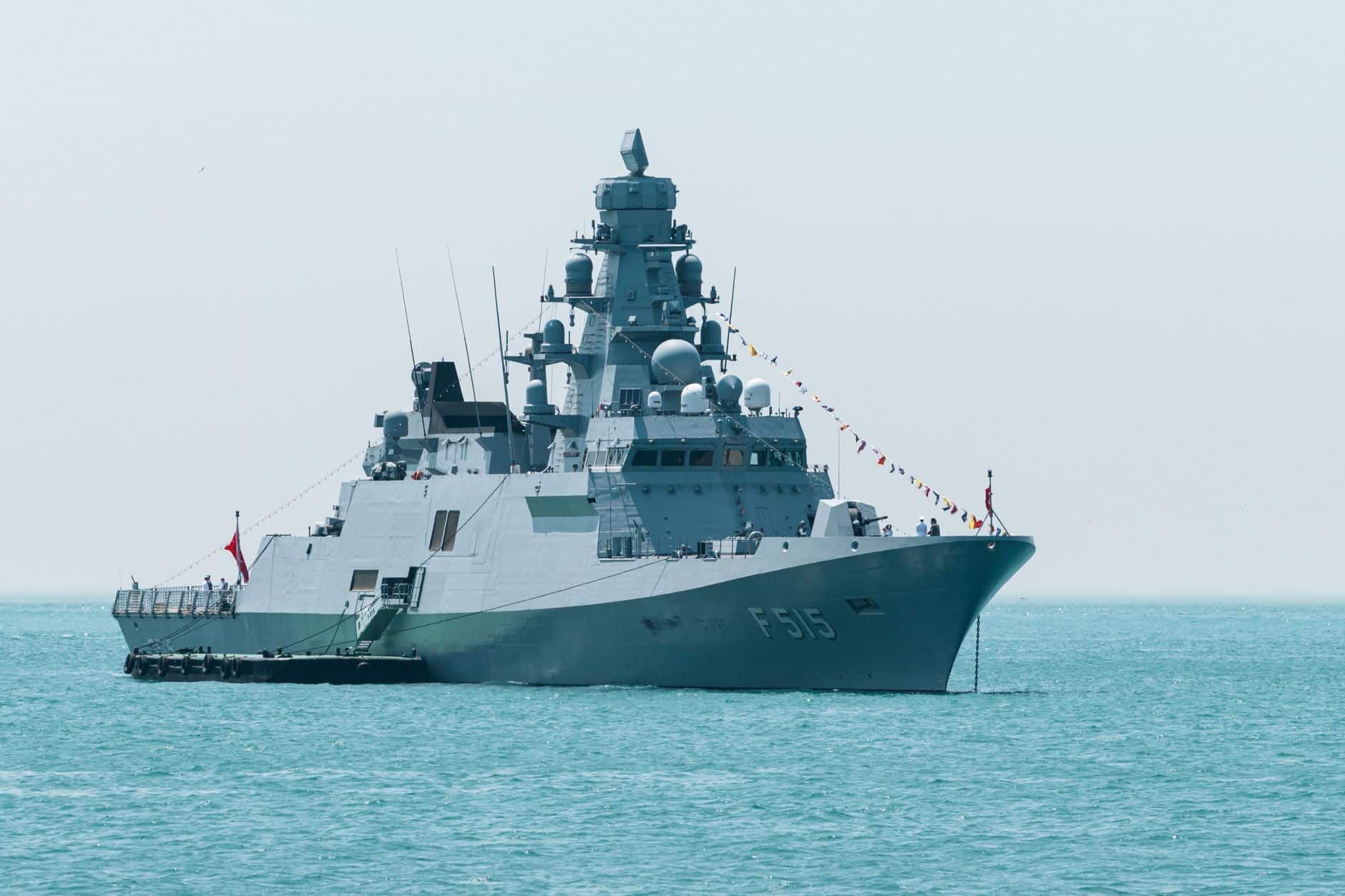
Japan and South Korea have resumed their bilateral search and rescue exercise after nine years, signalling pragmatic military cooperation despite unresolved historical tensions. The SAREX revival reflects shifting regional security imperatives as both nations face intensifying threats from North Korea and China.
After nine years of suspension, Japan and South Korea have resumed their bilateral search and rescue exercise (SAREX), marking a tangible shift in security cooperation between two of the Indo-Pacific’s most strategically important democracies. This revival is not merely a technical restoration of maritime protocols—it represents a recalibration of bilateral defence relationships amid intensifying regional security pressures from China’s military modernisation and North Korea’s accelerating weapons programmes.
The resumption of SAREX carries particular weight given the geopolitical context. Both Tokyo and Seoul face overlapping security threats: China’s assertive posture in the East China Sea and Yellow Sea, North Korea’s ballistic missile tests, and the broader challenge of maintaining freedom of navigation in contested waters. The nine-year hiatus reflected deep bilateral tensions, primarily rooted in historical grievances and territorial disputes. That both nations have chosen to move beyond this impasse suggests a pragmatic recognition that regional security imperatives now outweigh the friction points that previously dominated their defence relationship.
Japan-South Korea defence cooperation has historically been constrained by unresolved historical issues, particularly disputes over territorial claims and competing narratives about colonial-era history. The suspension of SAREX in the mid-2010s reflected this deterioration, coinciding with tensions over the Liancourt Rocks (known as Dokdo in Korean and Takeshima in Japanese) and broader disagreements over historical textbooks and diplomatic protocol.
The decision to restart SAREX signals that both governments have prioritised operational security cooperation over these long-standing grievances—at least in the maritime domain. This compartmentalisation is strategically rational: search and rescue operations are inherently non-threatening and serve humanitarian objectives, making them ideal confidence-building measures. By restoring SAREX, Tokyo and Seoul have created an institutional mechanism for regular military-to-military contact without requiring resolution of the underlying historical disputes.
However, the persistence of these tensions cannot be overlooked. Historical animosities remain embedded in domestic politics on both sides, and political leaders in Seoul and Tokyo continue to face domestic constituencies sensitive to any perceived concessions on sovereignty or historical memory. The SAREX revival therefore operates within carefully defined boundaries—it addresses immediate operational needs without implying broader reconciliation on contentious issues.
The timing of SAREX’s resumption reflects concrete security developments in the Indo-Pacific. North Korea conducted multiple ballistic missile tests throughout 2023 and 2024, including hypersonic variants and solid-fuel systems that complicate air defence calculations for both Japan and South Korea. Simultaneously, China has expanded its military presence in the East China Sea, conducting regular incursions into Japanese airspace and waters that Seoul also claims or monitors.
Search and rescue capabilities have become operationally critical in this environment. Maritime incidents involving military aircraft or vessels have increased in frequency as operational tempo rises. A coordinated SAREX framework reduces response times and improves survivability outcomes for downed pilots or crews in distress. From a pure capability perspective, Japan’s advanced maritime patrol aircraft and South Korea’s modern naval vessels represent complementary assets that become more effective when integrated through joint procedures and regular training.
The U.S. factor cannot be excluded from this analysis. The United States has consistently encouraged Japan-South Korea defence cooperation as a stabilising force in Northeast Asia. Washington’s strategic interest in a cohesive alliance architecture—encompassing Japan, South Korea, and Australia—creates diplomatic incentives for Seoul and Tokyo to demonstrate concrete cooperation. The SAREX revival aligns with this broader U.S. objective of preventing China from exploiting divisions between its regional allies.
The restored SAREX framework focuses specifically on search and rescue operations in contested maritime zones. The exercises typically involve naval vessels, maritime patrol aircraft, and helicopter operations conducted in international waters. Participants practice coordination protocols, communication procedures, and interoperability standards essential for effective emergency response.
However, the scope remains deliberately circumscribed. SAREX does not extend to joint combat operations, intelligence sharing on sensitive platforms, or integrated command structures. These limitations reflect both the political sensitivities on both sides and the reality that deeper military integration would require resolving outstanding disputes that remain unresolved. The exercise functions as a compartmentalised confidence-building measure rather than a comprehensive defence alliance.
The revival also does not address the broader question of trilateral cooperation involving Australia, Japan, and South Korea—a framework that has gained traction in recent years through the Quad-adjacent mechanisms and bilateral defence agreements. SAREX remains bilateral, though its success could create momentum for more ambitious multilateral maritime security arrangements in the future.
The SAREX revival represents a calibrated step forward in Japan-South Korea security cooperation, but it should not be misinterpreted as a breakthrough in bilateral relations. The exercise addresses immediate operational needs without resolving the historical and territorial disputes that have constrained the relationship for decades. This compartmentalisation is both its strength and its limitation: it allows practical cooperation to proceed despite political tensions, but it also prevents the kind of deep institutional integration that would characterise a genuine strategic partnership.
For Indo-Pacific security architecture, the SAREX revival carries modest but meaningful implications. It demonstrates that regional powers can cooperate on functional security matters even amid unresolved disputes—a model potentially applicable to other contentious relationships in the region. It also reinforces the U.S.-led alliance system by showing that Washington’s key regional partners can work together effectively, reducing opportunities for Chinese strategic advantage through allied division.
The sustainability of this cooperation depends on maintaining the distinction between operational maritime security and broader political disputes. If historical tensions escalate—whether through new territorial incidents, political rhetoric, or diplomatic provocations—SAREX could face renewed suspension. Conversely, if the exercise generates positive experiences and demonstrates mutual benefit, it could gradually expand into adjacent domains such as anti-piracy operations or environmental monitoring.
The nine-year hiatus demonstrated that Japan-South Korea defence cooperation remains vulnerable to political disruption. The current revival should therefore be understood as a conditional arrangement, dependent on both governments’ continued assessment that security cooperation serves their national interests more effectively than pursuing bilateral grievances. In the volatile Indo-Pacific security environment, this pragmatic calculation may prove durable—but history suggests that neither nation should take the other’s cooperation for granted.