Physical Address
304 North Cardinal St.
Dorchester Center, MA 02124
Physical Address
304 North Cardinal St.
Dorchester Center, MA 02124

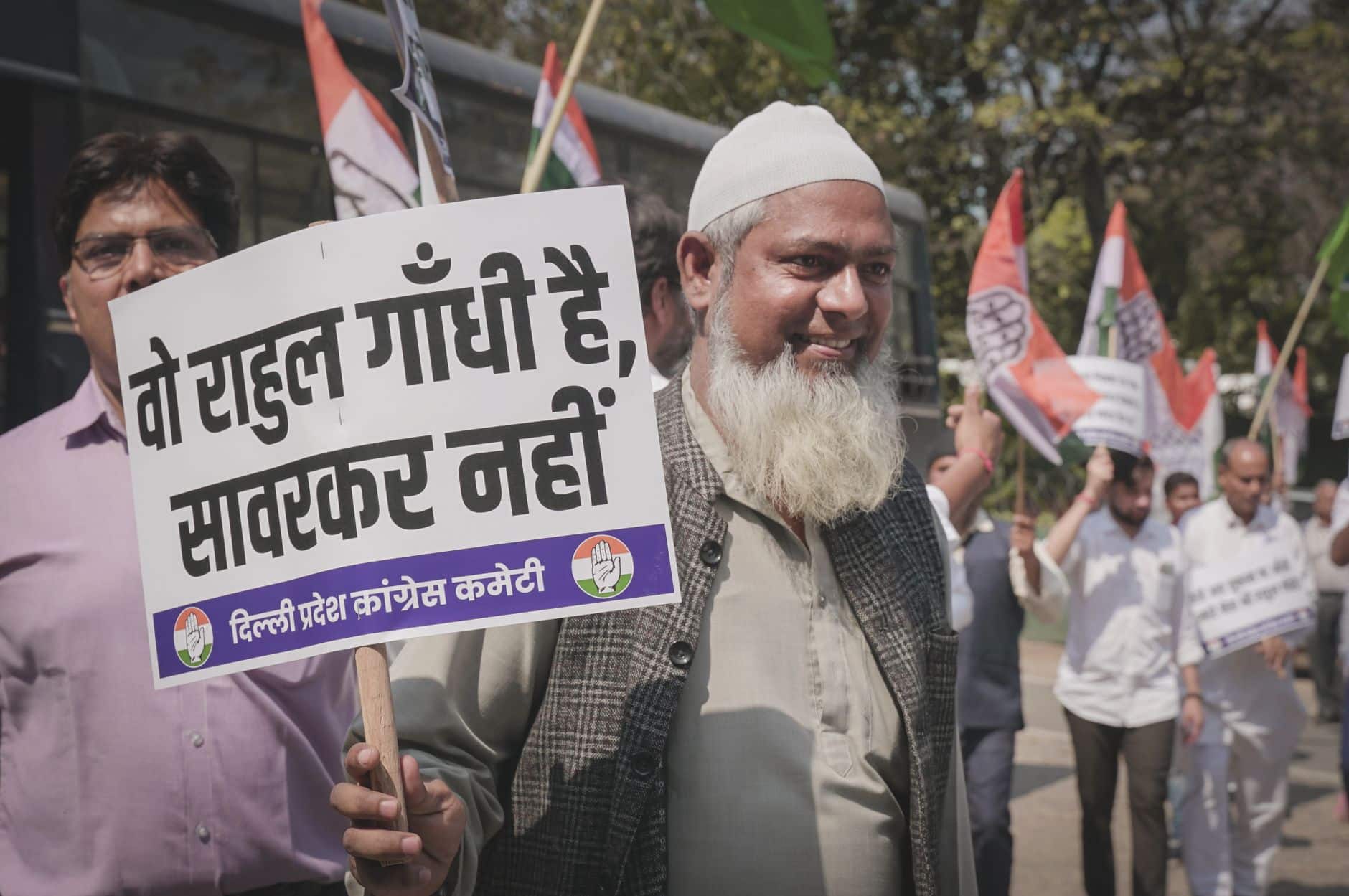
India's Gen Z political mobilisation, exemplified by the Cockroach Janta movement's June 6 Jantar Mantar protest, signals emerging challenges to the Modi government's political control and raises questions about India's democratic trajectory and regional stability.
India’s political landscape is experiencing a significant generational shift that extends beyond traditional party structures and institutional politics. On June 6, what began as an online satirical movement—the “Cockroach Janta Party”—transitioned from digital spaces into physical protest at Delhi’s Jantar Mantar, one of India’s most symbolically important sites for political dissent. This shift from virtual commentary to ground-level mobilisation signals a potential realignment in how India’s younger demographics engage with governance and political opposition.
The emergence of Gen Z-led political expression represents a challenge to conventional Indian political analysis, which has traditionally focused on institutional parties, caste-based coalitions, and established civil society organisations. The Modi government’s apparent concern with this decentralised, digitally-native form of political organisation reflects a broader recognition that traditional mechanisms of political control—media management, institutional co-optation, and electoral machinery—may be insufficient to address grassroots youth mobilisation that operates outside formal party structures.
The “Cockroach Janta Party” originated as an ironic online commentary, employing humour and satire as political expression—a communication strategy characteristic of Gen Z activism across the Indo-Pacific region and globally. The June 6 Jantar Mantar gathering marked a critical inflection point: the movement crossed the threshold from social media commentary into tangible political assembly, demonstrating that youth frustration with governance extends beyond memes and viral posts into demands for public accountability.
This pattern mirrors broader youth political movements observed in other major Asian democracies, including the 2019-2020 Hong Kong protests and student-led mobilisations in Thailand. What distinguishes India’s case is the movement’s apparent lack of hierarchical leadership or formal organisational structure—characteristics that make it simultaneously harder to suppress through conventional means and more difficult for traditional opposition parties to channel into electoral advantage.
The choice of Jantar Mantar as the protest venue carries historical weight. The site has hosted major anti-corruption protests, including the 2011 Anna Hazare movement that galvanised anti-establishment sentiment. By selecting this location, the Cockroach Janta movement implicitly positions itself within a lineage of anti-government activism, while simultaneously distinguishing itself through its decentralised, digitally-coordinated nature.
India’s Gen Z population—approximately 400 million individuals aged 13-25—faces distinct economic and political challenges that differentiate their experience from previous generations. Youth unemployment in India reached approximately 23% in 2023, with graduate unemployment particularly acute in urban centres. Simultaneously, this cohort has come of age during the Modi government’s tenure (2014-present), experiencing centralised executive decision-making, significant restrictions on digital freedoms, and contested democratic norms.
The government’s handling of issues including education policy, employment generation, and digital surveillance has created friction with younger voters who possess greater information access and transnational political reference points than their predecessors. The Cockroach Janta movement’s satirical framing suggests a rejection of both government messaging and conventional opposition party politics—a form of political alienation that extends beyond typical left-right ideological positioning.
Critically, this youth mobilisation occurs against a backdrop of India’s contested democratic trajectory. International indices including the V-Dem Institute’s Liberal Democracy Index have documented declining scores for India’s democratic performance, citing concerns about press freedom, opposition party treatment, and electoral integrity. For Gen Z voters evaluating India’s political system, these institutional concerns intersect with immediate economic grievances, creating conditions for sustained political activism.
The Modi administration’s apparent wariness regarding the Cockroach Janta movement reflects recognition that traditional state mechanisms face limitations when confronting decentralised, digitally-coordinated protest. The government’s extensive capacity for media management, institutional control, and electoral engineering proves less effective against movements lacking formal leadership structures or clear institutional targets.
India’s regulatory environment for digital spaces—including provisions within the Information Technology Act and the 2021 Information Technology Rules—provides tools for content removal and account suspension. However, applying these mechanisms against satirical, decentralised movements risks amplifying grievances and generating accusations of authoritarian overreach that resonate particularly with younger demographics already sceptical of government legitimacy.
The government’s strategic challenge involves responding to youth mobilisation without triggering accusations of democratic suppression that could alienate moderate voters and international observers. This constraint distinguishes India’s situation from authoritarian contexts where state repression faces fewer political costs. India’s electoral system, competitive opposition parties, and international democratic standing create incentive structures that limit purely coercive responses to youth activism.
The Jantar Mantar gathering and broader Gen Z political mobilisation carry implications extending beyond domestic Indian politics into regional strategic calculations. India’s democratic legitimacy and political stability directly influence its role as a counterweight to Chinese power in the Indo-Pacific, its capacity to maintain regional partnerships, and its internal cohesion as a multi-ethnic, multi-religious federation.
Sustained youth political alienation could undermine the Modi government’s electoral coalition, particularly if opposition parties successfully channel Gen Z grievances into organisational structures. Conversely, if the government implements economic and governance reforms addressing youth concerns, it could consolidate electoral support among younger voters critical to India’s 2024-2029 electoral cycle.
For regional actors including Australia, Japan, and ASEAN members, India’s internal political dynamics carry strategic weight. A politically fractured India faces reduced capacity for sustained regional engagement, security cooperation, and infrastructure investment—outcomes that would benefit China’s strategic position in the Indo-Pacific. Conversely, an India that successfully addresses youth grievances while maintaining democratic institutions represents a more stable, capable regional partner.
The transition of the Cockroach Janta movement from digital satire to ground-level protest represents a significant data point in assessing India’s democratic health and generational political realignment. This mobilisation suggests that India’s youth possess political agency and grievance-expression capacity despite government control of traditional media institutions.
The movement’s trajectory will depend on multiple variables: the government’s regulatory response, whether opposition parties effectively mobilise youth constituencies, the persistence of economic grievances, and the movement’s capacity to sustain organisation and momentum beyond initial protests. Historical precedent suggests that youth-led movements in India face sustainability challenges absent clear organisational structures and institutional linkages.
For strategic analysts assessing Indo-Pacific stability, India’s internal political dynamics warrant sustained attention. The emergence of decentralised, digitally-native political mobilisation among India’s majority-young population indicates that governance legitimacy—not merely electoral outcomes—represents the critical variable determining India’s internal stability and regional strategic capacity. The Modi government’s response to Gen Z political expression will significantly influence both India’s democratic trajectory and its role as a stabilising force in the Indo-Pacific region.




