Physical Address
304 North Cardinal St.
Dorchester Center, MA 02124
Physical Address
304 North Cardinal St.
Dorchester Center, MA 02124

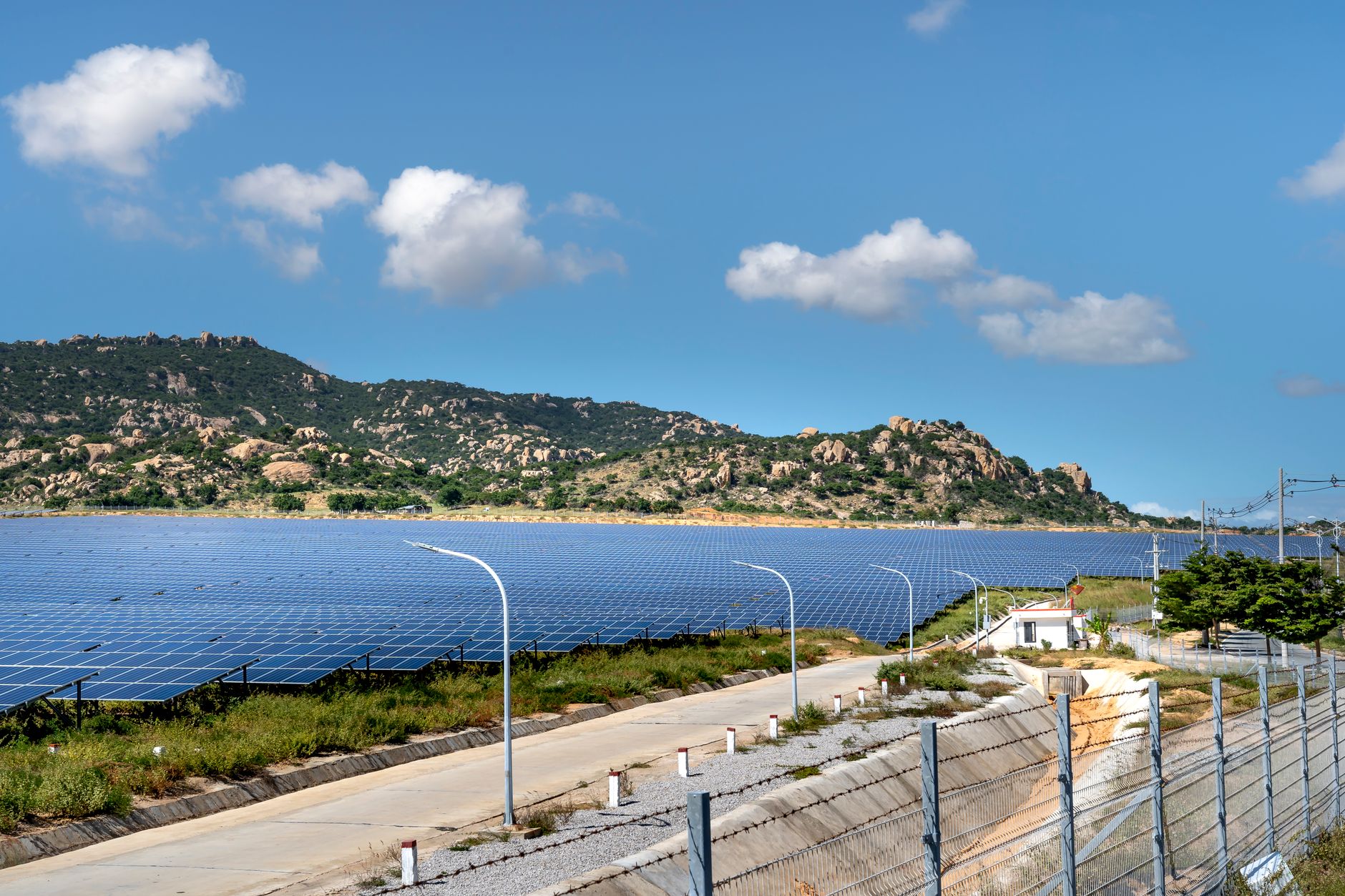
India faces an acute energy paradox: record heat stress drives electricity demand to historic peaks, yet surging solar capacity cannot be efficiently integrated into an inadequate grid. Coal remains the backbone of power generation despite renewable expansion, threatening India's 2035 climate goals.
India’s climate crisis has intensified dramatically. In April and May 2026, all 50 of the world’s hottest cities were located within Indian territory—a stark indicator of the systemic climate stress reshaping the country’s energy landscape. This extreme heat has persisted through subsequent months, driving unprecedented electricity consumption as households and businesses deploy cooling technologies at scale.
The numbers are striking: India’s electrical energy consumption reached 170.70 billion units (BU) in July 2026, a 10.93 percent year-on-year increase from 153.88 BU in July 2025. Peak power demand surged to 270.20 GW in July 2026, compared to 220.74 GW a year earlier, with an all-time record of 270.82 GW recorded in May 2026. This acceleration reflects not only climate impacts but also fundamental shifts in consumption patterns across India’s rapidly urbanizing middle class.
India’s response to extreme heat reveals both social adaptation and economic transformation. Major air conditioner manufacturers have reported exceptional sales growth. Voltas and LG Electronics each sold over 1 million units in the first three months of 2026 alone. Panasonic India reported a 50 percent year-on-year increase in residential AC sales during the summer season, marking its highest-ever sales volume. These figures carry particular significance given that 60 percent of India’s population depends on food subsidies and faces continuously rising power bills.
This AC proliferation demonstrates that India’s rising middle class—concentrated not only in major metros but increasingly in tier-two towns and smaller urban centers—now treats air conditioning as a health necessity rather than a luxury. However, this adaptation strategy creates a vicious cycle: increased cooling demand drives electricity consumption, which accelerates global warming while simultaneously straining India’s power generation and distribution infrastructure.
The International Energy Agency (IEA) projects that global electricity demand will grow 3.6 percent in 2026 and 3.8 percent in 2027, driven by industrial activity, cooling systems, electric vehicles, and data centers. India, as one of the world’s fastest-growing major electricity markets, is projected to grow at 7 percent—double the global average. By contrast, China’s electricity demand will grow at 5.5 percent, the United States at 1.8 percent, and Europe at 2.1 percent. This divergence underscores India’s unique vulnerability to climate-driven energy demand spikes.
India’s renewable energy strategy has achieved genuine capacity gains. According to India’s Ministry of New and Renewable Energy, solar energy generation surged 138 percent over four years, rising from 73.48 BU in 2021-22 to 174.76 BU in 2025-26. Solar capacity now supplies over 60 GW, representing approximately 22 percent of India’s daytime peak electricity demand. This expansion occurred under the government’s Solar Parks Scheme, which has systematically expanded India’s solar infrastructure across multiple states.
Yet this apparent success masks a critical structural problem: India has built solar generation capacity far faster than it has constructed the grid infrastructure necessary to transmit and store that power. Billions of units of electricity are routinely wasted because the grid cannot absorb massive surges during peak sunshine hours. Transmission lines lag significantly behind solar park construction, leaving tens of gigawatts of capacity either underutilized or operating on temporary, inefficient connections.
This challenge mirrors China’s experience between 2011 and 2016, when the world’s largest solar producer similarly constructed wind and solar capacity at rates that outpaced grid infrastructure development. India’s policymakers had the opportunity to learn from this precedent and calibrate their renewable expansion accordingly. Instead, India has replicated the same sequencing error, prioritizing generation capacity over transmission and storage systems.
India’s chronic air pollution problem creates an additional, often-overlooked constraint on solar efficiency. A recent study demonstrated that aerosols in India’s atmosphere reduced solar power generation by 9.6 percent in 2023—equivalent to approximately 15 terawatt-hours (TWh) of lost electricity. This far exceeds the global average loss of 5.8 percent from the same cause. Between 2017 and 2023, pollution-related electricity generation losses from existing solar installations averaged 74 TWh annually—roughly one-third of all electricity generated each year by new solar capacity additions.
This efficiency penalty represents one of the world’s highest and directly undermines India’s renewable energy strategy. The problem is not merely environmental degradation but a quantifiable drag on the economic returns of solar investment. Addressing this requires not just renewable energy expansion but simultaneous progress on air quality management—a dual challenge that current policy frameworks address only partially.
Coal generators further complicate grid management during peak solar production hours. These plants struggle to reduce output quickly without incurring costly and lengthy shutdowns, resulting in systematic solar curtailment and wasted generation capacity. This operational inflexibility perpetuates dependence on coal even as solar capacity expands.
India’s energy storage capacity remains grossly inadequate relative to its renewable generation and grid flexibility requirements. Current operational capacity includes approximately 6-7.5 GW of pumped storage hydro projects (PSPs) and 1-7.5 GWh of battery energy storage systems (BESS). By comparison, China’s operational non-conventional energy storage capacity reached approximately 153 GW by mid-2026—more than 20 times India’s capacity.
This storage deficit directly explains India’s continued reliance on coal-driven thermal power generation, which currently supplies 74 percent of total power generation. Coal provides the grid flexibility and dispatchability that renewable sources cannot yet deliver. While India’s wholesale electricity spot prices declined approximately 10 percent during the first half of 2026 despite international energy price increases and complications from the Iran conflict, this price advantage reflects coal’s dominance rather than successful renewable integration.
To address these grid flexibility constraints, India has committed approximately $50 billion—drawn from both government and private sector investment—toward establishing substantial multi-hour storage infrastructure and transitioning from standalone solar farms toward integrated systems. However, these investments will not materialize in the near term, leaving India’s energy transition dependent on coal for years ahead.
India faces a profound strategic contradiction. The country has committed to reducing emissions intensity by 47 percent and achieving 60 percent non-fossil power by 2035, alongside a long-term net-zero target by 2070. Yet current infrastructure realities force continued coal dependence to meet rising electricity demand driven partly by climate impacts themselves.
The El Niño climate pattern currently underway is already producing tangible consequences. The India Meteorological Department (IMD) and government vulnerability assessments indicate that central, eastern, and northeastern regions face the highest drought risks, with a deficient monsoon already evident in 2026. States including Odisha are considering hydropower generation halts to prioritize drinking water and irrigation, while Karnataka is prioritizing drinking water over agricultural irrigation. These decisions reduce non-coal generation capacity precisely when demand spikes.
India’s energy landscape in 2026 reveals a system outpacing its infrastructure while attempting to rebuild it. Rising demand will keep coal as the grid backbone in the coming years, which will simultaneously accelerate global warming while providing the short-term means to mitigate its immediate effects. This creates a self-reinforcing cycle: climate stress drives cooling demand, which increases electricity consumption, which necessitates coal generation, which exacerbates climate change and air pollution, which reduces solar efficiency and intensifies heat stress.
India’s energy transition challenge is no longer fundamentally about building additional solar panels. It is about managing grid integration, developing adequate storage infrastructure, and eliminating transmission bottlenecks that force widespread power curtailment. The country has demonstrated capacity to expand renewable generation; it has not yet demonstrated capacity to integrate that generation efficiently into its grid.
Aligning storage and transmission infrastructure with growing renewable energy capacity must become the top priority for energy planning. Without this reorientation, coal will remain the default option regardless of India’s stated climate commitments. The $50 billion storage investment commitment represents a necessary step, but implementation timelines and capital adequacy remain uncertain.
Heat waves and demand spikes will continue regardless of infrastructure readiness. The critical question is whether India can accelerate the pace of grid modernization, storage deployment, and transmission expansion fast enough to prevent coal from becoming permanently entrenched as the solution to climate-driven energy demand. Current trajectories suggest this race remains decidedly competitive, with outcomes dependent on execution capacity and political commitment to prioritize infrastructure integration alongside renewable capacity expansion.