Physical Address
304 North Cardinal St.
Dorchester Center, MA 02124
Physical Address
304 North Cardinal St.
Dorchester Center, MA 02124

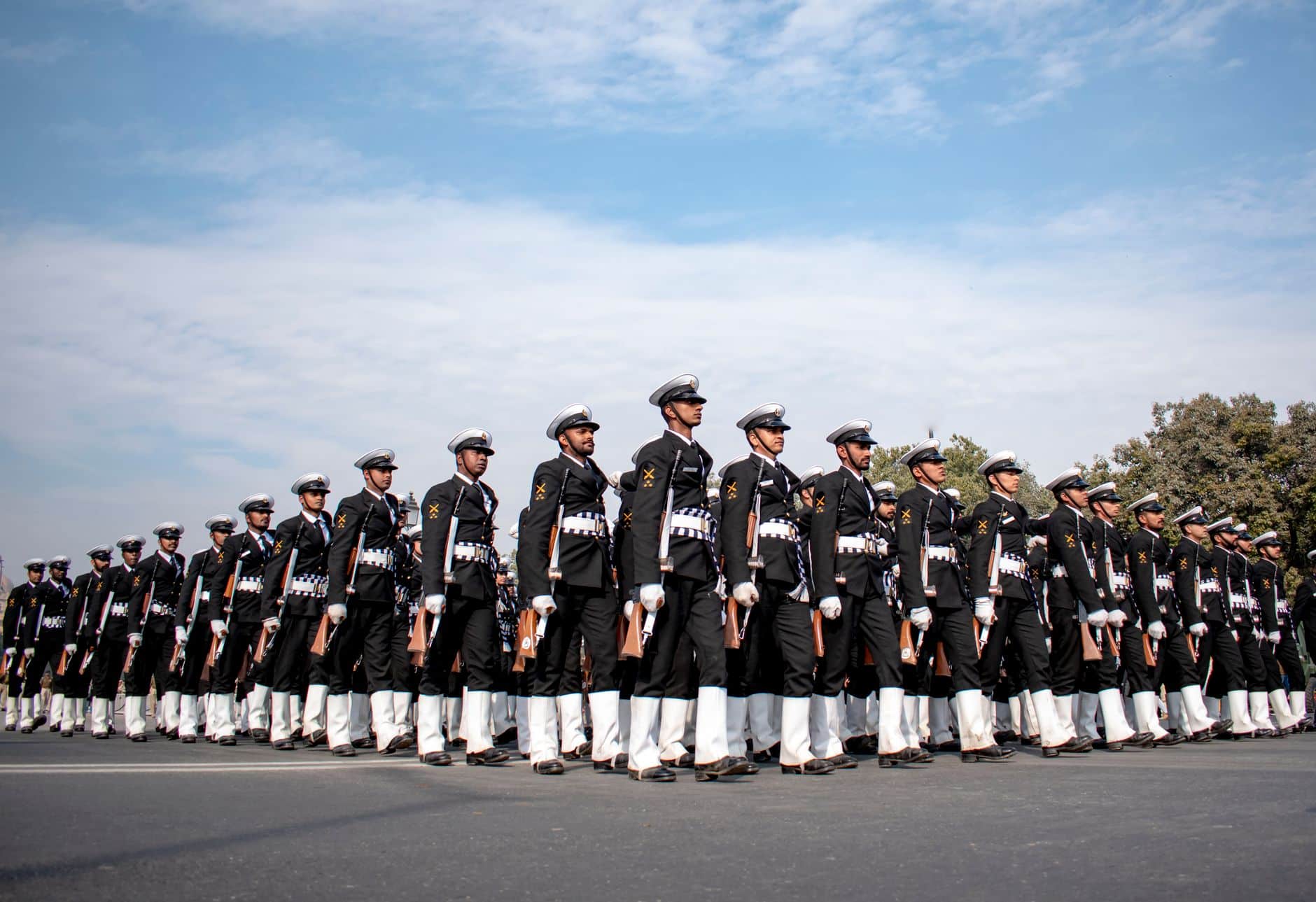
India-US relations occupy an ambiguous geopolitical space shaped by shared concerns about China but strained by divergent regional priorities, asymmetric leverage, and recent military incidents. Both nations must navigate this paradox or risk squandering decades of strategic investment.
The India-United States relationship defies conventional geopolitical classification. It is neither a formal alliance in the traditional sense, nor a rivalry, nor a friendship marked by strategic intimacy. Instead, it occupies an ambiguous space shaped by structural imperatives—primarily Chinese assertiveness—that keep both nations aligned despite mounting friction over regional priorities, military operations, and economic leverage. This paradox has become increasingly acute under the Trump administration, which prioritizes transactional outcomes over diplomatic protocol.
The relationship’s fragility became starkly apparent in June 2026, when U.S. military operations near the Strait of Hormuz resulted in the deaths of Indian nationals. The MT Settebello, an oil tanker carrying 24 Indian crew members, was attacked during American enforcement operations against Iranian oil shipments. Three Indians died in the incident, while a fourth sailor’s body decomposed aboard the vessel during a U.S.-imposed blockade that prevented evacuation. Secretary of State Marco Rubio’s response—justifying the action as necessary to prevent “illicit transport of Iranian oil” and demanding immediate compliance from all commercial vessels—sparked outrage in New Delhi. The absence of a formal apology or compensation offer exposed a fundamental asymmetry in the relationship.
India’s response to the Hormuz incident revealed uncomfortable truths about its strategic position. Unlike China, which extracted a public apology and $32.5 million in compensation from President Bill Clinton following the 1999 NATO bombing of its Belgrade embassy—an incident that killed three Chinese nationals—India has achieved neither accountability nor redress. This disparity underscores a critical limitation: India’s much-invoked “strategic autonomy” provides minimal leverage against Washington.
New Delhi faces a structural dependency trap. India relies on Russian military equipment for its defence posture, American advanced technology for civilian and strategic applications, Chinese-manufactured components for industrial production, and Gulf energy imports for economic stability. This multi-vector dependence constrains India’s ability to push back against American actions, even when Indian citizens are killed. The contradiction is particularly acute: India is simultaneously portrayed as indispensable to Indo-Pacific security architecture, yet treated as a trade problem requiring constraint to prevent future competition with the United States.
Deputy Secretary of State Christopher Landau’s admission that Washington would not repeat the “mistakes” made with China—allowing market development that enabled competitive capacity—signals a fundamental shift in American strategic thinking toward India. This framing treats India’s economic growth as a potential threat rather than a mutual benefit, creating a paradox that New Delhi cannot ignore.
Beyond the Hormuz incident, India faces a pattern of American decisions in South and Southeast Asia that contradict partner-like behaviour. The United States supported the 2024 regime change in Bangladesh despite explicit Indian warnings about the risks of Islamist resurgence—a concern that has proven prescient. American policy toward Myanmar has created security vulnerabilities along India’s eastern frontier, a region already prone to insurgency and cross-border instability. Washington’s emerging willingness to treat Nepal as an independent strategic actor rather than acknowledging India’s legitimate regional interests further erodes trust.
Most provocatively, the Trump administration’s warming toward Pakistan—a state that India correctly identifies as a Chinese client engaged in sustained terrorism against Indian territory—signals either strategic confusion or deliberate indifference to Indian security concerns. Pakistan’s role as a sponsor of cross-border terrorism and its deepening integration into Chinese strategic architecture make American engagement with Islamabad fundamentally incompatible with credible India-US partnership.
Despite these tensions, the Quad framework—comprising Australia, India, Japan, and the United States—continues to function as a substantive platform for Indo-Pacific coordination. The Foreign Ministers’ Meeting held in New Delhi in May 2026 focused on practical cooperation rather than rhetorical grandstanding: critical mineral supply chain resilience, maritime surveillance architecture, undersea cable protection, cybercrime prevention, and port development in Fiji. These initiatives represent functional partnership divorced from the emotional expectations that plague bilateral relations.
U.S. Secretary of Defense Pete Hegseth’s emphasis at the Shangri-La Dialogue that “an India strong enough to work for its own interests maintains the balance of power that the United States would like to sustain in the Indo-Pacific” articulates the structural logic binding the relationship. China’s continued assertiveness remains the critical variable preventing complete deterioration. Retired U.S. Marine and diplomat Grant Newsham’s assessment that the current relationship, despite its “down moment,” compares favourably to Cold War-era tensions provides historical perspective: the partnership, while strained, retains greater depth than earlier iterations.
However, the Quad’s success depends on shifting emphasis from rhetorical declarations to measurable delivery. Cooperation on rare earth mineral supply chains—where China currently maintains effective control—offers genuine strategic value for all parties. Maritime surveillance and undersea cable protection address real vulnerabilities in the Indo-Pacific commons. Port development in Fiji counters Chinese infrastructure expansion. These concrete initiatives, rather than vague commitments to “rules-based order,” constitute the substance of functional partnership.
India faces a complex calculus. Diplomatic restraint regarding the Hormuz deaths may appear prudent in the short term, but indefinite tolerance of American military actions resulting in Indian casualties without accountability damages India’s global standing. Nations build prestige through defending their citizens’ interests; accepting such incidents without demanding accountability signals weakness rather than strategic wisdom.
The path forward requires India to simultaneously pursue three objectives. First, increase tangible contributions to American strategic interests—enhanced access arrangements in the Indian Ocean, Quad-level cooperation on breaking Chinese control of rare earth minerals, and working-level military coordination that demonstrates concrete value. The Trump administration’s transactional approach means that symbolic gestures carry minimal weight; only demonstrable contributions matter.
Second, India must develop greater independent capacity to shape outcomes in its neighbourhood. Enhanced military capability, particularly in naval and air domains, combined with economic leverage in South Asia, reduces susceptibility to American decisions that contradict Indian security interests. India’s economic growth trajectory—projections suggest it will become the world’s third-largest economy within the decade—provides the foundation for such independence.
Third, India requires a more assertive diplomatic voice. While maintaining the partnership, New Delhi must clearly articulate its red lines: unacceptable American support for regime changes in India’s neighbourhood without consultation, warmth toward Pakistan that ignores its terrorism sponsorship, and military operations that endanger Indian nationals without accountability. These positions need not be framed as confrontational; they can be presented as clarifications necessary for partnership sustainability.
The India-US relationship will likely persist in its current awkward configuration—neither alliance nor rivalry, marked by structural alignment on China but tactical friction over regional priorities and economic competition. This is not an optimistic assessment, but neither is it one of inevitable deterioration. The relationship’s significance has grown despite tensions, suggesting that underlying interests remain powerful enough to sustain engagement.
India’s central challenge is closing the leverage gap while maintaining partnership viability. India is now economically and militarily more powerful than at any previous historical point, yet remains insufficient to dictate terms to Washington. The Trump administration’s preference for transactional relationships over traditional alliance structures creates both risks and opportunities: risks of sudden abandonment on issues where India’s interests diverge from American priorities; opportunities to build relationships based on demonstrated value rather than ideological affinity.
The next several years will determine whether India can translate growing economic and military capacity into genuine strategic autonomy while preserving partnership benefits. This requires moving beyond the current cycle of diplomatic incidents and restrained responses toward a framework where India’s voice carries proportional weight in decisions affecting its security and interests. The Hormuz incident should serve as a catalyst for recalibrating the relationship’s terms, not as a reason to abandon it entirely.




