Physical Address
304 North Cardinal St.
Dorchester Center, MA 02124
Physical Address
304 North Cardinal St.
Dorchester Center, MA 02124

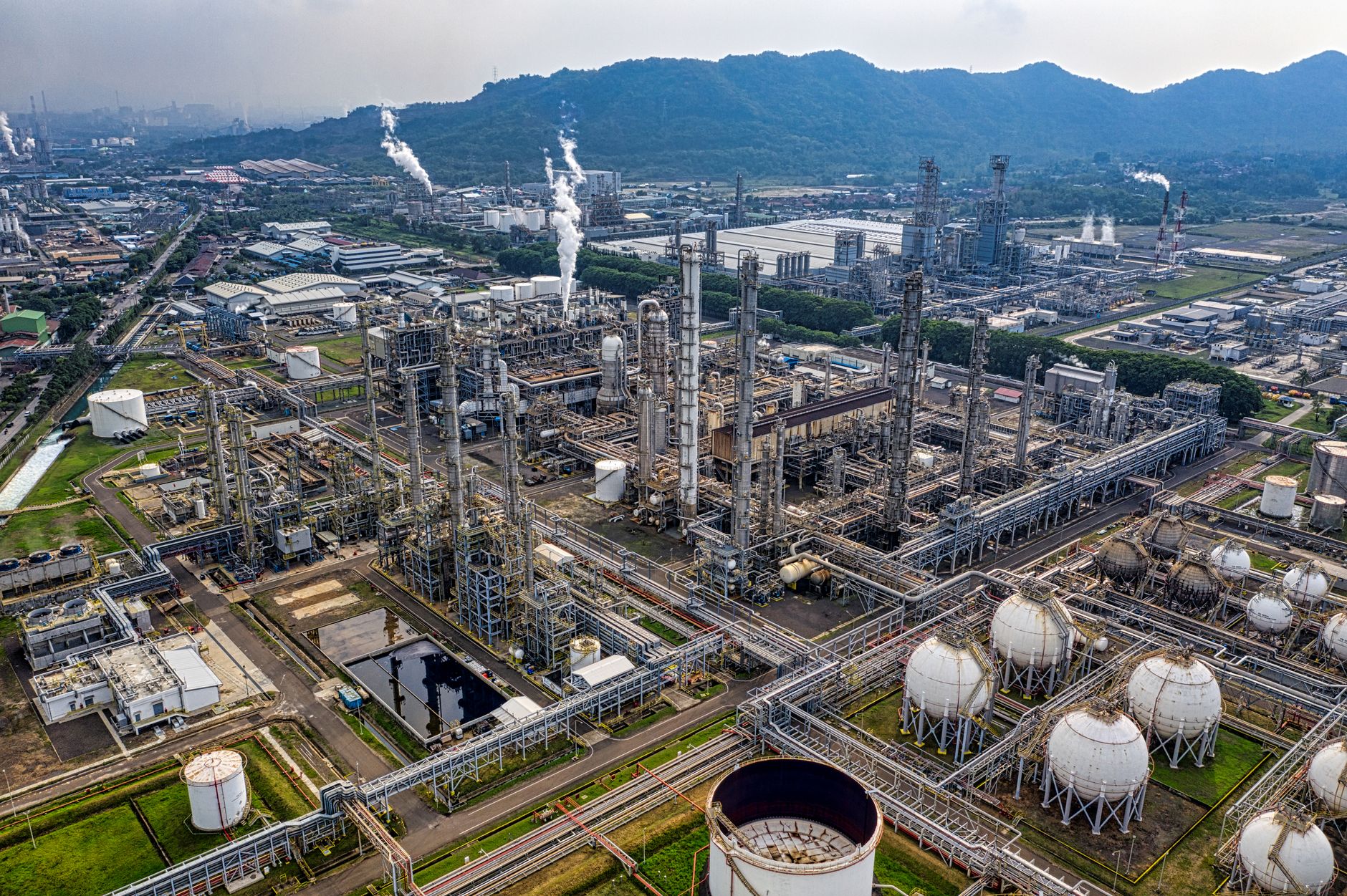
China controls over 50% of global production of refined fluorine compounds critical to semiconductors, aerospace, and nuclear technology. While governments focus on diversifying raw material sources, they overlook the more consequential challenge: replicating China's integrated downstream processing ecosystem.
The international discourse on critical minerals has fixated on a narrow set of resources—rare earths, lithium, and graphite—as governments race to diversify supply chains away from Chinese dependence. Yet this focus on upstream mining obscures a more consequential source of geopolitical leverage: downstream industrial processing and manufacturing capacity. China’s control over the fluorine economy exemplifies this shift in strategic competition, revealing how dominance over refined products and specialized chemical ecosystems may prove more consequential than control over raw ore deposits alone.
The fluorine sector demonstrates a critical strategic principle: in modern industrial competition, the ability to transform raw materials into technologically indispensable products matters more than possession of mineral reserves. This distinction carries profound implications for supply chain resilience strategies currently being pursued by the United States, Australia, the European Union, and other Indo-Pacific partners.
Fluorite, while relatively obscure in public discourse, underpins advanced manufacturing across virtually every high-technology sector critical to national security. The mineral serves as the primary precursor for fluorine chemicals and compounds deployed in semiconductor fabrication, electric vehicle battery production, aerospace engineering, uranium enrichment, and nuclear energy systems. China’s strategic advantage rests not merely on geological endowments but on systematic industrial integration.
As of 2025, China produces approximately 6 million metric tons of fluorite annually, representing roughly 69 percent of global output. However, this upstream figure captures only part of China’s competitive position. Chinese producers control over 50 percent of global production across multiple downstream segments: high-purity hydrofluoric acid, nitrogen trifluoride, fluoropolymers, and specialty fluorochemicals. This vertical integration—spanning mining, processing, purification, and specialized chemical manufacturing—creates a supply chain architecture that competitors cannot easily replicate.
The distinction between raw fluorite production and purified fluorine compounds is strategically decisive. Fluorite deposits exist globally; the industrial capability to transform fluorite into semiconductor-grade hydrofluoric acid or advanced fluoropolymers is concentrated in China. This processing expertise, accumulated over decades, represents embedded technological and organizational knowledge that cannot be quickly transferred or duplicated.
The semiconductor industry provides the most concrete illustration of fluorine’s strategic importance. During wafer fabrication, electronic-grade hydrofluoric acid is repeatedly applied to remove silicon dioxide layers and etch microscopic circuit patterns onto silicon wafers. Taiwan Semiconductor Manufacturing Company (TSMC), which produces advanced chips for artificial intelligence, cloud computing, and consumer electronics, depends on continuous supplies of ultra-high-purity process-fluorine chemicals. The semiconductor race is therefore determined as much by access to specialized chemical inputs as by access to cutting-edge lithography equipment.
Beyond semiconductors, fluorine compounds serve critical functions across defense and energy sectors. Uranium enrichment processes depend on uranium hexafluoride, a fluorine-based compound essential for nuclear fuel production. Fluoropolymers—particularly polytetrafluoroethylene (PTFE) and polyvinylidene fluoride (PVDF)—are irreplaceable in aerospace engineering, chemical processing equipment, and advanced electronics due to their exceptional resistance to heat, corrosion, and chemical degradation. Military applications, from missile systems to advanced avionics, rely on these fluorine-derived materials.
This multiplicity of critical applications, combined with geographically concentrated production, creates the structural conditions for supply chain weaponization. Unlike rare earths, where substitution is sometimes technically feasible, fluorine compounds often lack viable alternatives in high-performance applications.
China’s dominance over the fluorine value chain is reinforced by an increasingly systematic export control regime. The Export Control Law, implemented in 2020, established the legal framework for governing dual-use technologies and strategic industrial inputs. The unified Catalogue of Dual-Use Items, formalized through Ministry of Commerce (MOFCOM) Announcement No. 51 in 2024, represents a significant institutional development toward comprehensive export governance of fluorine-related products.
Fluorite remains subject to export licensing requirements, while selected fluorine compounds fall under dual-use export control mechanisms. Critically, this legal and administrative infrastructure need not be actively deployed to generate strategic effect. The mere existence of institutional capacity to regulate fluorine exports—combined with demonstrated willingness to weaponize supply chains in other sectors—creates a credible deterrent against policies Beijing views as threatening.
This represents a qualitative shift in economic statecraft. Rather than relying solely on natural resource scarcity, China has constructed the institutional machinery to regulate strategically significant technologies at moments of geopolitical tension. The fluorine economy illustrates how modern economic coercion operates through control over refined products and integrated industrial systems, not merely raw materials.
Current policy responses to supply chain vulnerability focus predominantly on developing alternative sources of raw materials. This approach, while necessary, proves insufficient for sectors dependent on fluorine compounds. Establishing new fluorite mines outside China does not automatically generate capacity to produce high-purity hydrofluoric acid or semiconductor-grade fluorochemicals. These capabilities require years of capital investment, specialized engineering expertise, stringent environmental compliance, and integrated manufacturing networks that cannot be rapidly constructed.
The United States, European Union, Japan, and Australia are investing in downstream processing capacity, yet replicating China’s fluorine ecosystem remains a multi-decade undertaking. South Korea and Japan possess some advanced fluorochemical production capacity, but neither possesses the integrated vertical supply chain that characterizes China’s dominance. Australia, despite significant fluorite reserves in Victoria and South Australia, lacks the downstream processing infrastructure to transform raw ore into advanced fluorochemicals.
Corporate supply chain strategies that focus exclusively on securing raw materials therefore underestimate vulnerabilities embedded within downstream production. Semiconductor manufacturers, aerospace companies, and advanced battery producers face concentration risks that cannot be addressed through conventional supply diversification. A manufacturer securing fluorite from alternative sources remains vulnerable if purification and chemical processing remain dependent on Chinese suppliers.
The fluorine economy exemplifies a broader reorientation of geopolitical competition away from raw material scarcity toward control over specialized manufacturing ecosystems. This shift has profound implications for Indo-Pacific security architecture and alliance coordination.
First, supply chain resilience requires integrated regional approaches that span mining, processing, and advanced manufacturing. Australia’s fluorite reserves are strategically valuable only if paired with processing capacity in allied jurisdictions—potentially Japan, South Korea, or the United States. Bilateral or trilateral arrangements that integrate mining, refining, and manufacturing represent the necessary policy response.
Second, technology transfer and industrial policy coordination among democratic partners must accelerate. Japan’s advanced fluorochemical capabilities, combined with Australian mineral endowments and American capital and expertise, could form the foundation for a resilient fluorine supply chain. This requires explicit coordination through mechanisms such as the Quad (Australia, India, Japan, United States) or bilateral defense and industrial partnerships.
Third, export control regimes among democratic nations should mirror China’s approach: establishing legal and administrative capacity to govern strategically significant downstream products, not merely raw materials. The European Union’s Critical Raw Materials Act and Australia’s emerging critical minerals policy should explicitly address downstream processing and manufacturing, not only extraction.
Whether fluorine ultimately becomes as geopoliticized as rare earths remains uncertain. What is already evident is that China has constructed the institutional and industrial capacity to exercise strategic leverage across the entire fluorine value chain. Democratic governments that address only upstream mining while ignoring downstream processing will discover, as semiconductor and aerospace manufacturers already are discovering, that supply chain vulnerability persists regardless of alternative raw material sources.