Physical Address
304 North Cardinal St.
Dorchester Center, MA 02124
Physical Address
304 North Cardinal St.
Dorchester Center, MA 02124

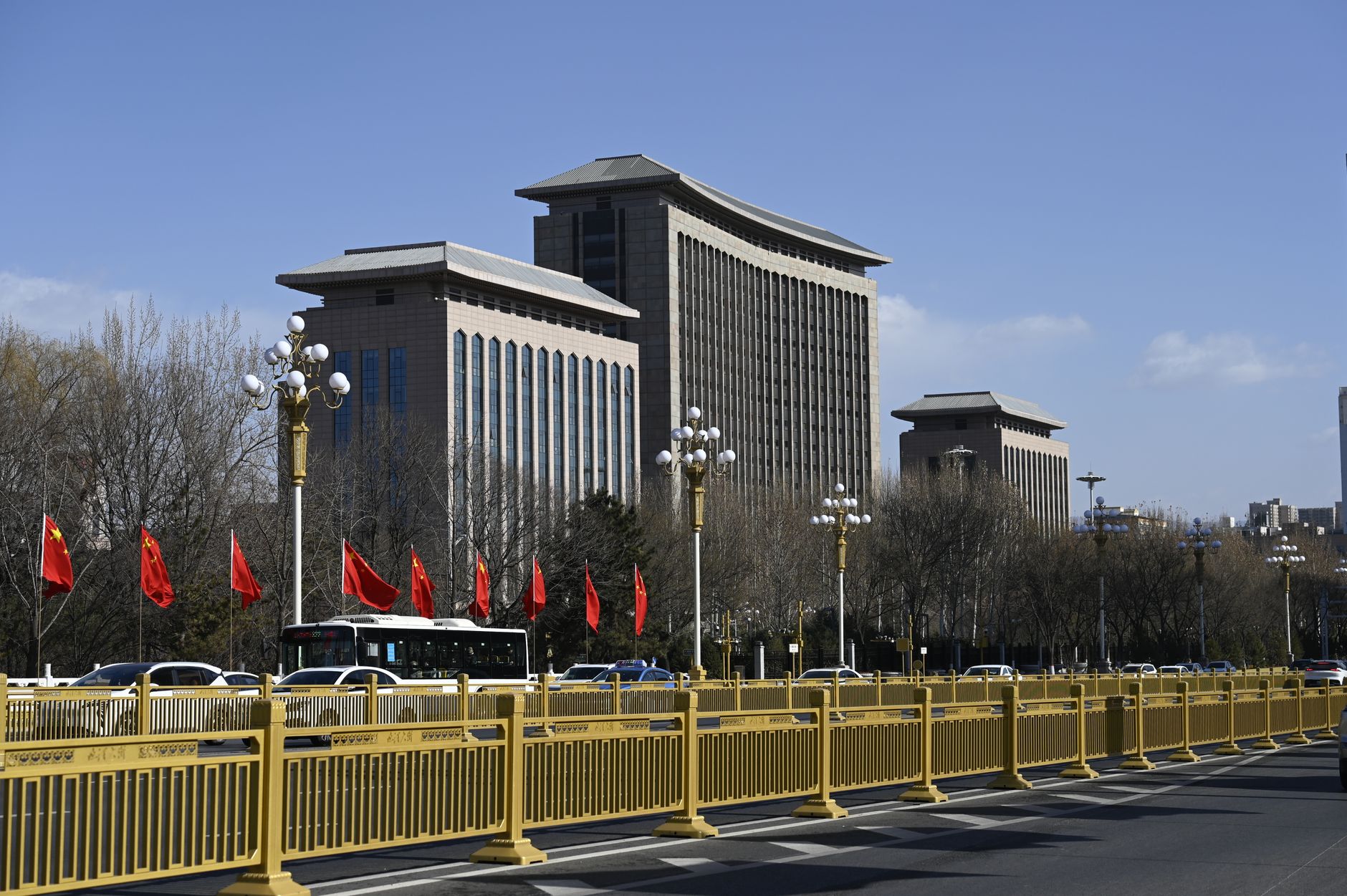
Beijing has quietly reopened economic dialogue channels with Japan through a June 2025 meeting between JAPIT officials and China's Vice Foreign Minister, signaling a calculated strategy to compartmentalize political disputes from economic engagement. However, fundamental disagreements on Taiwan and regional security remain unresolved.
For the first time since China-Japan relations deteriorated in November 2024, a high-level dialogue has resumed between the two nations. On June 22, 2025, Hashimoto Gaku, acting chairman of the Japan Association for the Promotion of International Trade (JAPIT) and a Liberal Democratic Party member of Japan’s House of Representatives, met with Chinese Vice Foreign Minister Hua Chunying at Beijing’s Foreign Ministry for approximately one hour. The meeting itself produced no formal agreements or policy breakthroughs, yet its occurrence signals something strategically significant: Beijing is deliberately maintaining economic engagement channels even as political tensions remain unresolved. This approach reflects a calculated Chinese strategy to compartmentalize disputes, separating political disagreements from economic cooperation—a tactic that carries important implications for regional stability and Japanese business interests.
The current diplomatic chill dates to November 2024, when Japanese Prime Minister Takaichi Sanae testified before the Diet regarding hypothetical Taiwan contingency scenarios. Beijing interpreted these remarks as Japanese encouragement of Taiwan independence and acceleration of Taiwan’s defense capabilities—characterizations that triggered a systematic response. China restricted travel to Japan, suspended Japanese artists’ performances within its territory, and tightened export controls on rare earth elements essential to Japan’s semiconductor and high-technology manufacturing sectors. These measures were not punitive outbursts but coordinated policy instruments designed to impose costs on Japanese political leadership while preserving options for economic dialogue.
The suspension of bilateral exchanges became near-total. Official government visits ceased, and even semi-official contacts through traditional friendship organizations became rare. JAPIT, one of seven Japanese quasi-governmental organizations that function as people-to-people and economic conduits, had planned a flagship delegation of approximately 50 members led by former House Speaker Kono Yohei. The previous year’s delegation had been received by Premier Li Qiang, demonstrating the diplomatic weight Beijing attached to this channel. However, Kono’s death on June 8, 2025, forced postponement of the full visit and left JAPIT without one of its most trusted and effective interlocutors in Beijing.
Kono Yohei’s passing is strategically significant beyond personal loss. His stature extended JAPIT’s influence far beyond its formal mandate of promoting economic exchange, giving the organization diplomatic weight that reflected his own historical standing in Japanese politics and his deep personal relationships with Chinese counterparts built over decades. Hashimoto Gaku, whose late father Hashimoto Ryutaro also served as JAPIT chairman, carries family credentials within the organization, but rebuilding the level of personal trust and institutional credibility that Kono possessed will require sustained effort and time. This generational transition occurs at a moment when such relationships are most needed.
Hashimoto traveled to Beijing ostensibly to attend the China International Supply Chain Expo, accompanied by three other JAPIT executives. The meeting with Vice Foreign Minister Hua Chunying covered familiar ground but with notable strategic implications. Hua opened with formal condolences regarding Kono’s death and acknowledged his contributions to bilateral relations—a diplomatic courtesy that also signaled respect for the institutional channel itself. She then reiterated Beijing’s stated position on Takaichi’s Taiwan remarks, using the phrase “consistent position” as diplomatic shorthand for objections to what China characterizes as Japanese military remilitarization and security alignment against Chinese interests.
Hashimoto’s response was equally calibrated. He rejected the characterization that Japan seeks to become “a military state” and emphasized the importance of face-to-face dialogue as a mechanism for managing disagreements. Hua responded by indicating Beijing would welcome a future JAPIT delegation and expressed hope that Japan’s business community would “play an active role in improving bilateral relations.” This language is significant: it explicitly acknowledges the business community as a distinct actor separate from Japan’s political leadership, and it signals willingness to engage with that constituency even as political disputes remain unresolved.
The Chinese government’s approach to publicizing the meeting is analytically revealing. Despite meeting with an LDP lawmaker at the vice ministerial level, China’s Foreign Ministry press conferences on June 22, 23, and 24 made no mention of Hashimoto’s visit. Instead, Chinese official statements during this period continued to criticize Japan’s “dark and horror-filled” history and “full throttle remilitarization.” Beijing thus maintained political pressure on Japanese security policy while quietly accepting dialogue with Japanese business representatives. This compartmentalization is not accidental; it reflects deliberate strategy.
Equally notable is what the meeting did not include. No engagement occurred with China’s Ministry of Commerce, the counterpart most directly relevant to Japanese business grievances: rare earth export restrictions, supply chain disruptions, investment climate deterioration, and heightened scrutiny of sensitive technology transfers. Hashimoto acknowledged this gap to reporters and expressed hope that future delegations could engage directly with economic officials. Whether such access materializes will be the genuine test of whether this contact represents durable re-engagement or merely tactical signaling.
The optimistic framing of the Hashimoto-Hua meeting must be contextualized against the actual operating environment for Japanese companies in China. On June 24, 2025—just two days after the meeting—the Japanese government revealed that two Japanese nationals had been detained by Chinese authorities in Dalian during May on suspicion of violating China’s export control regulations. Japanese media reporting indicated that at least one detainee worked for a major Japanese electronics manufacturer’s local subsidiary and may have been involved in handling rare earth materials subject to increasingly stringent Chinese export controls.
This incident occurred during the same period as the diplomatic overture, illustrating the disconnect between political signaling and operational reality. The detention is likely to reinforce concerns within Japan’s business community about operating risks in China amid deteriorating bilateral relations and intensified scrutiny of sensitive technologies. For Japanese manufacturers already concerned about supply chain vulnerability and regulatory unpredictability, a meeting between a JAPIT representative and a vice foreign minister offers limited reassurance absent concrete engagement with economic policymakers on specific grievances.
The pattern evident in China’s approach reflects a well-established strategic method: preserving economic engagement channels while maintaining political pressure on security and sovereignty issues. This approach serves multiple Chinese objectives simultaneously. First, it allows Beijing to sustain economic relationships and avoid unnecessary damage to bilateral trade and investment flows that benefit Chinese enterprises and employment. Second, it creates a distinction between “responsible” business actors and “provocative” political leaders, potentially generating pressure from Japanese business communities on their own government to moderate security policies. Third, it preserves diplomatic optionality—should Japanese political leadership change or policy shift, Beijing has maintained a channel through which to signal receptiveness to improved relations.
For Japan, this strategy creates a complex negotiating environment. Japanese business interests have incentive to advocate for improved relations with China, but the fundamental political disagreements over Taiwan, regional security architecture, and Japan’s defense modernization remain firmly in place. Prime Minister Takaichi’s government has shown little inclination to soften the security policies Beijing finds most provocative. Takaichi’s administration has continued defense spending increases, strengthened security partnerships with the United States and regional allies, and maintained its position that Japan must prepare for potential Taiwan contingencies as part of regional security planning.
The Hashimoto-Hua meeting does not represent a breakthrough in China-Japan relations. Fundamental disagreements persist, and the political temperature remains cool. However, Beijing’s decision to receive an LDP lawmaker at vice ministerial level—however quietly—when it could easily have declined, suggests that China is not seeking a complete rupture. Rather, Beijing appears willing to keep at least one channel open: business and trade engagement through semi-official organizations like JAPIT.
The real test of whether this contact represents durable re-engagement will be whether future JAPIT delegations gain access to China’s Ministry of Commerce and economic officials who can address concrete business grievances. Without such engagement, the meeting amounts to diplomatic theater rather than substantive channel-building. The upcoming APEC leaders’ summit scheduled for November 2025 in Shenzhen presents a potential inflection point. Should conditions permit a bilateral meeting between Prime Minister Takaichi and Chinese President Xi Jinping, it would signal that the reopening of business channels has created sufficient political space for broader engagement. Absent such a meeting, the “thread of exchange” that Hashimoto described will remain thin and fragile—sufficient to prevent complete rupture but insufficient to resolve the underlying strategic competition between the two nations.
For Australian and regional policymakers, the China-Japan dynamic carries important implications. A complete rupture in bilateral relations would destabilize the region and potentially push Japan toward more assertive security postures. Conversely, Chinese success in using economic compartmentalization to pressure Japanese security policy could establish a precedent for similar tactics against other regional partners. The durability of the Hashimoto channel will indicate whether Beijing views economic engagement as a genuine pathway toward political accommodation or merely as a pressure tool to be deployed selectively while political competition intensifies.