Physical Address
304 North Cardinal St.
Dorchester Center, MA 02124
Physical Address
304 North Cardinal St.
Dorchester Center, MA 02124

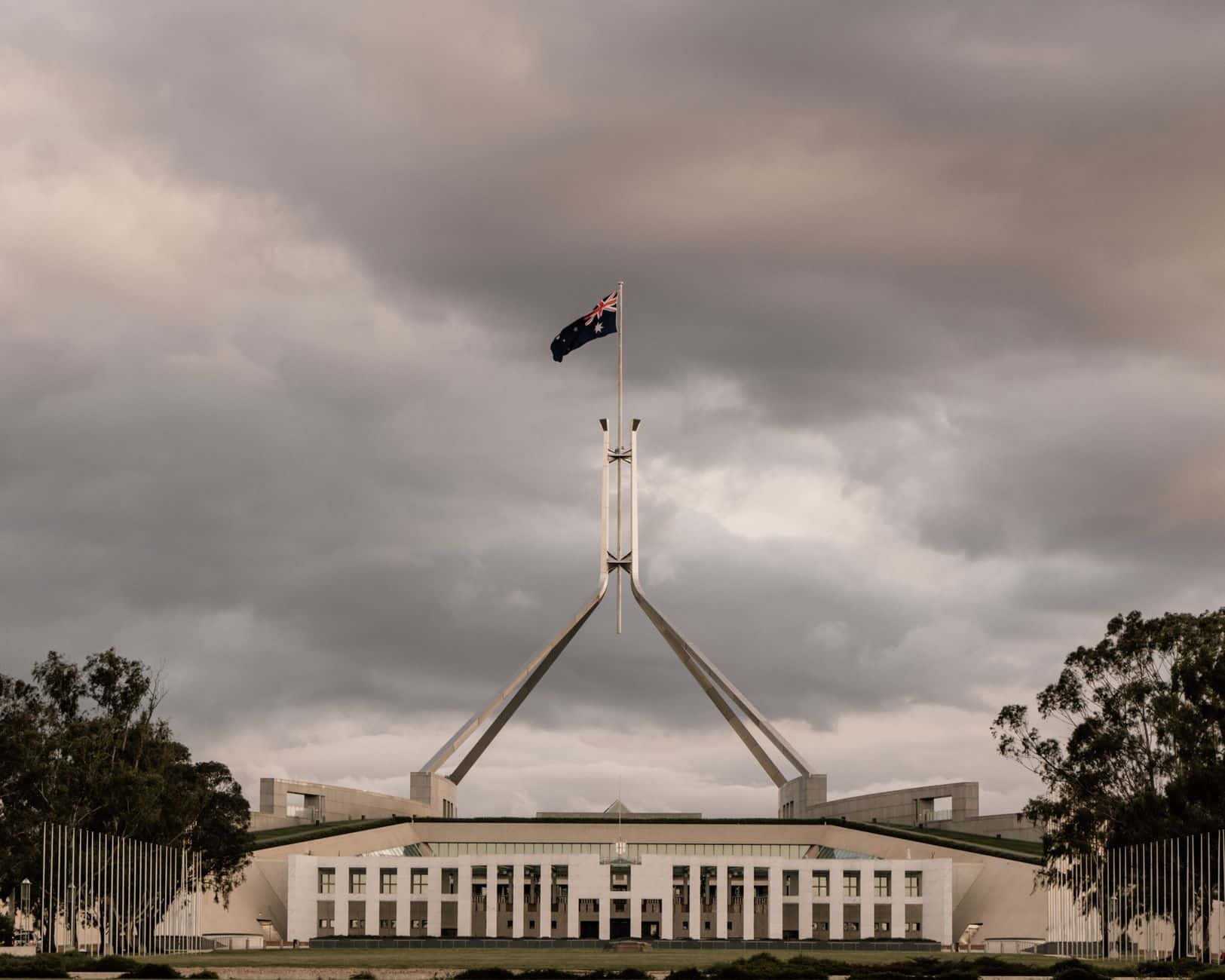
Australia can leverage its diplomatic credentials and middle power status to position itself as the Indo-Pacific's primary conflict mediator, addressing a critical gap as great power competition intensifies and multilateral institutions decline in influence.
Foreign Minister Penny Wong’s articulation of Australia as an “architect” middle power signals a strategic reorientation toward active conflict mediation and regional stabilization. This positioning arrives at a critical juncture: the Indo-Pacific faces unprecedented pressures from great power rivalry, the proliferation of active conflicts, and the systematic erosion of multilateral institutions’ influence over peace processes. Australia’s 2029-30 candidacy for a United Nations Security Council seat provides both a platform and an imperative to operationalize this mediation ambition at scale.
The confluence of these factors creates a strategic opening that few states are positioned to exploit. While Japan is developing dedicated mediation capacity within its foreign ministry and China has launched the International Organization for Mediation in Hong Kong, Australia possesses a distinctive combination of attributes that competitors cannot easily replicate: a proven regional peacemaking track record, genuine middle power status unconstrained by great power alliance obligations, geographic distance from most regional flashpoints, and deep institutional credibility across the Indo-Pacific.
Australia’s diplomatic portfolio contains substantive evidence of mediation capacity and regional trust. The 1999 East Timor intervention established Australia as a willing actor in regional crises when multilateral consensus existed. The Regional Assistance Mission to Solomon Islands (RAMSI), which operated from 2003 to 2017, represented sustained commitment to state-building and conflict prevention in the Pacific—a 14-year engagement that rebuilt institutional capacity in a fragile state. Australia’s role in brokering the Bougainvillean peace process alongside New Zealand and United Nations mediation demonstrated capacity for multi-stakeholder diplomatic coordination in complex internal conflicts.
More broadly, Australia’s participation in the Cambodian peace agreement framework in the 1990s positioned it as a constructive actor in major regional settlements during the post-Cold War transition. These precedents are not incidental to Australia’s current positioning—they constitute the foundational credibility upon which expanded mediation roles must rest. Wong’s recent leadership of the Declaration for the Protection of Humanitarian Personnel, endorsed by over 100 states, extends this record into contemporary humanitarian diplomacy, signaling Australia’s capacity to mobilize multilateral consensus around principled positions.
The current strategic environment differs markedly from the post-Cold War period in which Australia’s earlier mediation efforts occurred. Russia’s invasion of Ukraine, the proliferation of active conflicts to levels unseen since 1945, and the documented decline in U.S. commitment to multilateral norm-championing have created a vacuum in conflict prevention architecture precisely when regional tensions are escalating.
Small and medium-sized Indo-Pacific states—including ASEAN members, Pacific Island nations, and South Asian actors—face acute vulnerability to great power coercion and proxy competition. Australia’s geographic position as a developed, stable democracy with no territorial disputes in the immediate region provides it with a unique credibility advantage. Unlike regional powers with direct stakes in contested issues, Australia can credibly position itself as a neutral facilitator rather than a partisan actor. This distinction matters enormously in mediation contexts where perceived bias undermines effectiveness.
The strategic imperative is acute: absent deliberate diplomatic architecture, great power competition in the Indo-Pacific risks cascading into direct conflict through miscalculation, proxy escalation, or the exploitation of regional disputes by external actors. Wong’s commitment to championing “conflict prevention, peacebuilding, the protection of civilians” through Australia’s Security Council candidacy reflects recognition that preventive diplomacy delivers superior outcomes to post-conflict reconstruction.
Wong’s request that parliament’s Joint Standing Committee on Foreign Affairs, Defense and Trade examine how Australia’s international development program can prevent conflict indicates awareness that mediation requires institutional scaffolding beyond rhetorical commitment. Effective mediation demands sustained diplomatic presence, deep contextual knowledge of dispute parties, credible channels to decision-makers, and capacity to facilitate dialogue when official negotiations have stalled.
Japan’s development of a dedicated mediation unit within its foreign ministry provides a relevant institutional model. Australia should consider establishing similarly focused capacity—a small, specialized diplomatic corps with regional language expertise, conflict analysis capability, and mandate to maintain quiet engagement with potential dispute parties before crises crystallize. Such capacity would complement rather than replace Australia’s existing diplomatic infrastructure, operating as a specialized function within the Department of Foreign Affairs and Trade.
The development assistance dimension is equally critical. Australia’s aid architecture, particularly in the Pacific and Southeast Asia, positions it to support conflict prevention at the grassroots level—strengthening local governance, building economic resilience, and supporting dialogue mechanisms in fragile states. This addresses a gap that state-to-state mediation alone cannot fill: the prevention of grievances that fuel internal conflicts which subsequently invite great power interference.
Australia’s mediation ambitions will be tested against the initiatives of other aspiring regional mediators. China’s International Organization for Mediation, headquartered in Hong Kong, represents Beijing’s attempt to position itself as a neutral arbiter—an effort that faces inherent credibility constraints given China’s direct interests in most regional disputes. Japan’s mediation unit development reflects Tokyo’s desire to enhance its diplomatic influence as it gradually expands security roles. Gulf states including the United Arab Emirates have successfully positioned themselves as niche mediators in Middle Eastern conflicts, demonstrating that mediation capacity can become a distinctive diplomatic brand.
Australia’s competitive advantage rests not on claiming neutrality in all disputes—an impossible standard—but on demonstrating principled consistency, institutional reliability, and genuine commitment to solutions that benefit disputants rather than external powers. This requires careful calibration: Australia must avoid being perceived as either a proxy for Western interests or as indifferent to rule-of-law concerns. Wong’s emphasis on protecting civilians and upholding international humanitarian norms provides a principled framework for this positioning.
Australia’s mediation role should be conceived not as an isolated diplomatic function but as integral to broader Indo-Pacific stabilization. Wong’s framing of Australia’s contribution—promoting a model that “reaffirms sovereignty, addresses environmental risks, strengthens local economies, and withstands coercion from big powers”—articulates a coherent strategic vision that connects conflict prevention to sustainable development and institutional resilience.
The Indo-Pacific’s role as a global growth engine depends fundamentally on open trade, predictable rules, and the absence of major-power conflict. Australia’s prosperity is directly contingent on this stability. By positioning itself as a mediator and conflict prevention actor, Australia simultaneously serves its material interests and its regional responsibilities. This alignment of interest and principle strengthens Australia’s diplomatic positioning: it can credibly argue that its mediation efforts serve not narrow national advantage but genuine regional public goods.
Implementation should proceed through three channels: first, formal Security Council advocacy for conflict prevention and mediation mechanisms once Australia assumes its 2029-30 seat; second, establishment of dedicated mediation capacity within the foreign ministry, resourced and mandated for sustained engagement; and third, integration of conflict prevention objectives throughout Australia’s development assistance programming, particularly in the Pacific and Southeast Asia.
The window for Australia to establish itself as the Indo-Pacific’s preferred mediator is open but not indefinite. Great power competition will intensify, regional conflicts will proliferate, and the demand for credible mediation will only increase. Australia possesses the credentials, the geographic position, and the diplomatic capital to meet this demand. Operationalizing this potential requires deliberate institutional investment and sustained political commitment—but the strategic returns, measured in regional stability and Australia’s enhanced international standing, justify the investment substantially.




