Physical Address
304 North Cardinal St.
Dorchester Center, MA 02124
Physical Address
304 North Cardinal St.
Dorchester Center, MA 02124

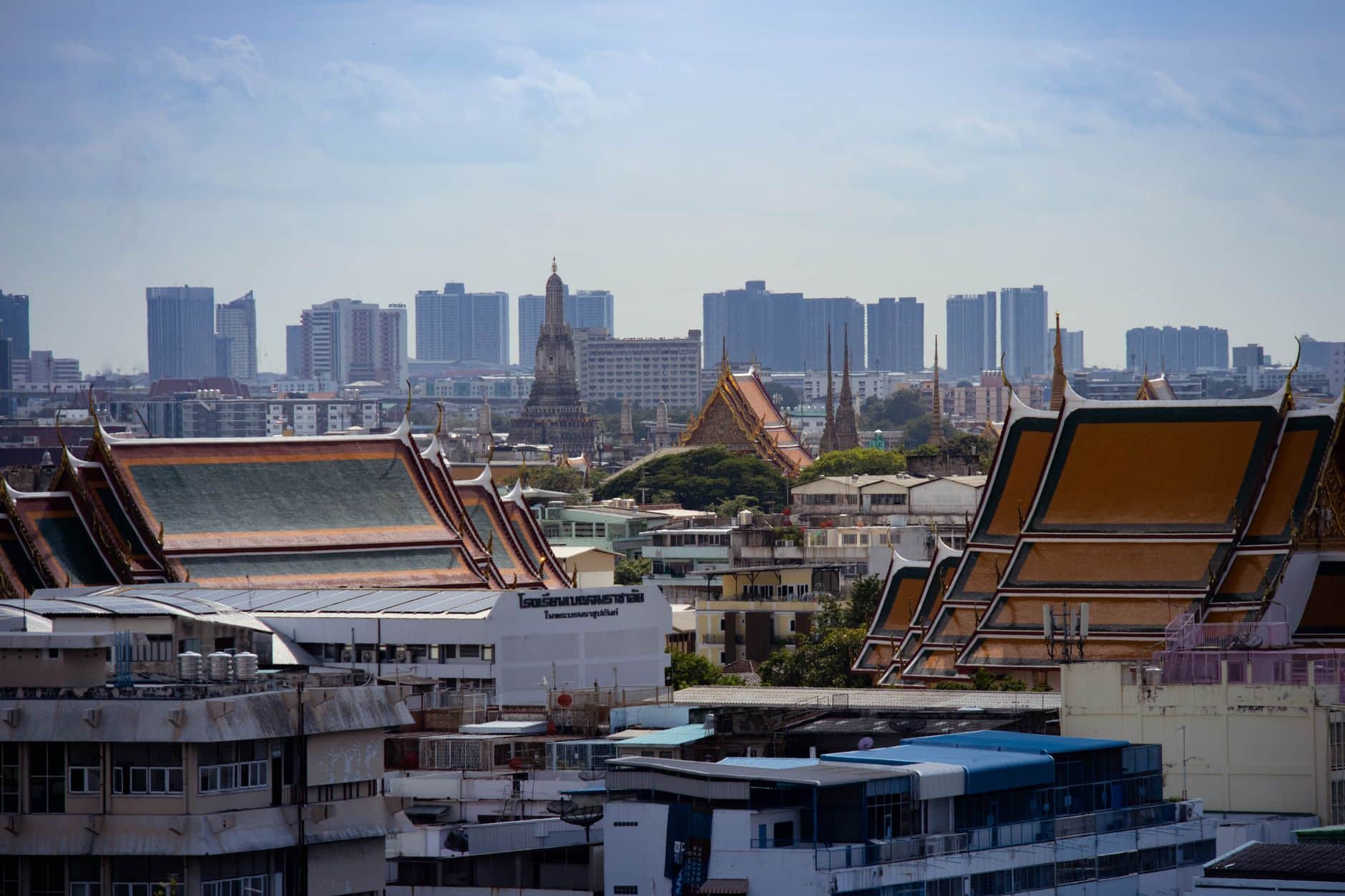
Thailand's August 2026 invitation to Myanmar's military leader Min Aung Hlaing directly contradicts ASEAN's unified stance on the junta, threatening the bloc's consensus and regional credibility. Prime Minister Anutin Charnvirakul's "calibrated reengagement" strategy prioritizes bilateral stability over collective leverage, risking the erosion of ASEAN's institutional cohesion.
On August 6, 2026, Thai Prime Minister Anutin Charnvirakul hosted Myanmar’s military leader Min Aung Hlaing for a two-day state visit in Bangkok, signaling a dramatic shift in Thailand’s approach to Myanmar’s political crisis. The visit culminated in three bilateral memoranda of understanding covering labor, water resources, and space cooperation, alongside Anutin’s public commitment to facilitate Myanmar’s reintegration into ASEAN—a position that directly contradicts the regional bloc’s official stance. This move represents more than routine bilateral diplomacy; it constitutes a fundamental challenge to ASEAN’s collective Myanmar policy and exposes deepening fissures within the organization’s decision-making consensus.
The significance of this visit lies not in what was achieved, but in what it signals about Thailand’s willingness to diverge from ASEAN’s coordinated approach to Myanmar’s military junta. Since Myanmar’s February 2021 coup, ASEAN has maintained a carefully calibrated position: excluding military leaders and political appointees from high-level summits while technically preserving the principle of non-interference by framing the crisis as a regional stability issue. Thailand’s invitation to Min Aung Hlaing effectively breaks this united front without securing any demonstrable progress on ASEAN’s Five-Point Consensus—the bloc’s framework for Myanmar’s political transition.
Thailand’s rationale for its divergent approach stems from acute bilateral pressures that other ASEAN members do not face with equal intensity. As the country most directly affected by Myanmar’s ongoing civil conflict, Thailand has absorbed hundreds of thousands of displaced persons, managed cross-border crime networks, and confronted destabilization along its western frontier. Prime Minister Anutin and Foreign Minister Sihasak Phuangketkeow have framed their policy as “calibrated reengagement”—a softer, more accommodative approach designed to extract concessions from Myanmar’s military leadership through dialogue rather than isolation.
Thai officials point to selective evidence of progress: the recent meeting between detained civilian leader Aung San Suu Kyi and an International Committee of the Red Cross representative, and Myanmar’s stated willingness to allow ASEAN envoys to meet with Suu Kyi. These developments, however modest, have convinced Bangkok that engagement yields results where ASEAN’s exclusionary stance has failed. Implicit in Thailand’s position is a judgment that ASEAN’s five-year strategy of diplomatic isolation has rendered Myanmar increasingly uncooperative, thereby limiting the bloc’s ability to pressure the junta toward meaningful political concessions.
This assessment reflects growing Thai impatience with both Myanmar’s intransigence and ASEAN’s inability to resolve the crisis. For a government managing refugee flows, human trafficking, and armed group incursions across a 2,400-kilometer border, the luxury of principled consistency holds less appeal than pragmatic stability. Yet this bilateral calculus, however understandable from Thailand’s perspective, fundamentally undermines the regional architecture that ASEAN has spent five years constructing.
ASEAN’s Myanmar policy, despite external criticism and limited effectiveness, has achieved something analytically noteworthy: sustained consensus among ten diverse member states on a major regional crisis. This consensus has been maintained across multiple ASEAN chairs—Indonesia, Brunei, and Vietnam—each of which has adopted slightly different tactical approaches while adhering to the same strategic framework. The bloc has navigated the tension between its founding principle of non-interference and the imperative to address regional instability by reframing Myanmar’s internal conflict as a matter of “regional stability,” thereby creating space for collective action without formally violating non-interference norms.
Thailand’s unilateral engagement directly challenges this delicate consensus. Philippine Foreign Secretary Ma. Theresa Lazaro, speaking in her capacity as ASEAN special envoy on Myanmar, recently stated that Myanmar’s readmission to ASEAN remains “far off” without substantial progress on the Five-Point Consensus. This position stands in explicit contradiction to Anutin’s pledge to work toward Myanmar’s reintegration. The contradiction is not merely rhetorical; it signals that ASEAN member states now operate from divergent assessments of both the crisis and the appropriate response.
Myanmar’s military government has shown no inclination to implement the Five-Point Consensus and has openly criticized it as interference in internal affairs. By extending diplomatic legitimacy to Min Aung Hlaing without requiring progress on these benchmarks, Thailand has effectively signaled that the Consensus is negotiable—a message that weakens ASEAN’s collective leverage precisely when unity is most essential.
Thailand’s Myanmar gambit arrives at a particularly vulnerable moment for ASEAN institutional cohesion. The Philippines currently holds the ASEAN chair, while Singapore assumes the role in 2027. Both nations have invested political capital in maintaining ASEAN’s unified Myanmar position. The Philippines, in particular, has emphasized ASEAN’s role as a credible regional mediator and has positioned the Five-Point Consensus as the framework for any future Myanmar reintegration. Thailand’s divergent approach places both current and incoming ASEAN leadership in an awkward position: they must either endorse Thailand’s reengagement strategy (thereby abandoning the Consensus framework) or publicly challenge a fellow ASEAN member state (thereby fracturing the facade of consensus that ASEAN depends upon for its diplomatic credibility).
This dilemma reveals a structural weakness in ASEAN decision-making. The bloc operates on consensus, which theoretically prevents any single member from imposing its will on others. In practice, consensus also prevents the organization from disciplining or constraining members who defect from agreed positions. Thailand’s move exploits this permissiveness: it can pursue its bilateral interests while remaining nominally committed to ASEAN frameworks, creating confusion about what ASEAN’s actual position is and whether it remains binding.
Thailand’s engagement strategy rests on an optimistic assumption: that Myanmar’s military leadership will reciprocate diplomatic overtures with political concessions. The historical record and current behavior suggest otherwise. Since the 2021 coup, Myanmar’s junta has consolidated control, faced no serious threat of international intervention, and demonstrated willingness to sustain a prolonged civil conflict against armed opposition groups and ethnic organizations. The military has shown no indication that ASEAN exclusion causes sufficient pain to warrant implementing the Five-Point Consensus.
By offering engagement without preconditions, Thailand removes what limited leverage ASEAN possessed. The junta now faces a choice between maintaining its current isolation from ASEAN summits (a modest cost) or implementing political reforms that would threaten military rule (an unacceptable cost). Thailand’s approach has shifted the calculus in Myanmar’s favor: the junta can accept Thai engagement, extract investment and economic benefits, and ignore ASEAN’s broader demands. Min Aung Hlaing’s August 2026 visit to Bangkok and his invitation to Thai business leaders to invest in Myanmar demonstrates that the junta views this engagement as a diplomatic and economic victory—precisely the opposite of what ASEAN’s exclusionary strategy intended.
The fundamental risk posed by Thailand’s Myanmar gambit is not that it will resolve the crisis faster than ASEAN’s approach—evidence suggests the opposite. Rather, it threatens to erode ASEAN’s credibility as a coherent regional actor capable of sustaining unified positions on major security challenges. If ASEAN members can unilaterally pursue divergent strategies on a crisis that the bloc has collectively addressed for five years, the organization’s value as a forum for regional cooperation and conflict management diminishes substantially.
This erosion has implications extending far beyond Myanmar. ASEAN’s relevance in the Indo-Pacific depends significantly on its ability to maintain consensus on regional security issues and to present a unified voice to major powers. If ASEAN cannot hold together on Myanmar—a crisis that directly affects one member state and has been the bloc’s primary focus since 2021—its capacity to coordinate positions on China’s South China Sea activities, great power competition, or other transnational challenges becomes questionable. Regional powers and external actors will increasingly treat ASEAN as a collection of individual states rather than a coherent bloc, thereby reducing ASEAN’s diplomatic weight.
Thailand’s approach may yield short-term bilateral benefits: reduced refugee flows, improved cross-border cooperation, and economic opportunities in Myanmar. These gains, however, come at the cost of ASEAN’s institutional cohesion and long-term regional influence. The test of this strategy will come when Myanmar’s military continues to ignore ASEAN’s broader demands despite Thai engagement, forcing Bangkok to acknowledge that accommodating the junta has not produced the promised political concessions. At that point, Thailand will face a choice: publicly admit that its divergent approach failed, or double down on engagement and further undermine ASEAN unity. Either outcome weakens the regional organization that Thailand ultimately depends upon for its own security and prosperity in an increasingly contested Indo-Pacific environment.




