Physical Address
304 North Cardinal St.
Dorchester Center, MA 02124
Physical Address
304 North Cardinal St.
Dorchester Center, MA 02124

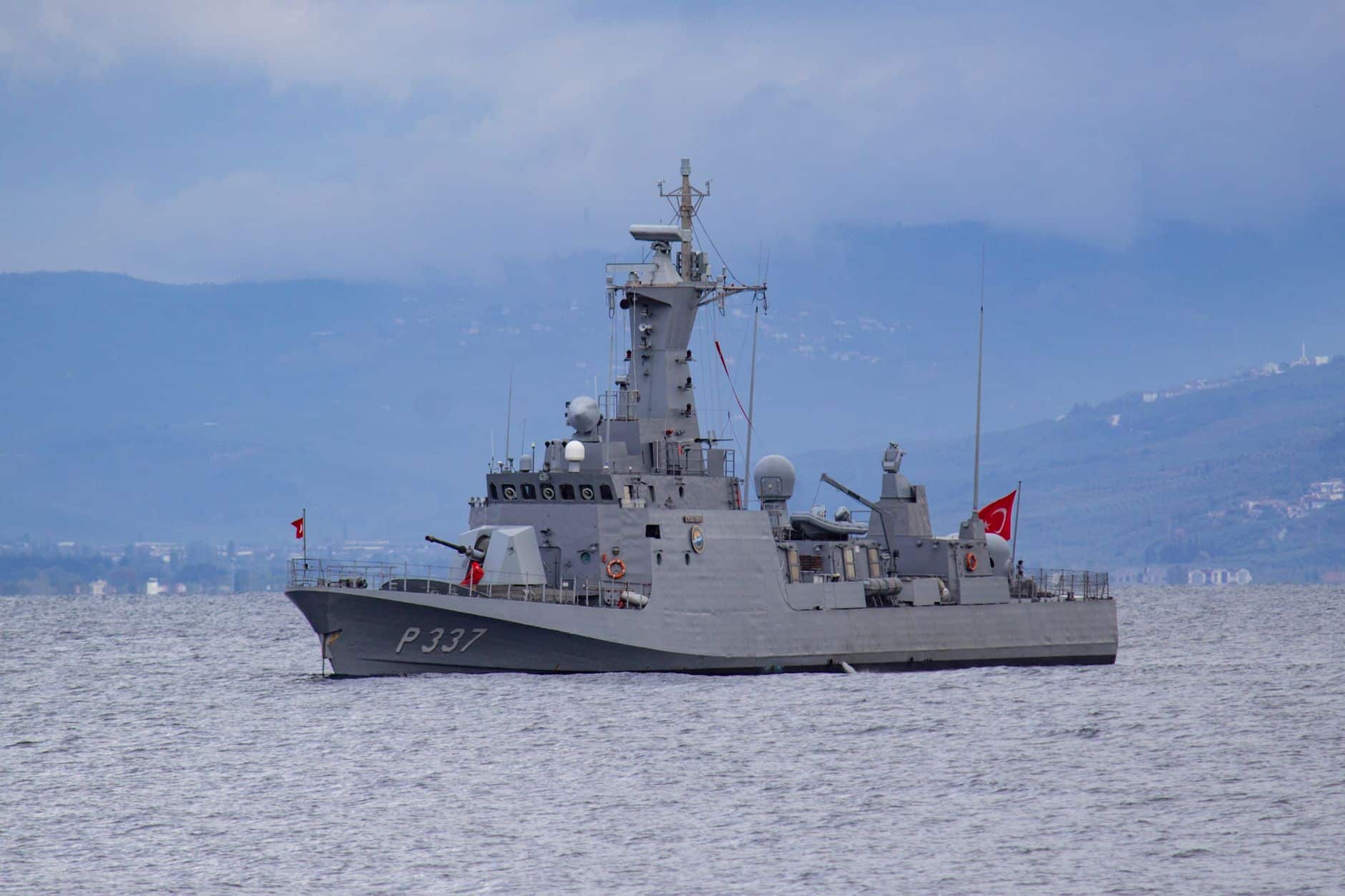
Taiwan protested Indonesia's joint naval exercise with China in August 2026 conducted within Taiwan's exclusive economic zone. The exercise reflects China's strategy to establish normalized military operations in contested waters and signals potential shifts in Indonesian foreign policy under President Prabowo Subianto.
Taiwan formally called on Indonesia to explain its participation in a joint naval exercise with China on August 12, 2026, marking a rare moment of diplomatic friction between Taipei and Jakarta. The exercise, conducted between 6:30 a.m. and 9:30 a.m. in waters east of Taiwan, involved the Indonesian Navy frigate KRI I Gusti Ngurah Rai and China’s PLA Navy guided-missile frigate Honghe, which operates under the Eastern Theater Command. The drill included formation maneuvers, maritime communications, replenishment-at-sea operations, and a formal divergence ceremony. Critically, geointelligence analysis confirms the exercise took place within Taiwan’s exclusive economic zone (EEZ), with the Indonesian vessel operating with its Automatic Identification System (AIS) activated while the Chinese frigate operated with AIS disabled—a standard practice for PLA Navy vessels operating near Taiwan.
The timing and location of this exercise underscore the escalating strategic competition over maritime spaces adjacent to Taiwan. Rather than a routine naval interaction, the passex (passing exercise) represents a deliberate assertion of Chinese and Indonesian presence in waters that Taiwan claims and increasingly defends through diplomatic channels and coast guard operations.
Indonesia’s official response emphasized that the exercise was non-threatening, characterizing passex activities as “universal naval traditions” and “goodwill engagements” reflecting “naval brotherhood and maritime diplomacy.” This framing aligns with standard international practice—navies do routinely conduct passing exercises in international waters. However, the Indonesian Navy’s statement obscures the specific geopolitical context: the exercise occurred in Taiwan’s EEZ during a period of intensifying cross-strait tensions and was immediately preceded by Indonesia’s participation in bilateral exercises with the Russian Navy in late July.
The sequence of Indonesia’s naval movements is analytically significant. The KRI I Gusti Ngurah Rai transited from exercises with Russia, docked at Japan’s Yokosuka Naval Base from August 1-8, then proceeded directly to the joint exercise with China before entering the Philippines’ EEZ and approaching Scarborough Shoal—a disputed reef claimed by both China and the Philippines. This routing pattern suggests deliberate choreography rather than routine transit, positioning Indonesia as willing to operate alongside China in contested waters at a moment when Beijing is asserting control over maritime spaces east of Taiwan.
Analytical assessment indicates the Indonesia-China exercise functions as a strategic response to accelerating maritime cooperation between Japan and the Philippines. In late May 2026, Japan and the Philippines agreed to delimit their overlapping EEZs and continental shelves in waters east of Taiwan—a move widely interpreted as strengthening bilateral coordination in potential Taiwan contingency scenarios. This agreement followed joint exercises between the Philippines, Japan, and the United States in the South China Sea in late July, conducted amid renewed confrontations between Manila and Beijing over Scarborough Shoal, where the Philippines accused China of deploying water cannons against its vessels.
China’s response has been multifaceted. Beijing objected to the Japan-Philippines maritime talks on grounds of its claimed sovereignty over Taiwan and Taiwan’s EEZ, demanding the two countries “immediately cease all illegal acts that undermine China’s sovereign rights and interests.” In June 2026, the China Coast Guard announced stepped-up patrols east of Taiwan specifically in response to the Japan-Philippines delimitation talks. The PLA Navy’s joint exercise with Indonesia thus represents a military dimension of China’s broader strategy to establish presence and normalize operations in waters where Japan, the Philippines, and Taiwan are increasingly coordinating.
The exercise also carries symbolic weight: it demonstrates China’s ability to secure participation from a major Southeast Asian power in military activities in Taiwan’s EEZ, potentially signaling to other regional actors that alignment with Beijing remains strategically viable despite intensifying U.S.-led security partnerships in the region.
The exercise raises substantive questions about Indonesia’s strategic direction under President Prabowo Subianto, who assumed office in October 2024. Prabowo’s participation in the China-led exercise represents a notable shift from Indonesia’s traditionally balanced positioning in Indo-Pacific geopolitics. The irony is historically acute: Prabowo, a retired general from Suharto’s authoritarian New Order regime, was previously accused of fanning anti-Chinese sentiment in Indonesia and has been held culpable by analysts for contributing to the 1998 anti-Chinese race riots that killed over 1,000 people. His decision to visit China as president-elect and subsequently authorize military exercises with the PLA Navy suggests a deliberate effort to rehabilitate Indonesia’s relationship with Beijing.
The strategic logic appears rooted in economic pragmatism. China represents Indonesia’s largest source of foreign direct investment, operating extensive manufacturing facilities, mining operations, and funding major Belt and Road Initiative infrastructure projects throughout the archipelago. Prabowo has publicly stated his intention to maintain balanced relationships with China, Japan, and the United States, but his actions suggest a tilt toward Beijing. Whether this reflects a fundamental reorientation of Indonesian foreign policy or tactical positioning to secure Chinese economic investment during Indonesia’s transition to a new administration remains unclear. However, the precedent of the Philippines under Rodrigo Duterte is instructive: Duterte pursued deliberate alignment with China while distancing Manila from the United States, a policy subsequently reversed by his successor Ferdinand Marcos Jr., who repositioned the Philippines toward closer U.S.-Japan-Taiwan coordination.
A critical but underanalyzed dimension of Indonesia’s strategic positioning involves the welfare of its citizens in Taiwan. Approximately 350,000 Indonesians reside in Taiwan, making Indonesians the largest Southeast Asian nationality and the largest foreign population in Taiwan overall. The vast majority are blue-collar migrant workers in manufacturing, construction, and domestic service sectors. Despite this substantial population presence, Indonesian policymakers and analysts have not conducted sustained public discussion of contingency planning for a Taiwan conflict scenario.
By contrast, the Philippines—with approximately 150,000 nationals in Taiwan—has begun articulating explicit security implications. In April 2026, former Philippine Army Vice Commander Leodevic B. Guinid publicly stated that military interoperability between Taiwan and the Philippines would be necessary for evacuations in the event of armed conflict. Philippine President Ferdinand Marcos Jr. has signaled that Manila views itself as a stakeholder in Taiwan’s security, even congratulating Taiwan’s President Lai Ching-te on his 2024 election victory. Indonesia’s apparent strategic alignment with China, combined with the absence of comparable contingency planning for its much larger population in Taiwan, represents a policy gap with significant humanitarian implications.
The August 12 exercise should be understood as part of a broader Chinese strategy to establish normalized military operations in waters east of Taiwan. This objective extends beyond Taiwan’s EEZ to encompass the broader maritime space where Japan, the Philippines, Taiwan, and increasingly the United States are coordinating. China’s use of Indonesia as a partner in this exercise serves multiple objectives: it demonstrates Beijing’s ability to secure regional participation in activities that Taiwan contests; it signals to other Southeast Asian nations that alignment with China remains strategically viable; and it establishes a precedent for routine military operations in disputed waters.
Indonesia’s participation, whether driven by economic incentives under Prabowo or reflecting a genuine policy reorientation, has measurable strategic consequences. It complicates the emerging Japan-Philippines-Taiwan security architecture and suggests that China retains significant leverage over Indonesian foreign policy through economic interdependence. The exercise also highlights the vulnerability of Southeast Asian states to great power competition, with military and diplomatic decisions in Jakarta, Beijing, and Manila carrying direct implications for Taiwan’s security posture and the stability of the Indo-Pacific region.
The waters east of Taiwan are transitioning from a peripheral strategic concern to a central focal point of Indo-Pacific geopolitics. The convergence of Japanese-Philippine maritime cooperation, Chinese assertions of control, Taiwanese sovereign claims, and now Indonesian military participation suggests that this region will witness intensifying diplomatic friction and potential military incidents in coming months. Policymakers in Canberra, Washington, and other regional capitals should monitor Indonesia’s strategic trajectory closely, as Jakarta’s positioning may signal broader shifts in Southeast Asian alignment during a period of acute great power competition.




