Physical Address
304 North Cardinal St.
Dorchester Center, MA 02124
Physical Address
304 North Cardinal St.
Dorchester Center, MA 02124

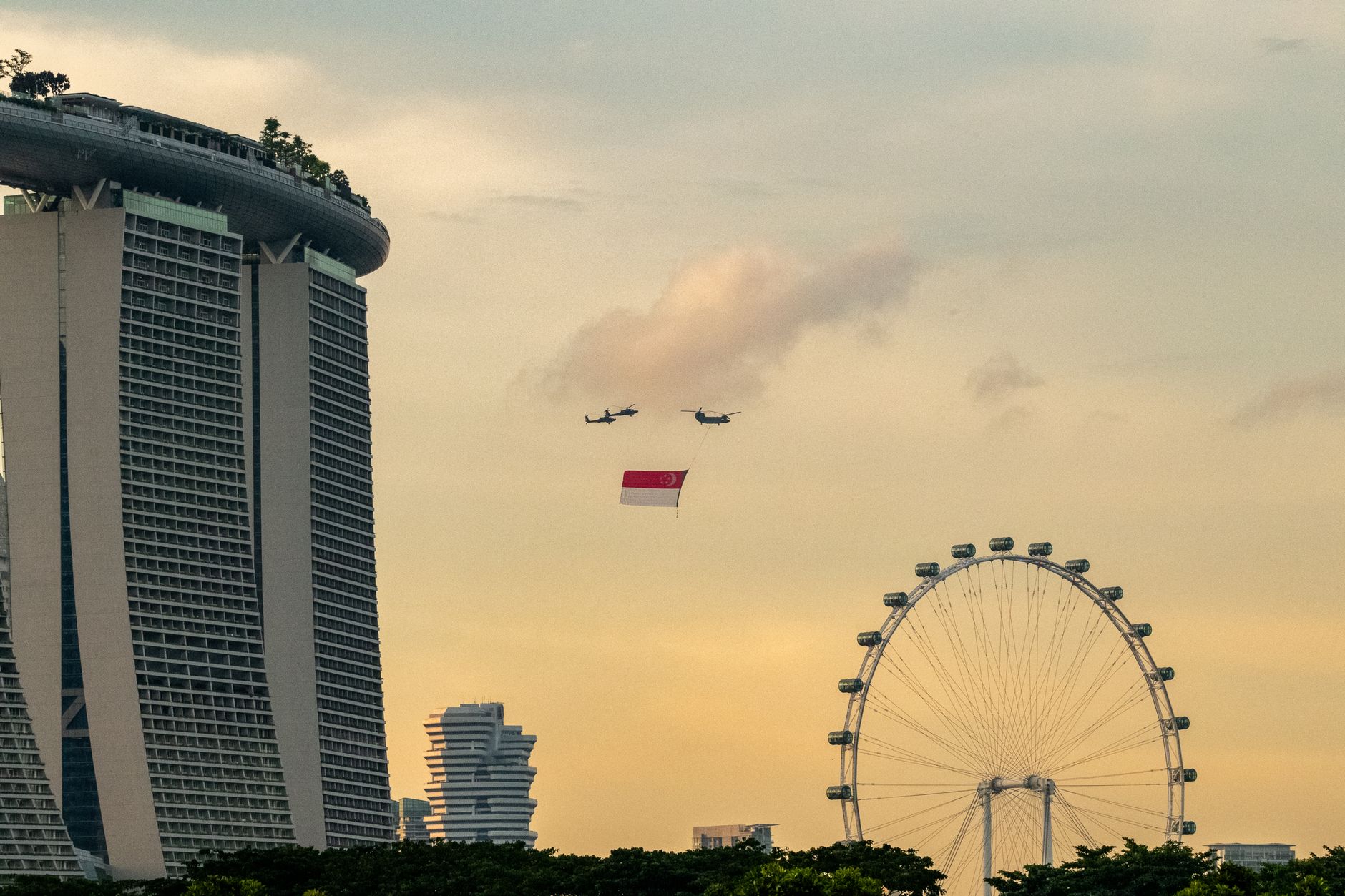
Singapore's 2025 sanctions on Israeli nationals for settler violence marked an unprecedented assertion of principle in a historically consequential partnership. The measured response reveals how a small state balances strategic necessity with adherence to international law.
Singapore’s 2025 decision to impose financial sanctions and travel bans on four Israeli nationals for settler violence in the West Bank marked a watershed moment in one of Asia’s most strategically consequential but politically delicate bilateral relationships. The sanctions—targeting individuals connected to what Singapore’s Foreign Ministry characterized as “egregious acts of extremist violence” against Palestinians—represented an unprecedented public assertion of principle against a state that quite literally enabled Singapore’s existence as an independent nation. Yet the measured nature of the response, targeting individuals rather than the Israeli state itself, revealed the profound complexity of Singapore’s foreign policy challenge: maintaining a critical strategic partnership while upholding the international legal principles upon which small states depend for survival.
This tension encapsulates a broader challenge facing Singapore in the Indo-Pacific and globally. As a city-state with no natural resources, limited geographic depth, and a population of 5.9 million, Singapore’s security and prosperity depend entirely on a rules-based international order. That dependency fundamentally shapes how Singapore approaches even its closest partnerships, including the one forged in 1965 with Israel.
When Singapore separated from Malaysia in August 1965, it inherited neither an army nor international allies willing to assist in its military development. The newly independent nation faced existential vulnerability: surrounded by larger neighbors, economically underdeveloped, and diplomatically isolated. Israel, then itself a young state navigating regional hostility, responded when others declined.
Israeli military advisers arrived in Singapore to conduct comprehensive defence assessments and architect what became known internally as the “Brown Book”—a master strategic plan for building the Singapore Armed Forces from foundational principles. This was not merely technical assistance; it represented a complete institutional transplant. Singapore’s national service system, conscription model, and military organizational structure were directly modeled on the Israeli Defence Forces. Israeli personnel, operating under the coded designation “the Mexicans” to obscure their presence from regional observers, worked alongside Singapore’s founding military leadership, including figures close to Prime Minister Lee Kuan Yew.
The relationship remained classified for decades. Public acknowledgment of Israeli military cooperation would have been politically catastrophic in 1960s Southeast Asia, where Arab-Israeli tensions resonated across Muslim-majority societies and where Singapore’s own Muslim population—then comprising approximately 14-15% of the city-state—might have viewed such alignment as betrayal. Lee Kuan Yew’s government demonstrated strategic discipline by maintaining the partnership in secrecy while building alternative diplomatic relationships across the Islamic world and beyond.
Over subsequent decades, the relationship expanded substantially beyond defence. Israeli expertise and investment flowed into Singapore’s emerging technology sector, cybersecurity infrastructure, life sciences research, and industrial R&D. Israeli companies established regional headquarters in Singapore, leveraging the city-state’s position as a financial and technological hub to access Asian markets. By the 2020s, bilateral cooperation spanned multiple domains, creating institutional interdependencies that transcended the original defence rationale.
Singapore’s January 2025 sanctions decision targeted four Israeli nationals implicated in what the Foreign Ministry described as settler violence in the West Bank. The action was deliberate and carefully calibrated. By targeting individuals rather than the Israeli government or state institutions, Singapore avoided the appearance of rupture while making an unambiguous statement about the limits of partnership. The sanctions included financial asset freezes and entry bans to Singapore—tools that imposed real costs without severing diplomatic or economic ties.
Foreign Minister Vivian Balakrishnan articulated Singapore’s position with unusual directness. He affirmed that Israeli settlements constitute violations of international law, that their expansion undermines prospects for a two-state solution, and that perpetrators of settler violence must face accountability. Simultaneously, Balakrishnan stated that recognition of Palestinian statehood was a matter of “when, not if,” contingent on Palestinian acceptance of Israel’s right to exist and rejection of terrorism. This formulation—supporting both Israeli survival and Palestinian statehood while condemning specific Israeli policies—reflected Singapore’s attempt to hold multiple principles in tension.
Notably, Singapore stopped short of formally recognizing Palestinian statehood, a step taken by Australia, Canada, France, and the United Kingdom in autumn 2025. This restraint demonstrated Singapore’s calculation that formal recognition would constitute a more dramatic rupture with Israel than its strategic interests warranted, even as it signaled alignment with the international trend toward Palestinian state recognition.
Singapore’s foreign policy posture cannot be understood outside the framework of small state vulnerability. In February 2026, Balakrishnan articulated this logic explicitly in Parliament: “On some issues, we will have to say ‘no’ and to do so courteously, respectfully, and constructively, but nevertheless to stand firm and say ‘no.’ This is not about choosing sides, but about upholding principles and making a careful assessment of Singapore’s long-term national interests.”
He continued with a formulation that captured the existential stakes: “If we ever lose the ability to say ‘no,’ then that is the day that Singapore loses our relevance and indeed, our independence.”
This reasoning reveals the paradox at the heart of Singapore’s Israel policy. Singapore’s security architecture rests entirely on the assumption that international law constrains powerful states and that smaller nations can invoke legal principles to resist coercion. The moment Singapore abandons those principles in favor of strategic convenience—accepting Israeli settlement expansion, ignoring settler violence, or treating international law as negotiable—it undermines the very legal framework upon which its own security depends. A world where “might is right” is fundamentally incompatible with Singapore’s survival.
Balakrishnan connected this reasoning to Singapore’s broader stance on international conflicts, suggesting that consistency across cases strengthens Singapore’s credibility and reinforces the international legal order itself. This is not moral posturing; it is rational calculation about long-term national interest.
Singapore’s policy must also navigate acute domestic political sensitivities. The city-state’s Muslim population comprises approximately 13-14% of its 5.9 million residents, with substantial Malay-Muslim communities in neighboring Malaysia (73% Muslim) and Indonesia (87% Muslim). The Israel-Palestine conflict resonates powerfully across these populations for religious, humanitarian, and communal reasons.
Singapore’s government has maintained strict control over public expression of foreign political causes, viewing uncontrolled pro-Palestinian activism as a potential vector for communal polarization. In July 2026, this principle was tested when members of the British band Massive Attack displayed a Palestinian flag and shouted “Free Palestine” during a Singapore concert. Singaporean police investigated the musicians, issued stern warnings, and barred them from re-entering Singapore, citing concerns about racial and religious harmony.
This episode illustrated the government’s determination to prevent the Israel-Palestine conflict from becoming a flashpoint for domestic sectarian division. While pro-Palestinian sentiment runs deep in Muslim-majority sections of Singapore’s society and across neighboring countries, the government treats public political expression of foreign causes as a potential threat to social cohesion. The sanctions on Israeli individuals thus served a dual function: signaling international principle while simultaneously demonstrating to Singapore’s Muslim population that their concerns about Palestinian suffering were being acknowledged at the state level.
Singapore’s approach to Israel represents a sophisticated model of small state diplomacy: maintaining critical partnerships while preserving the capacity to disagree publicly. The relationship with Israel will not dissolve; the historical debt remains real, the strategic cooperation continues to yield tangible benefits, and neither side has incentive for dramatic rupture. Israeli technology companies remain embedded in Singapore’s economy, bilateral defence consultations continue, and intelligence-sharing arrangements persist.
However, Singapore has signaled that historical gratitude will not function as a political shield against criticism. The friendship is conditional on alignment with Singapore’s core foreign policy principles: respect for international law, commitment to a rules-based order, and adherence to the two-state solution framework. When Israeli policies breach these principles, Singapore will say so—publicly, clearly, and through concrete policy measures.
This recalibration reflects Singapore’s maturation as an independent state. The early decades of Israel-Singapore relations required secrecy and strategic silence; Singapore lacked the diplomatic capacity and regional standing to openly challenge Israeli policies. By the 2020s, Singapore had accumulated sufficient diplomatic capital and strategic autonomy to afford principled disagreement with even its most historically important partners.
For policymakers in the Indo-Pacific and beyond, Singapore’s model offers a template for navigating the tension between strategic partnership and principled foreign policy. Small states need not choose between friendship and independence; they can maintain both by being clear about the conditions under which partnerships endure. In doing so, Singapore reinforces the international legal order upon which its own survival depends—and demonstrates that even the closest historical bonds must ultimately bend to the imperatives of principle and long-term national interest.