Physical Address
304 North Cardinal St.
Dorchester Center, MA 02124
Physical Address
304 North Cardinal St.
Dorchester Center, MA 02124

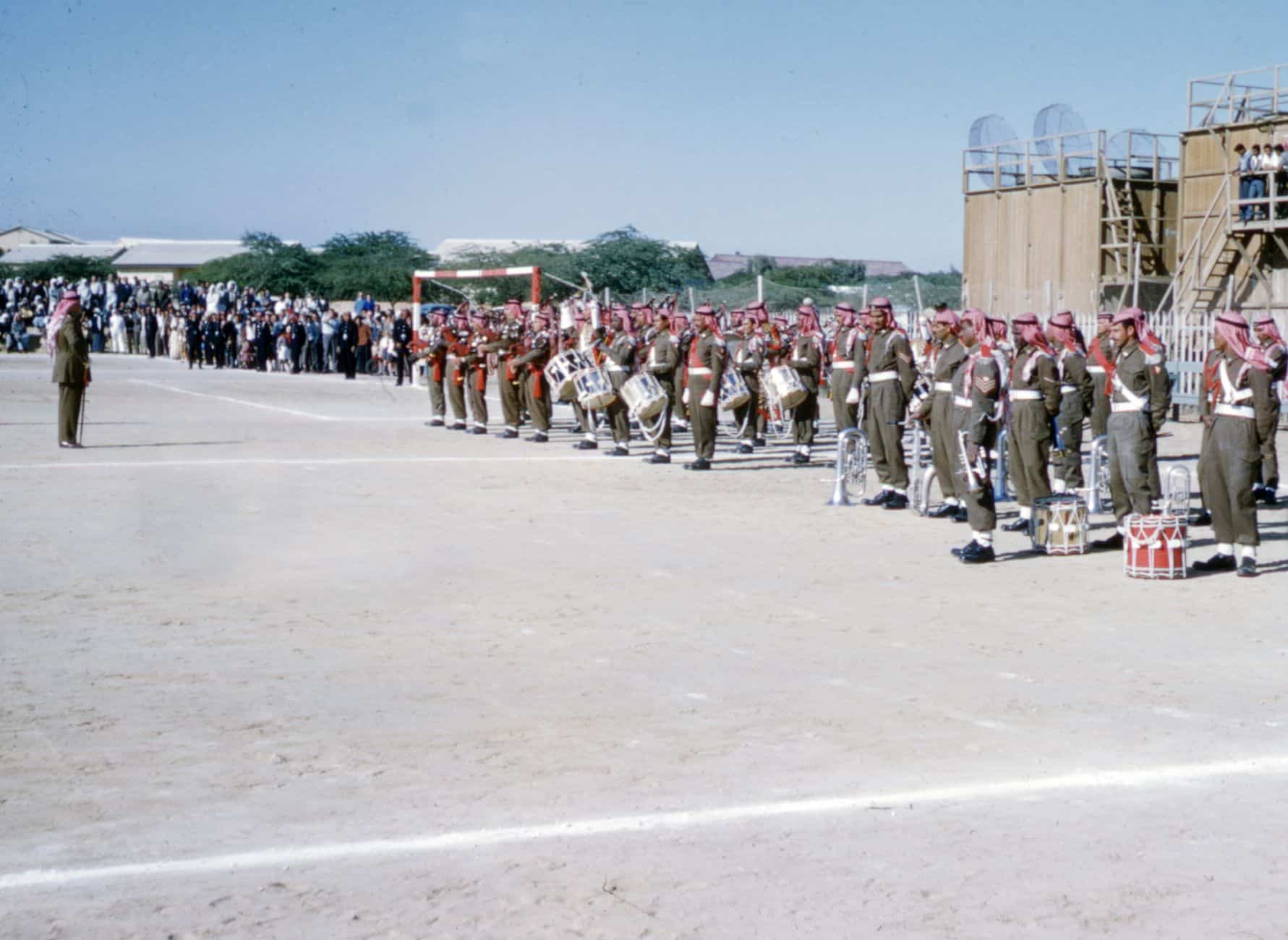
Pakistan, Turkey, and Saudi Arabia signed the Mecca Joint Defense Agreement in August 2025, committing to treat attacks on any member as attacks on all three. The pact represents Pakistan's formal pivot into Gulf security while preserving operational flexibility and avoiding full military integration.
On August 7, 2025, Turkey, Saudi Arabia, and Pakistan signed the Mecca Joint Defense Agreement, marking a significant shift in Pakistan’s strategic orientation. The pact commits the three nations to treat an armed attack on any one member as an attack on all three—a collective-defense clause that formally embeds Pakistan into Gulf security architecture for the first time. This represents more than diplomatic coordination; it signals Islamabad’s deliberate expansion beyond its traditional South Asian security focus into a region where it has operated tactically but never held formal strategic commitments.
The agreement emerged from exploratory trilateral talks in February 2025, when the three governments had no formal defense framework. The speed of negotiation and the substance of the final agreement suggest convergent interests: Saudi Arabia seeking to diversify its security partnerships beyond Washington, Turkey positioning itself as a regional power independent of NATO constraints, and Pakistan pursuing new sources of military financing and political influence. Yet the pact’s operational ambiguity—undefined military obligations, no disclosed activation procedures, and unstated geographical scope—reveals the three signatories’ caution about overcommitting to an untested alliance.
Comparisons to NATO’s Article 5 framework are instructive but incomplete. While Article 5 establishes mutual defense, NATO operates within decades of integrated military planning, standardized procedures, and institutionalized command structures. The Mecca pact contains none of these. The three governments have deliberately avoided the institutional architecture that would lock them into automatic responses.
Pakistan’s May 2025 deployment to Saudi Arabia during the Iran crisis provides the operational model the three countries appear to be adopting. Islamabad deployed approximately 8,000 troops, JF-17 fighter aircraft, armed drones, and a Chinese HQ-9 air-defense system to the kingdom. Critically, Pakistani personnel operated this equipment while Saudi Arabia financed the deployment. This arrangement preserved Pakistani control over its forces and systems while delivering tangible military capability to Riyadh without requiring Saudi Arabia to reorganize its armed forces around Chinese-origin systems.
This model offers advantages for all parties. Pakistan gains political access and defense revenue without surrendering operational autonomy. Saudi Arabia receives force augmentation without the friction of full military integration. Turkey, which already cooperates with Saudi Arabia through the 2023 SAMI-Baykar agreement on local defense manufacturing, can follow the same pattern. The pact thus functions as a flexible framework for specific missions rather than a binding alliance requiring standardized procedures and integrated command structures.
For Pakistan, the Mecca pact represents a calculated expansion of its strategic toolkit. Islamabad has historically oriented its defense planning toward India, with Afghanistan and Iran shaping its western security environment. The new Gulf commitment allows Pakistan to leverage its military capacity for political gain, defense sales revenue, and Saudi financing—resources that strengthen its position in South Asia while reducing dependence on any single partner.
However, the pact introduces new complications. A future India-Pakistan crisis would test how Saudi Arabia and Turkey interpret their collective-defense obligations. New Delhi has publicly stated it is monitoring the agreement closely. Riyadh, which maintains a substantial strategic relationship with India, has strong incentives to prevent the pact from converting every India-Pakistan confrontation into a Saudi-Indian crisis. This tension is manageable but real.
Pakistan’s nuclear arsenal introduces a separate layer of complexity. Possessing nuclear weapons and extending nuclear guarantees to allies are distinct decisions. There is no public evidence that Islamabad has formally placed Turkey or Saudi Arabia under its nuclear deterrent umbrella. Pakistani officials have previously stated that nuclear weapons were “not on the radar” of its Saudi defense agreement, and Saudi officials have characterized the Mecca pact as unrelated to nuclear ambitions. Yet the fact that one pact member possesses nuclear escalation options unavailable to the others creates asymmetries that could complicate crisis management.
The three signatories operate fundamentally different defense-equipment ecosystems. China supplied 80 percent of Pakistan’s major arms imports during 2021-25, making Pakistani forces predominantly equipped with Chinese systems. Saudi Arabia remains heavily dependent on U.S. and Western equipment, while Turkey operates a hybrid mix of NATO-standard and domestically produced systems. This divergence creates real obstacles to seamless military cooperation, particularly in communications, maintenance protocols, and sensitive technology sharing.
Yet Pakistan’s May deployment demonstrates that full integration is unnecessary. Chinese-origin equipment contributed effectively to Saudi defense through Pakistani-operated units without requiring Riyadh to reorganize its armed forces or adopt Chinese systems wholesale. This model sidesteps the interoperability problem by maintaining separate operational chains while coordinating at the strategic level.
Saudi Arabia’s stated objective to localize more than half of military spending by 2030 creates opportunities for deeper cooperation. The kingdom’s Vision 2030 initiative explicitly prioritizes strategic autonomy through domestic defense manufacturing. Turkey and Pakistan could become embedded in this process. Saudi capital and procurement power can help Turkish and Pakistani manufacturers achieve greater scale, while Riyadh builds indigenous capacity. The 2023 SAMI-Baykar agreement on local manufacturing of Turkish defense systems offers a template. Pakistan could participate in similar arrangements, creating long-term procurement and production relationships that outlast political shifts.
The Mecca pact is frequently characterized as evidence of a post-American Middle East. This assessment overstates the case. In January 2025, U.S. Central Command and regional partners opened an air- and missile-defense coordination cell at Al Udeid Air Base in Qatar, with representatives from 17 countries. Saudi Arabia deepened its bilateral defense relationship with Washington in November 2025, with Riyadh explicitly reaffirming the United States as its primary strategic partner. American military and intelligence capabilities remain difficult for regional powers to replace.
The Mecca pact more accurately represents an attempt to gain operational flexibility within the existing American-centered system rather than a rupture from it. Saudi Arabia diversifies its security partnerships without abandoning Washington. Turkey, a NATO member, pursues regional initiatives outside direct U.S. control. Pakistan maintains relationships with both Beijing and Washington while offering Gulf partners access to Chinese-origin equipment and Pakistani military expertise. From the U.S. perspective, this arrangement distributes security burdens among regional actors. From the perspective of the three signatories, it expands their room for maneuver.
A historical parallel exists in CENTO (Central Treaty Organization), the Cold War alliance linking Turkey, Pakistan, and Iran under American sponsorship. Declassified U.S. records reveal that in 1960, the three regional members pushed for a permanent CENTO command structure while Washington resisted, fearing the political and financial obligations such institutionalization would create. The United States participated extensively in CENTO while maintaining the fiction of observer status. The Mecca pact reverses this dynamic: the regional states negotiate the framework themselves, without American participation, yet all three maintain significant relationships with Washington. The three signatories have more strategic autonomy than they possessed during the CENTO era, but this does not yet amount to independence from American capabilities and strategic preferences.
The pact’s immediate operational utility may materialize in the Red Sea. On July 30, 2025, Saudi Arabia proposed a multinational maritime-defense coalition to address renewed Houthi attacks in the Red Sea, Bab el-Mandeb, and the Gulf of Aden. Turkey and Pakistan joined 12 other governments—including Egypt, Sudan, and Djibouti—in supporting the initiative. This maritime-security mission offers a practical framework for the pact to demonstrate concrete capability.
The Red Sea coalition also illustrates how the pact can expand without requiring all participants to accept collective-defense commitments. Egypt can cooperate with the three Mecca signatories on maritime security without joining the mutual-defense clause. Other governments can participate in specific missions or exercises aligned with their interests. This modular structure allows the network to grow organically around particular security challenges rather than requiring wholesale adoption of the full pact framework.
The Mecca pact represents a significant but carefully calibrated expansion of Pakistan’s strategic role. Islamabad has secured formal access to Gulf security architecture while preserving operational autonomy and avoiding the institutional rigidity that full military integration would impose. For Saudi Arabia, the pact diversifies security partnerships and creates options for burden-sharing. For Turkey, it establishes a regional security channel independent of NATO structures.
The agreement’s long-term durability will depend on whether the three signatories can transform summit-level commitments into sustained military cooperation. Joint procurement, training programs, and defense-manufacturing partnerships would create institutional depth that political disagreements cannot easily dissolve. The current model—flexible, mission-focused, and operationally distinct—suits all three parties’ immediate interests. Whether this flexibility can evolve into deeper integration without creating the institutional constraints the signatories appear determined to avoid remains the central question facing the pact’s evolution.




