Physical Address
304 North Cardinal St.
Dorchester Center, MA 02124
Physical Address
304 North Cardinal St.
Dorchester Center, MA 02124

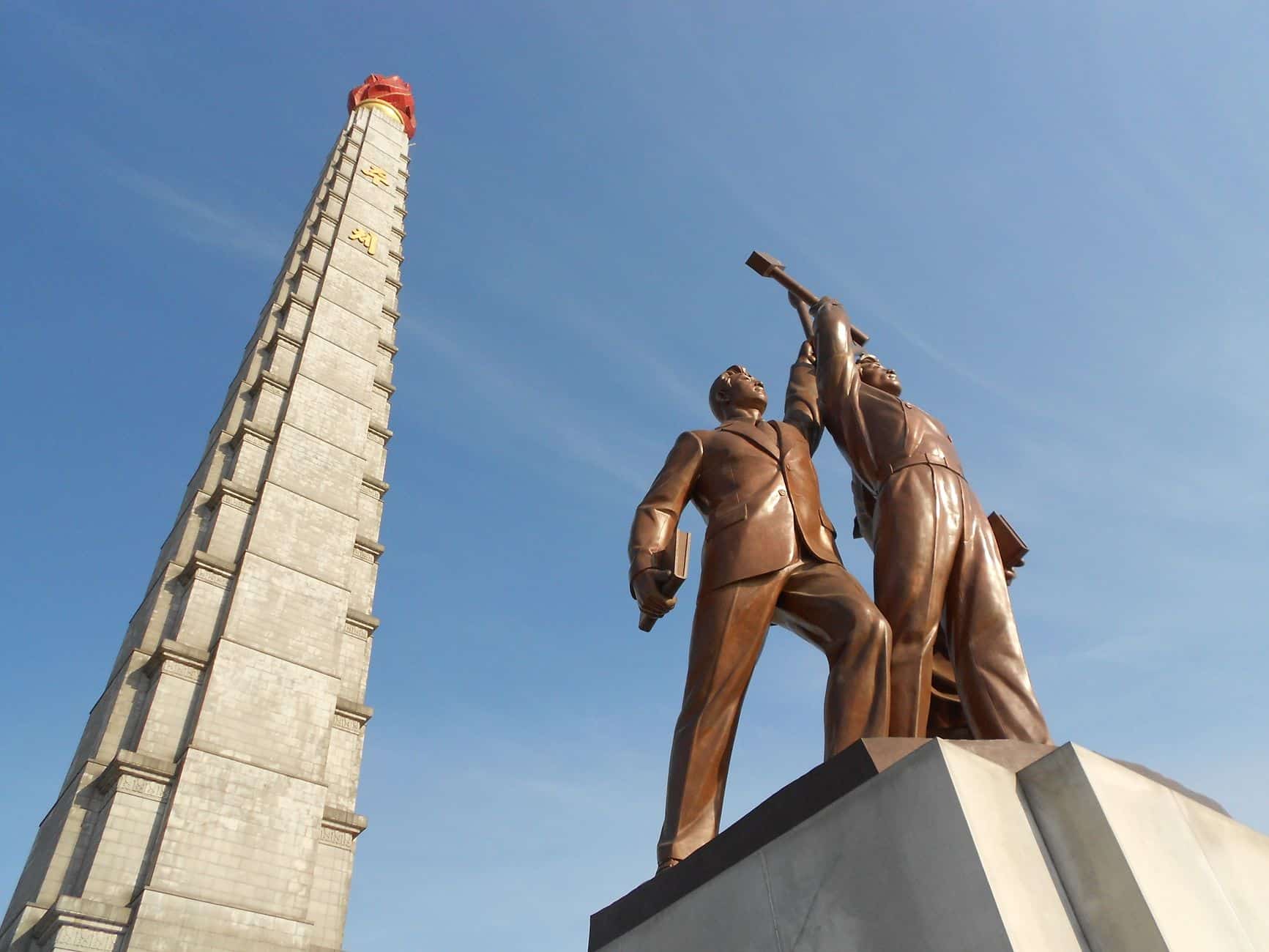
U.S. Senators Tim Kaine and Dan Sullivan have reintroduced the North Korean Human Rights Reauthorization Act, reviving a critical legislative framework that expired in 2022. As North Korea's isolation deepens and its alignment with China and Russia strengthens, expanded information access, bilateral coordination, and integration of defector expertise are essential to supporting the regime's victims.
The reintroduction of the North Korean Human Rights Reauthorization Act (NKHRA) by U.S. Senators Tim Kaine (D-Virginia) and Dan Sullivan (R-Alaska) in June 2024 marks a pivotal moment in American engagement with one of the world’s most repressive regimes. After a three-year legislative gap since the Act’s expiration in 2022, Congress has signaled renewed commitment to addressing systemic human rights violations affecting North Korea’s 26 million citizens. This reauthorization arrives at a particularly critical juncture: as North Korea’s isolation deepens through strengthened alignment with China and Russia, the space for humanitarian intervention and information access continues to narrow. Understanding the strategic significance of this legislation requires examining both the deteriorating conditions within North Korea and the evolving geopolitical architecture that shapes international responses to the regime’s abuses.
Recent documentation by the United Nations Commission of Inquiry on Human Rights in the Democratic People’s Republic of Korea (DPRK) confirms that conditions inside North Korea have deteriorated sharply in recent years. The regime’s information control apparatus has become increasingly lethal: consuming foreign media now carries a sentence of public execution, representing an escalation in the state’s response to ideological deviation. This represents a qualitative shift in enforcement mechanisms, moving beyond imprisonment to public demonstration killings designed to maximize deterrent effect.
The political prison camp system continues to hold tens of thousands of detainees under conditions that international observers characterize as amounting to ongoing crimes against humanity. The United Nations Commission of Inquiry has documented systematic torture, forced labor, starvation, and extrajudicial execution within these facilities. Notably, the regime maintains a system of guilt-by-association that extends punishment across three generations of families deemed politically unreliable, a practice that has no parallel in modern state systems.
The COVID-19 border closures, which began in 2020 and were only partially relaxed in subsequent years, severed North Korea’s already limited external connections. This isolation has intensified the regime’s control over information flows and reduced opportunities for the North Korean population to access alternative narratives about governance, economics, or international norms. The combination of technological isolation and ideological indoctrination creates a population uniquely vulnerable to state propaganda and unable to develop independent perspectives on their circumstances.
The deepening strategic alignment between Chinese President Xi Jinping, Russian President Vladimir Putin, and North Korean leader Kim Jong Un has fundamentally altered the calculus of international human rights advocacy. This tripartite relationship serves as a shield against international accountability mechanisms, with both China and Russia blocking or diluting United Nations resolutions critical of North Korea’s human rights record.
China’s role deserves particular analytical attention. As North Korea’s primary economic lifeline and diplomatic protector, Beijing has systematically repatriated North Korean refugees attempting to escape to third countries, a practice that violates international non-refoulement principles. The 2025 UN Commission of Inquiry documentation emphasizes that every North Korean returned to the regime faces severe punishment—typically imprisonment in political prison camps or execution. China’s continued cooperation with North Korean authorities on forced repatriation represents one of the most consequential human rights violations occurring in the region, yet it receives limited international diplomatic pressure.
Russia’s recent military cooperation with North Korea, including reported deployment of North Korean troops to support Russian operations in Ukraine, has further entrenched the regime’s international position. This military partnership provides Kim Jong Un with both strategic validation and economic resources, reducing the effectiveness of sanctions-based pressure on human rights reform.
The original North Korean Human Rights Act, first passed by Congress in 2004, was groundbreaking: the United States became the first nation to formally legislate recognition that conditions inside North Korea constituted crimes against humanity rather than merely internal political matters. This framing was strategically significant because it established a legal and moral basis for external engagement despite North Korea’s sovereignty claims.
The reauthorized NKHRA should prioritize expansion of information access programs as a core strategic mechanism. The logic underlying this approach is straightforward but powerful: a single piece of substantive outside information can dismantle years of state indoctrination. North Korean defectors consistently report that access to foreign media—radio broadcasts, USB drives containing documentaries, or digital content—proved instrumental in their decision to question regime narratives and ultimately escape.
However, quantity of information alone is insufficient. The reauthorized Act should emphasize quality and strategic targeting of content designed to expose the regime’s failures in political governance, economic management, and social provision. Programming that allows ordinary North Koreans to understand comparative economic performance, governance alternatives, or the true nature of international relations would equip citizens to not only question state propaganda but to envision alternative political futures. This represents a form of soft power engagement that respects North Korean agency while providing tools for ideological resistance.
The effectiveness of information programs depends partly on delivery mechanisms that the regime cannot easily intercept. Radio broadcasts, particularly those transmitted on frequencies that North Koreans have historically accessed, remain viable. Digital delivery mechanisms face increasing technical barriers as the regime improves its censorship infrastructure, though USB-based distribution networks continue to operate within North Korea despite security risks to participants.
A critical vulnerability in current U.S. policy architecture is the absence of designated special envoys for North Korean human rights. The position of U.S. Special Envoy for North Korean Human Rights sat vacant from 2025 onward, following the tenure of Julie Turner (2023-2025). Simultaneously, South Korea’s corresponding position of Special Envoy for North Korean Human Rights, previously held by Lee Shin-wha, has remained unfilled for an extended period.
The previous pairing of Turner and Shin-wha demonstrated the strategic value of coordinated bilateral engagement. Such coordination allows the United States and South Korea to align messaging, coordinate support for defector networks, and present unified diplomatic positions in multilateral forums. The absence of these positions represents not merely an administrative gap but a substantive weakening of policy coherence on one of the region’s most significant human rights challenges.
Reauthorization of the NKHRA should include explicit provisions mandating appointment of special envoys in both countries, with defined mandates for bilateral coordination. These positions should have sufficient seniority and resources to engage with international human rights bodies, coordinate with civil society organizations, and maintain relationships with North Korean defector communities. The previous effectiveness of the Turner-Shin-wha pairing provides a clear precedent for what coordinated engagement can achieve.
North Korean Young Leaders Assembly (NKYLA) members and other young defectors now occupy positions as professionals, researchers, lawyers, and civic leaders in democratic societies. These individuals possess irreplaceable expertise: intimate knowledge of regime operations, understanding of North Korean social dynamics, and lived experience of ideological indoctrination and escape. Yet current policy frameworks often treat defectors as symbolic witnesses rather than genuine policy partners.
The reauthorized NKHRA should establish formal mechanisms for integrating defector voices into policy development, not as consultants providing occasional input but as substantive participants in strategy design. This serves multiple functions: it improves policy quality by incorporating ground-level expertise, it demonstrates respect for North Korean agency and intellectual capacity, and it creates pathways for defectors to contribute meaningfully to efforts assisting those still trapped within the regime.
Such integration must be structured carefully to avoid performative inclusion. Defectors should have genuine influence over programming priorities, messaging strategies, and resource allocation decisions. Their networks within remaining North Korean communities, maintained through family connections and underground communication channels, provide intelligence value that formal diplomatic channels cannot access.
The reintroduction of the NKHRA by Senators Kaine and Sullivan represents necessary but insufficient action on North Korean human rights. Reauthorization restores legal architecture that lapsed in 2022 and signals congressional commitment to the North Korean people. However, the legislation must be accompanied by meaningful implementation across multiple policy domains.
The strategic environment has deteriorated since the Act’s original passage in 2004. North Korea’s isolation is deeper, its international alignment with China and Russia more entrenched, and its information control apparatus more sophisticated and lethal. These factors compress the window for external engagement. The regime’s execution of citizens for consuming foreign media represents an escalation that demands proportional response through enhanced information access programs.
Appointment of special envoys in both the United States and South Korea is essential to restore bilateral coordination. The precedent established by Julie Turner and Lee Shin-wha demonstrates that coordinated engagement produces measurable results. Continued absence of these positions represents a strategic error that weakens overall policy effectiveness.
Finally, the international community must elevate forced repatriation of North Korean refugees in China as a central concern of human rights diplomacy. Greater international attention, explicit provisions in the reauthorized Act, and coordinated diplomatic pressure can raise the cost for China of continuing this practice. Every refugee returned to North Korea faces severe punishment; preventing such returns represents perhaps the most direct form of human rights protection available to external actors.
The United States was the first nation to legislate recognition of North Korean crimes against humanity. Reauthorizing that commitment in 2026 is both a moral imperative and a strategic necessity. The North Korean people remain isolated and vulnerable, but the international tools for supporting their human rights and facilitating access to truth remain available. Deploying those tools effectively requires sustained congressional commitment, coordinated bilateral engagement, and respect for the agency and expertise of North Korean defectors themselves.