Physical Address
304 North Cardinal St.
Dorchester Center, MA 02124
Physical Address
304 North Cardinal St.
Dorchester Center, MA 02124

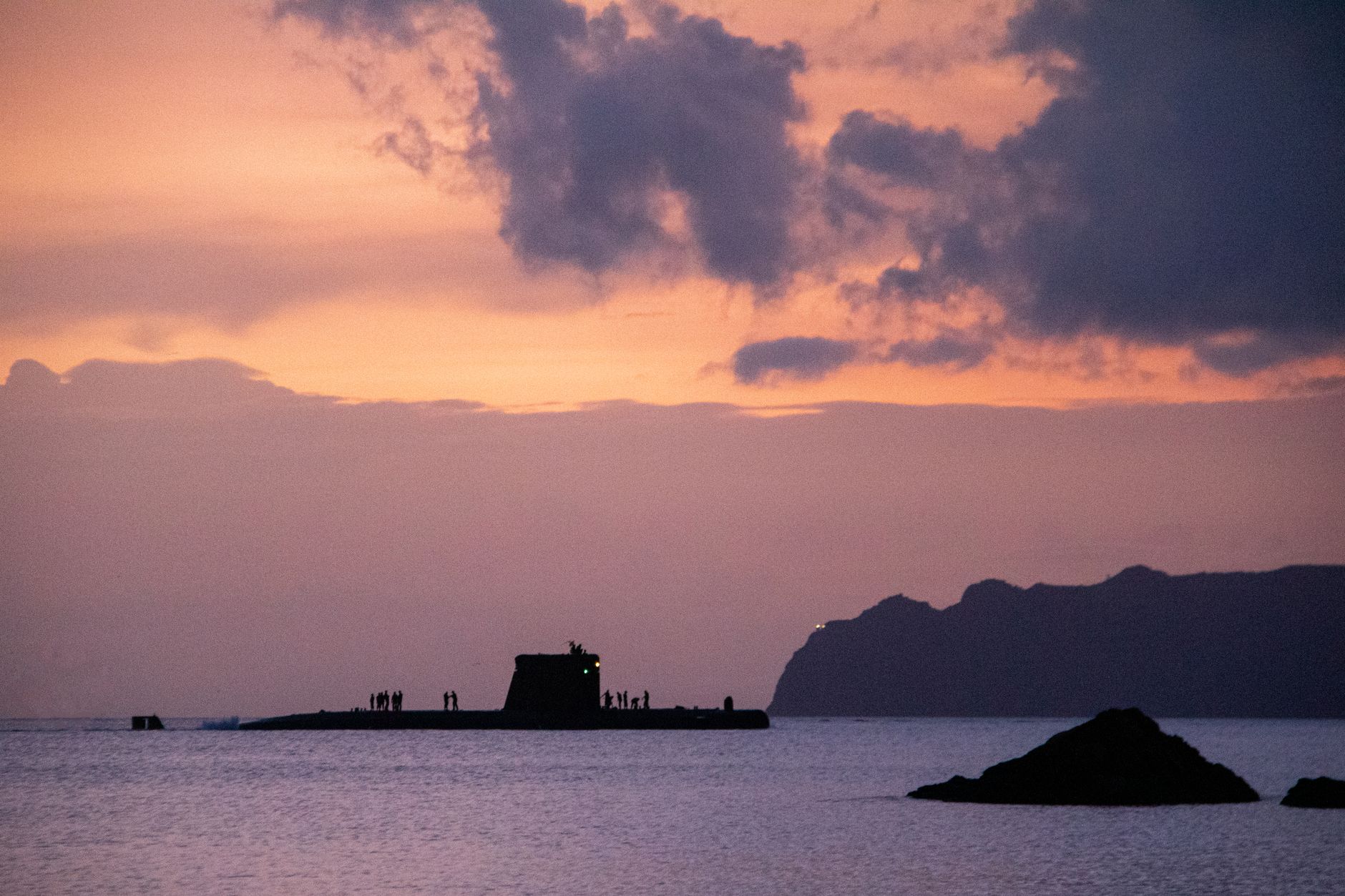
China's July 6 SLBM test in the South China Sea marks a strategic shift toward demonstrating advanced nuclear capabilities in international waters. The compressed notification protocol and regional reactions reveal underlying tensions in Indo-Pacific security management.
On July 6, 2024, the People’s Liberation Army (PLA) conducted a submarine-launched ballistic missile (SLBM) test in the South China Sea, marking a significant departure from China’s historical practice of conducting such weapons trials in domestic waters. The test represents only the second Chinese SLBM launch into international waters since 1980, and the first instance of China conducting such a test in the South China Sea specifically. The PLA’s official statement characterised the exercise as “routine” and part of annual military training cycles, yet the test’s location, notification protocols, and strategic timing warrant closer analytical examination of Beijing’s intentions and the broader implications for regional security architecture.
A distinctive feature of the July 6 test was China’s advance notification to regional and allied powers, including Australia, Japan, the United States, and other nations. However, the notification window proved exceptionally compressed—in several cases, Beijing provided only 30 minutes’ advance warning before the launch. This approach sits uneasily between two postures: sufficient notice to avoid miscalculation and military escalation, yet minimal time for third parties to conduct independent verification or mount diplomatic objections.
This notification strategy reflects a calculated diplomatic calculus. By providing advance warning, China signals confidence in its military capabilities while simultaneously demonstrating restraint and adherence to international norms around freedom of navigation and military exercises. The compressed timeline, conversely, minimises the window for international pressure or coordinated responses. The approach suggests Beijing views the test as defensible under customary international law—nations retain the right to conduct military exercises in international waters—while simultaneously signalling resolve to regional powers that it will not be deterred by diplomatic pressure from the Quad (Australia, India, Japan, United States) or AUKUS (Australia, United Kingdom, United States) partners.
China’s SLBM programme has undergone substantial modernisation over the past two decades. The PLA Navy operates the Type 094 Jin-class ballistic missile submarine, which carries the JL-2 missile with an estimated range of 7,400 kilometres. More recently, the Type 096 submarine programme is reportedly under development, potentially equipped with the longer-range JL-3 missile. These platforms form a critical component of China’s nuclear deterrent strategy, providing a survivable second-strike capability that reduces vulnerability to preemptive conventional or nuclear attacks.
The decision to conduct a test in international waters rather than in the Bohai Sea or Yellow Sea—China’s traditional testing grounds—signals several strategic messages. First, it demonstrates operational confidence: the PLA Navy is sufficiently assured of its capabilities to conduct tests in more exposed, internationally-monitored environments. Second, it projects power into the South China Sea at a moment when China faces sustained international criticism over its activities in the region, including militarisation of artificial islands and aggressive coast guard operations. Third, it serves as a capability demonstration to regional audiences, particularly Japan and the Philippines, of China’s advanced military technology and resolve.
The test elicited measured responses from key regional powers, reflecting the delicate balance between acknowledging Chinese military developments and avoiding escalatory rhetoric. Japan and Australia, both US allies with significant strategic interests in the South China Sea, acknowledged the notification but expressed concern about China’s military modernisation and its implications for regional stability. The United States, through official channels, reiterated its commitment to freedom of navigation operations and emphasised the importance of responsible military conduct in shared waters.
The muted international response, despite the test’s significance, underscores several structural realities in Indo-Pacific geopolitics. First, China’s military capabilities have advanced to a point where regional states accept their development as a fait accompli; the focus shifts from prevention to management and deterrence. Second, the notification protocol, however compressed, provides sufficient diplomatic cover for major powers to avoid escalatory responses. Third, regional states recognise that excessive criticism of routine military exercises—even those involving strategic weapons systems—risks normalising a cycle of tit-for-tat military demonstrations that could destabilise the region.
The July 6 test occurs within a broader context of accelerating military modernisation across the Indo-Pacific. Australia’s acquisition of nuclear-powered submarines under the AUKUS framework, Japan’s increased defence spending and potential constitutional amendments to enable offensive operations, and the Philippines’ strengthening security partnerships with the United States all reflect regional responses to China’s military advancement. The SLBM test serves as a reminder that China’s strategic capabilities extend beyond conventional military systems—its nuclear deterrent is operationalised, credible, and increasingly difficult to constrain through conventional deterrence mechanisms alone.
The test also highlights the limitations of existing confidence-building measures in the Indo-Pacific. The Code for the Unplanned Encounters at Sea (CUES), established between the US and China in 2014, and bilateral military communication channels between Beijing and Washington, provide mechanisms for reducing the risk of accidental escalation. However, neither framework effectively constrains the development or demonstration of strategic weapons systems. As China’s military capabilities mature, the Indo-Pacific region faces a structural challenge: managing the coexistence of multiple advanced military powers with competing strategic interests in increasingly contested spaces.
China’s July 6 SLBM test should be assessed not as an anomalous event but as a marker of normalised strategic competition in the Indo-Pacific. The test demonstrates that China possesses operationally mature submarine-based nuclear deterrent capabilities and is willing to conduct demonstrations of these systems in international waters under controlled conditions. For regional policymakers, this development reinforces the necessity of credible conventional deterrence, sustained military modernisation, and robust alliance structures.
The compressed notification window, while reducing miscalculation risks, also reflects asymmetric information and decision-making timelines that characterise great power competition in the region. Australia, as a middle power with significant strategic interests in the Indo-Pacific, must calibrate its response to Chinese military developments through a combination of alliance strengthening, military capability advancement, and diplomatic engagement that neither accommodates Chinese strategic expansion nor provokes unnecessary escalation. The test underscores that strategic stability in the Indo-Pacific will depend less on constraining military development—a goal now largely unattainable—and more on establishing clear communication protocols, maintaining credible deterrent capabilities, and reinforcing rules-based frameworks that govern military conduct in shared waters.




