Physical Address
304 North Cardinal St.
Dorchester Center, MA 02124
Physical Address
304 North Cardinal St.
Dorchester Center, MA 02124

A grassroots campaign mourning a tortured stray dog in Guangdong mobilized millions across the Chinese-speaking world, revealing both the resilience and fragility of civil society under authoritarian constraints. The state's aggressive suppression of the campaign exposes how Beijing treats any autonomous public coordination—regardless of subject—as a political threat.
On June 28, 2023, five boys under 14 years old in Jieyang, Guangdong province killed a stray mother dog known locally as Wang Wang and her three puppies. They dragged her by wire, beat her with sticks, doused her in fuel, and set her alight—then filmed and uploaded the footage to social media. The perpetrators faced no formal charges. China has no national animal cruelty statute, and because the boys were below the age of criminal responsibility, they were sent only to a “specialized school” for corrective education.
What followed was extraordinary: ordinary Chinese citizens crowdfunded memorial billboards that appeared on more than 200 electronic screens worldwide. In Times Square, the Milan Duomo, Taipei 101, and shopping districts across mainland China, the message appeared: “Never forget. Never give up.” A domestic cosmetics brand in Shenzhen ran its own mall advertisements declaring: “Resist animal cruelty; insist there be a law to rely on.” The Wang Wang campaign became the most visible grassroots mobilization in mainland China in years—and the state’s response to it reveals critical truths about the constraints on Chinese civil society in 2023.
The Chinese party-state moved swiftly to suppress the campaign. In Guangzhou, LED screens along Beijing Road’s pedestrian street that had displayed Wang Wang memorials were ordered to go dark. Sympathy posts vanished from Weibo. A street mural in Chengdu was painted over. A leaked internal notice from a district internet affairs office in Shenyang classified the campaign as a “political risk” vulnerable to “malicious hype by foreign forces” and instructed officials to inspect commercial LED screens for unauthorized content.
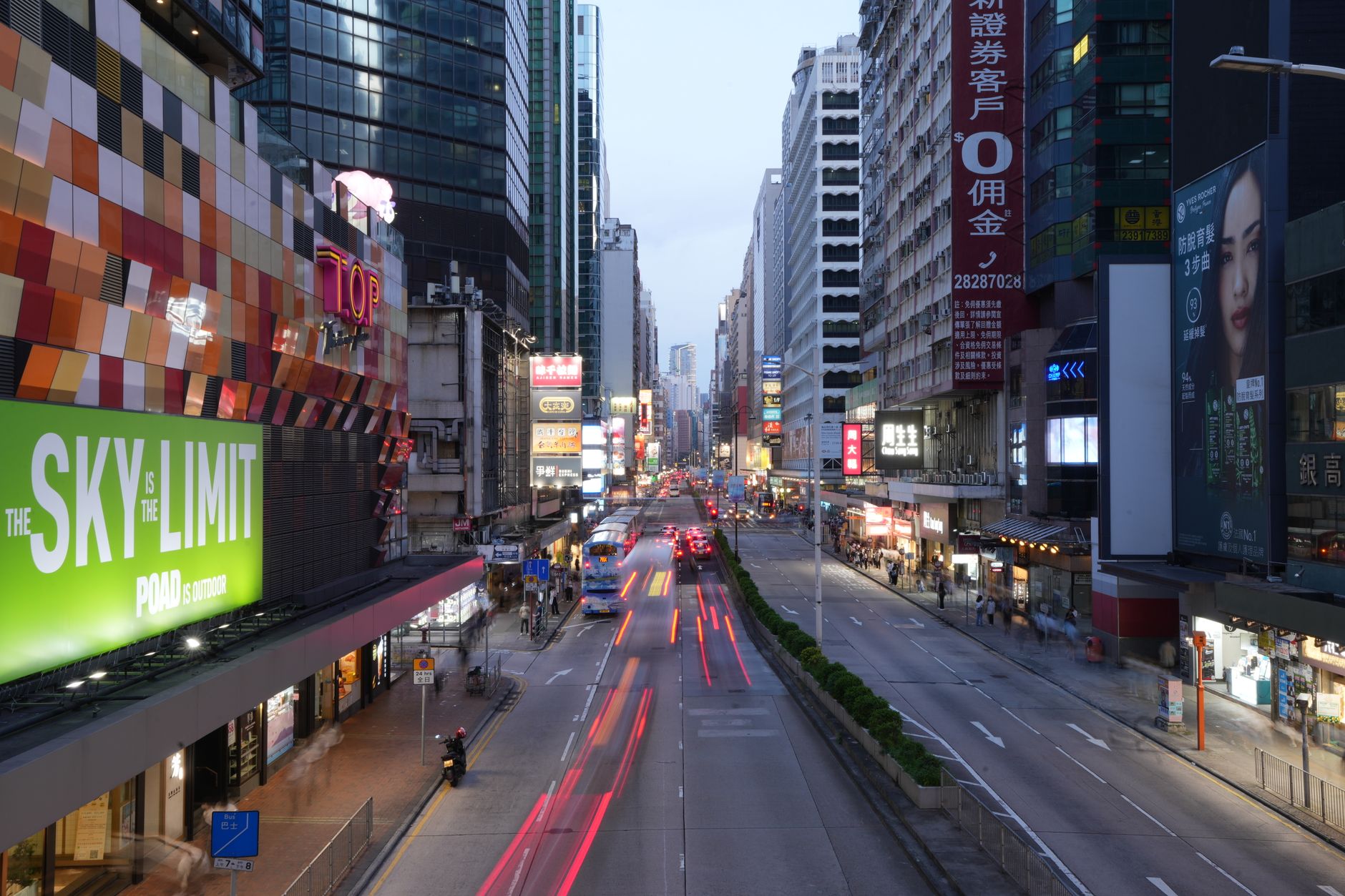
The repression extended to Hong Kong. A crowdfunded memorial screen at the junction of Argyle and Shanghai Streets in Mong Kok was shut down. Handwritten placards in Causeway Bay disappeared. When Leung Pak-yu, a Hong Kong Muay Thai team member, hung a 5-meter banner on his boxing gym depicting Wang Wang and her puppies with the words “Being a minor does not mean cruelty can be lightly brushed aside,” police visited three times on July 23 alone. Building management demanded removal, citing the lease. After Leung complied, he cut the banner apart and rehung the remaining fragments—the dogs’ portrait among them—inside his window facing the street.
The adoption platform Suppaw had crowdfunded HK$95,000 (approximately US$12,000) in two hours to place Wang Wang’s image on a Hong Kong tram. The tram company approved the wording but rejected the dog images, claiming they might “affect public sentiment.” This pattern—suppressing the visual and emotional core while allowing the words to pass—demonstrates how sophisticated China’s censorship apparatus has become in calibrating what can and cannot be seen.
What distinguishes the Wang Wang campaign is its organizational structure and geographic reach. The movement was horizontal, leaderless, funded through micro-donations, and executed across multiple jurisdictions in days. Hong Kongers recognized the playbook: in 2019, they had crowdfunded newspaper advertisements in major international dailies ahead of the G20 summit to appeal for international support against the extradition bill. Now, mainland Chinese internet users had adopted the same model and scaled it globally.
This represents a rare moment of genuine grassroots civilian coordination across the Chinese-speaking world. The Chinese party-state has spent decades systematically dismantling or capturing independent civil society organizations—labor unions, feminist and LGBTQ+ groups, rights-focused law firms, religious congregations, and NGOs. Yet the Wang Wang campaign demonstrated that autonomous public action remains possible, even in the heavily monitored mainland Chinese public sphere.
The mechanism is crucial: the mobilization occurred through decentralized, apolitical interest communities of internet users united by a shared subject—pet welfare. Because the campaign was framed around animal cruelty rather than explicit political demands, it traveled further through China’s censorship filters than any dissident message could. Shared life experience—grief for an animal, moral outrage at cruelty, the universal human capacity for compassion—proved to be among the few unifying forces that the state’s censorship system cannot easily counter or delegitimize.
The authorities’ aggressive suppression of Wang Wang memorials reveals a strategic calculation: autonomous grassroots coordination, regardless of its ostensible subject matter, is inherently dangerous to state control. The Shenyang leaked notice’s classification of an animal welfare campaign as a “political risk” exposes this logic. The party-state does not fear animal cruelty advocacy per se; it fears the organizational capacity, the cross-border coordination networks, and the demonstration that millions of citizens can mobilize around shared values without state direction or approval.
The Wang Wang campaign proved that even with decades of civil society restrictions, the infrastructure for independent public action persists—dormant but functional. When triggered by a sufficiently powerful moral catalyst, these networks activate rapidly. The state’s response was not merely to suppress a specific campaign but to signal that any autonomous civilian coordination, however apolitical in appearance, will be treated as a security threat.
According to Pew Research Center data released in July 2023, China was viewed more favorably than the United States in most countries surveyed for the first time in approximately 20 years of tracking. As official narratives from Beijing and the West compete for international credibility, the Wang Wang billboards offered something neither state propaganda nor Western commentary could: an unmediated view of what Chinese people themselves feel and value.
A public that mourns a stray dog and demands the rule of law presents a more humanizing and authentic picture of China than official state broadcasts or threat assessments. The campaign demonstrated that millions of ordinary Chinese citizens possess a moral compass independent of state messaging, and that they will act on it when given sufficient cause. This capacity for autonomous moral reasoning and collective action—even when channeled through seemingly apolitical subjects—represents the foundation upon which any future civic renewal in China would have to be built.
The boys who killed Wang Wang will face no trial. But the millions who refused to let her memory disappear have demonstrated that Chinese civil society, though severely constrained, has not been extinguished. The question facing democratic societies is how to support and amplify these fragile networks of autonomous public expression without appropriating or instrumentalizing them.
Democratic municipalities and transit authorities should establish clear, content-neutral guidelines for public-interest advertising by overseas communities, ensuring that approval does not depend on facility managers’ private calculations of political risk. Crowdfunding platforms could build standing partnerships with outdoor-advertising companies to streamline compliant campaigns. These measures are not China-specific; the same infrastructure would serve marginalized voices from any jurisdiction where domestic public squares have been closed.
For those in restricted circumstances, seeing their messages appear on screens in Times Square or Tokyo is more than symbolic—it is sustaining proof that their voices carry weight beyond their borders. This visibility preserves and quietly fosters the civilian networks on which any future civic life will depend. As Hong Kong’s experience has shown, the speed with which a society can arrive at a place where a sign in your own window becomes a criminal risk is frightening. Supporting the infrastructure through which these suppressed voices can still be heard is both a matter of principle and of strategic foresight regarding China’s long-term trajectory.