Physical Address
304 North Cardinal St.
Dorchester Center, MA 02124
Physical Address
304 North Cardinal St.
Dorchester Center, MA 02124

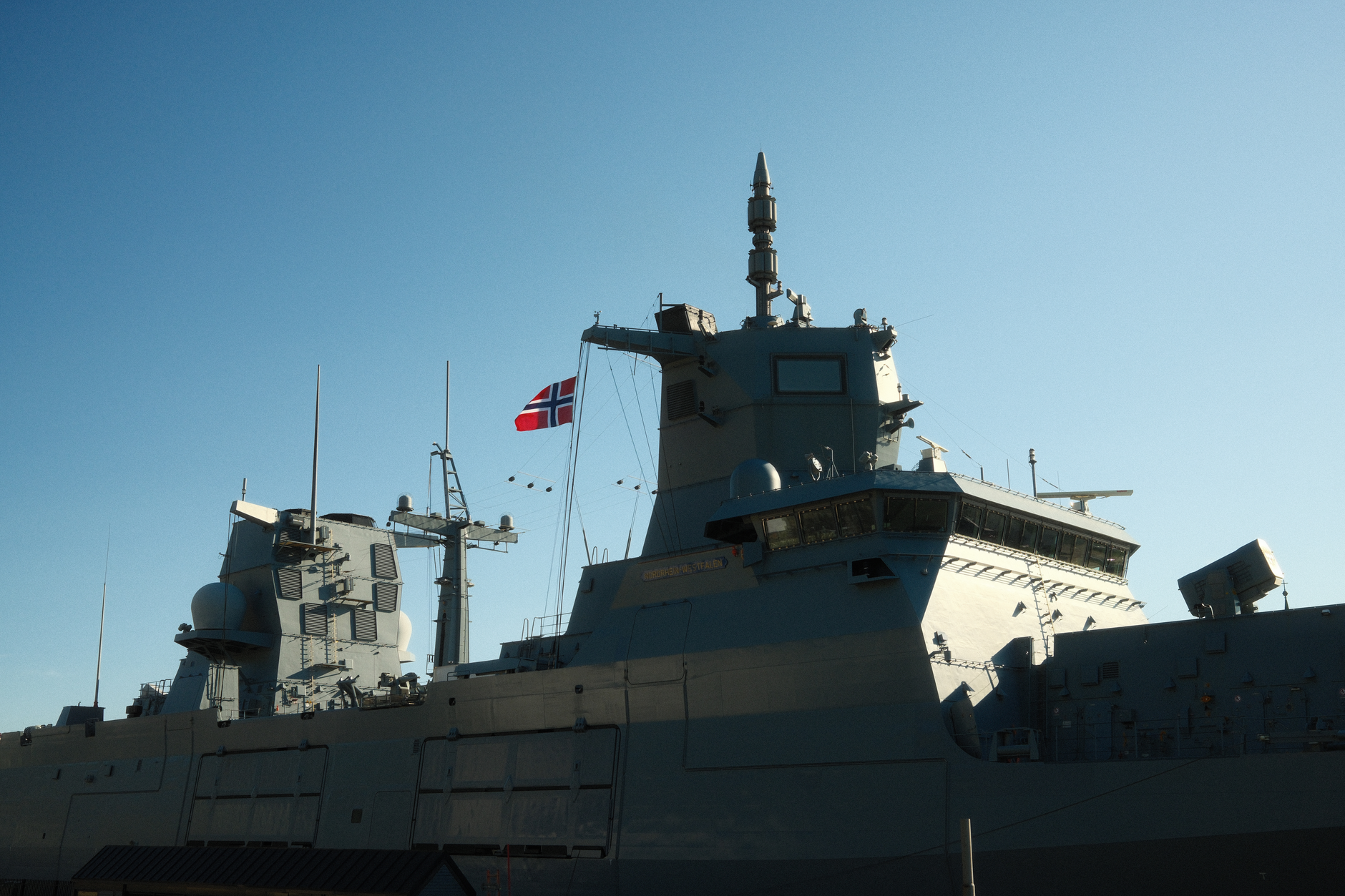
India and Japan are deepening defence industrial cooperation through shipbuilding partnerships, moving beyond operational coordination toward joint development of advanced naval platforms. The November 2024 UNICORN mast technology transfer and proposals for Mogami-class frigate co-production signal a strategic shift in how Asia's democracies build maritime deterrence capacity.
The India-Japan security partnership has entered a transformative phase that extends beyond traditional operational coordination into defence industrial collaboration. Prime Minister Narendra Modi and Japanese Prime Minister Takaichi Sanae’s July 2026 summit in New Delhi crystallized a strategic shift: both nations now recognize that sustained Indo-Pacific maritime security depends on building shared industrial capacity rather than relying solely on diplomatic alignment. This represents a fundamental evolution in how Asia’s leading democracies approach deterrence and strategic autonomy.
The foundation for this transition was laid over more than a decade of naval exercises, defence dialogues, and logistics agreements. However, the strategic environment has changed. China’s expanding presence in the Indian Ocean and its assertive maritime posture have created a new imperative: India and Japan must develop the industrial resilience to sustain long-term naval modernization without dependence on external suppliers. This recognition underpins the recent acceleration of defence technology collaboration between the two nations.
Japan’s November 2024 agreement to transfer its advanced Unified Complex Radio Antenna (UNICORN) mast technology to the Indian Navy marks a decisive break from historical patterns in India-Japan defence relations. UNICORN systems integrate multiple communication, radar, and electronic warfare functions into a single mast, significantly improving operational efficiency while reducing radar signature—a critical capability for modern naval platforms operating in contested waters.
The technology transfer agreement carries strategic weight beyond its technical specifications. It demonstrates Japan’s unprecedented confidence in India as a defence technology partner and signals a willingness to move beyond conventional buyer-seller dynamics. For Japan, this reflects a calculated strategic choice: India possesses both the technological sophistication to absorb advanced systems and the manufacturing scale to justify long-term industrial partnerships. Japan’s domestic defence market remains constrained by geography and population, making international partnerships essential for sustaining defence industrial competitiveness.
The UNICORN transfer also validates India’s Aatmanirbhar Bharat (self-reliance) initiative, which seeks to reduce dependence on foreign defence imports while building indigenous technological capability. By integrating Japanese systems with Indian shipbuilding programs, both nations can achieve complementary objectives: Japan gains production scale and supply-chain resilience, while India accelerates its transition toward self-sufficient naval modernization.
Japan’s proposal to jointly develop and produce Mogami-class frigates with India represents the logical next step in this industrial partnership. The Mogami class embodies cutting-edge naval design: advanced stealth features, high levels of automation, integrated anti-submarine warfare capabilities, and modular mission flexibility. For India, access to this platform offers far more than acquiring additional warship tonnage—it provides a pathway to absorb Japanese expertise in automated ship systems, integrated electronics, and advanced maritime manufacturing.
Indian shipyards have demonstrated capability in designing and constructing destroyers, frigates, and offshore patrol vessels, but Japanese expertise in automation and systems integration represents a qualitative leap. Co-development would facilitate structured technology transfer while building India’s capacity to design and produce next-generation naval platforms independently. This aligns directly with India’s strategic objective of becoming a competitive shipbuilding powerhouse capable of meeting regional demand and potentially exporting naval platforms to partner nations.
The industrial logic is compelling. Japanese defence companies such as Mitsubishi Heavy Industries operate within a high-cost domestic labour market and face structural constraints on production volume. India offers access to skilled manufacturing capacity at lower cost, enabling economies of scale that Japanese shipyards cannot achieve independently. This arrangement mirrors successful precedents in the commercial sector: Japanese automotive companies (Suzuki, Honda) and industrial firms have established production ecosystems in India that combine Japanese design and quality standards with Indian manufacturing efficiency. The same model can be applied to naval shipbuilding.
India-Japan naval shipbuilding cooperation carries implications that extend beyond bilateral defence industrial interests. Both nations occupy strategically critical positions along Indo-Pacific sea lanes and share fundamental interests in preserving freedom of navigation, respect for international law, and a rules-based maritime order. Joint development of naval platforms would enhance interoperability across diverse operational domains: anti-submarine warfare, humanitarian assistance and disaster relief, and protection of critical sea lines of communication.
This cooperation also reinforces the strategic objectives of the Quad, the informal security grouping comprising Australia, India, Japan, and the United States. While the Quad has traditionally focused on critical technologies, supply-chain resilience, and maritime domain awareness, deeper bilateral defence industrial partnerships among members are essential for sustaining long-term regional deterrence. India-Japan collaboration in shipbuilding translates political coordination into tangible military capabilities—a shift from aspirational frameworks to concrete defence capacity.
The timing is strategically significant. China’s defence industrial base has achieved unprecedented scale, with annual military spending exceeding $240 billion and state-directed shipbuilding programs producing vessels at volumes that outpace Western production. India and Japan cannot match this output individually, but coordinated defence industrial cooperation creates multiplicative effects: shared research and development, complementary manufacturing expertise, and integrated supply chains that enhance both nations’ strategic autonomy.
Strategic convergence alone does not guarantee successful defence industrial cooperation. Both nations face genuine obstacles that require systematic management. Japan’s defence export regime, while liberalized compared to Cold War-era restrictions, remains subject to domestic political sensitivities around military technology transfers. India’s procurement systems differ substantially from Japan’s in timelines, specifications, and bureaucratic processes. Intellectual property arrangements, technology security protocols, and workforce development requirements all demand careful negotiation.
Sustained political support is non-negotiable. Defence industrial partnerships require multi-year commitments, stable government policies, and close coordination between defence ministries and private sector shipbuilders. Neither India nor Japan can afford the disruption of shifting political priorities or bureaucratic inconsistency. A dedicated institutional framework—potentially a joint India-Japan Defence Industrial Cooperation Committee with dedicated secretariat functions—would provide the necessary architecture to translate political intent into sustained industrial outcomes.
Workforce development represents an underestimated challenge. Japanese shipbuilders employ highly skilled engineers and technicians trained through decades of precision manufacturing. Scaling production in India requires not only technology transfer but also systematic training programs that develop comparable expertise across Indian shipyards. This demands investment in technical education, knowledge exchange programs, and potentially long-term secondment of Japanese specialists to Indian facilities.
The convergence of India’s manufacturing ambitions and Japan’s technological sophistication creates a rare strategic opportunity. India-Japan shipbuilding cooperation would establish a new benchmark for defence industrial partnership between democratic Indo-Pacific nations. Unlike transactional military sales, co-development creates enduring institutional linkages, shared technological ecosystems, and aligned strategic interests that deepen over time.
The UNICORN agreement demonstrated what is possible when political will aligns with strategic necessity. Collaboration on platforms such as the Mogami-class frigate could expand this model across multiple naval systems: next-generation frigates, advanced corvettes, and potentially submarine technologies. Over a decade, such cooperation could produce 15-20 jointly developed naval vessels, generating cumulative industrial benefits that strengthen both nations’ defence-industrial bases while enhancing regional deterrence capacity.
At a historical moment when industrial capacity increasingly determines strategic power, India and Japan have recognized that building warships together may be among the most important investments they can make in Indo-Pacific security. This partnership represents not merely defence procurement optimization, but a deliberate strategic choice to build shared capacity for long-term regional stability. The coming decade will determine whether political commitment translates into sustained industrial collaboration—and whether India-Japan defence industrial partnership becomes a model for how democratic Indo-Pacific nations can collectively strengthen maritime security without dependence on distant powers.




