Physical Address
304 North Cardinal St.
Dorchester Center, MA 02124
Physical Address
304 North Cardinal St.
Dorchester Center, MA 02124

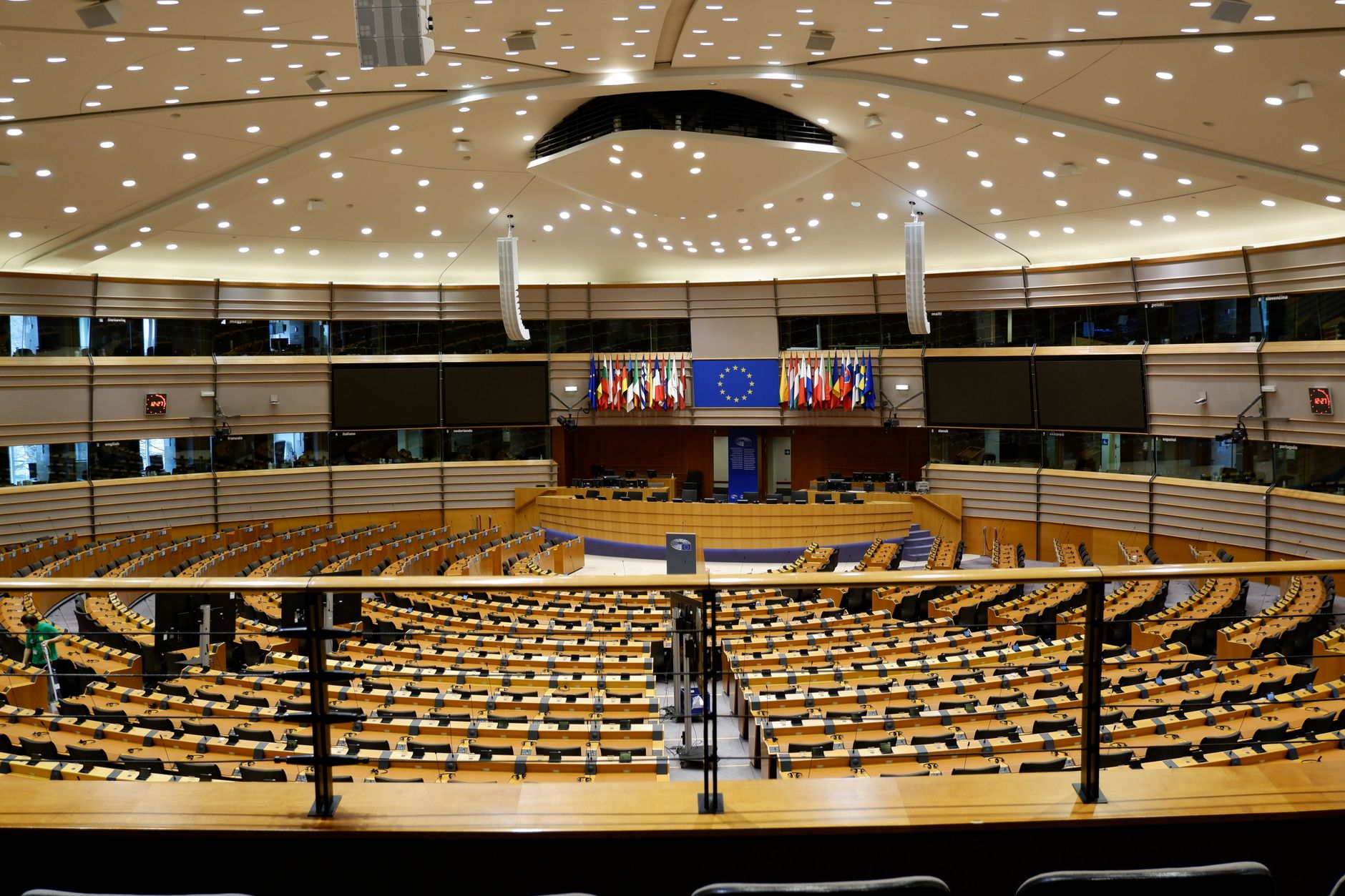
The EU's China policy has split into contradictory narratives: economic engagement through a new trade framework versus security-focused positioning of Beijing as a strategic challenge and Russian enabler. This internal contradiction threatens to undermine both initiatives.
The European Union’s approach to China has fractured into two irreconcilable narratives within a matter of weeks in mid-2025, exposing fundamental tensions in how Brussels conceptualizes its relationship with Beijing. On June 29, EU and Chinese officials reached agreement on a new economic framework defining their ties as “stable and balanced key trading partners,” backed by a formal Trade and Investment Consultation (TIC) mechanism. Simultaneously, on July 8 and 13, EU member state ambassadors and the Foreign Affairs Council endorsed a strategic assessment that rebranded China as “a critical long-term strategic challenge” and “a crucial enabler for Moscow” in the Ukraine conflict. This contradiction reflects deeper structural tensions between Europe’s economic interests and its emerging security priorities—tensions that will likely define EU-China relations for the next decade.
The EU’s trade establishment has pursued a pragmatic stabilization strategy with Beijing. During Chinese Commerce Minister Wang Wentao’s June visit to Brussels, both sides committed to managing economic friction through structured dialogue. The TIC mechanism addresses four core areas: trade and investment balancing, export controls, intellectual property rights, and World Trade Organization reform. This framework is deliberately modest in scope—neither side expects structural transformation of China’s manufacturing-based economic model.
The concrete measures being negotiated reveal the EU’s focus on lower-hanging fruit. China has committed to reducing its trade deficit by increasing government procurement of EU goods and expanding state trading arrangements. The European Commission’s Deputy Director General for Trade and Economic Security, Denis Redonnet, told the European Parliament’s trade committee that a “joint monitoring mechanism” would track increases in Chinese imports to Europe. EU Trade Commissioner Maroš Šefčovič is expected to travel to Beijing in autumn 2025 for the second round of TIC negotiations, with vice-ministerial meetings scheduled for August and September to meet an October deadline for “tangible progress.”
At the member-state level, diplomatic channels have intensified. During Foreign Minister Wang Yi’s July 2-7 visit to Denmark, Sweden, Finland, and Norway, China emphasized partnership and practical cooperation in green transition, innovation, and artificial intelligence governance. The Netherlands and China committed to resolving the Nexperia semiconductor dispute—a significant irritant in bilateral relations. These moves signal that despite broader tensions, both Brussels and Beijing prioritize preventing economic friction from escalating into a trade war.
The European Council’s July 2025 strategic assessment represents a significant hardening of EU threat perception. The 2019 formulation—which characterized China as “a partner for cooperation, an economic competitor and a systemic rival”—has been superseded by language that emphasizes strategic challenge and military enablement for Russia. This shift is not merely rhetorical; it reflects genuine changes in how European security establishments perceive Chinese intentions and actions.
The assessment extends beyond the Ukraine context in three critical dimensions. First, it positions China within a broader systemic competition over global order, technology, and geopolitical influence—framing the relationship as fundamentally about competing visions for international governance. Second, it identifies China’s geoeconomic leverage as a security concern, citing industrial scale, trade position, control of critical raw materials, and selective technological advantages. Third, and most significantly for Indo-Pacific strategy, the assessment directly links European security to regional stability in the South China Sea, East China Sea, and Taiwan Strait, arguing that tensions in these areas “could affect European security, stability and prosperity.”
This last point marks a conceptual shift in Brussels. The EU is no longer treating Indo-Pacific security as a peripheral concern but as integral to European strategic interests. This reflects both the reality of global supply chain interdependence and a recognition that Chinese military assertiveness in Asia could trigger broader geopolitical realignment affecting European interests.
China’s relationship with Russia under Vladimir Putin’s leadership has become the central strategic irritant in EU-China relations. The European Council assessment explicitly identifies Beijing as “a crucial enabler for Moscow” in the Ukraine conflict. The EU has imposed sanctions on multiple Chinese companies for supporting Russia’s military-industrial complex, while Beijing has consistently denied providing military assistance to Russia.
However, the reality is more complex than this binary framing suggests. Ukraine has reportedly been authorized to use a 6 billion euro EU defense-loan tranche to purchase Chinese-made drone components—exposing a fundamental paradox in European strategy. The same China that Brussels characterizes as enabling Russian war capacity remains integrated into European and Ukrainian defense supply chains. This contradiction reveals the limits of decoupling strategies in an interdependent global economy.
The sanctions regime targeting Chinese companies supporting Russia’s defense sector has not fundamentally altered Beijing’s calculus. China views its relationship with Russia as a strategic counterweight to Western dominance, particularly as US-China competition intensifies. From Beijing’s perspective, maintaining Moscow as a strategic partner—even one engaged in a costly war—is preferable to allowing Russia to drift toward greater Western engagement.
The coexistence of these two narratives reveals fissures within the EU machinery itself. The European Commission’s Directorate-General for Trade and Economic Security is pursuing stabilization and managed economic engagement, while the European Council’s strategic assessment reflects security-first thinking from member state foreign ministries. This is not a temporary disagreement but a structural tension rooted in different institutional mandates and constituencies.
The question of whether these definitions can coexist is both tactical and strategic. Tactically, yes—the EU can maintain trade negotiations while signaling security concerns, thereby keeping channels open and managing disputes without triggering an uncontrolled spiral. Strategically, however, the two frameworks rest on incompatible premises. China views economic interdependence as a stabilizing force that raises the costs of confrontation. The EU increasingly sees certain forms of interdependence as sources of vulnerability—particularly in critical technologies, rare earth minerals, and defense-related supply chains.
The critical uncertainty is whether the Foreign Affairs Council’s “critical long-term strategic challenge” framing will crystallize into a broader definitional framework for EU-China relations, similar to how the 2019 “partner, competitor, systemic rival” formulation became the standard reference point. If the FAC language gains institutional weight, it could undermine the Commission’s trade negotiations by signaling that economic engagement is subordinate to security containment.
The trajectory of EU-China relations in the coming months will depend critically on Beijing’s strategic response. China has several options. It could strategically downplay the EU’s new security framing—particularly since it has not yet attracted major public attention—to maintain momentum in trade negotiations and preserve economic channels. Alternatively, Beijing could weaponize the contradiction by highlighting it publicly, arguing that the EU is pursuing confrontation while claiming to seek cooperation, thereby justifying a more assertive Chinese response.
For the EU, the fundamental challenge is achieving internal coherence. The Commission’s trade apparatus and the Council’s security establishment are pursuing divergent strategies without clear coordination or strategic hierarchy. This incoherence is not unique to China policy—it reflects broader EU institutional fragmentation—but it is particularly consequential in relations with Beijing, which is sophisticated at exploiting European divisions.
The October 2025 deadline for “tangible progress” on trade will be a critical test. If meaningful agreements emerge on government procurement, investment protections, or supply chain cooperation, the economic narrative may gain institutional weight. If negotiations stall, the security framing will likely dominate, triggering a more confrontational posture across multiple domains including technology restrictions, investment screening, and sanctions coordination.
The deeper issue is that the EU has not resolved a fundamental strategic question: whether China is a competitor to be managed within an essentially stable international framework, or a systemic challenger requiring containment and decoupling. Until Brussels answers this question coherently, its China policy will remain a collection of tactical responses rather than a strategic approach.