Physical Address
304 North Cardinal St.
Dorchester Center, MA 02124
Physical Address
304 North Cardinal St.
Dorchester Center, MA 02124

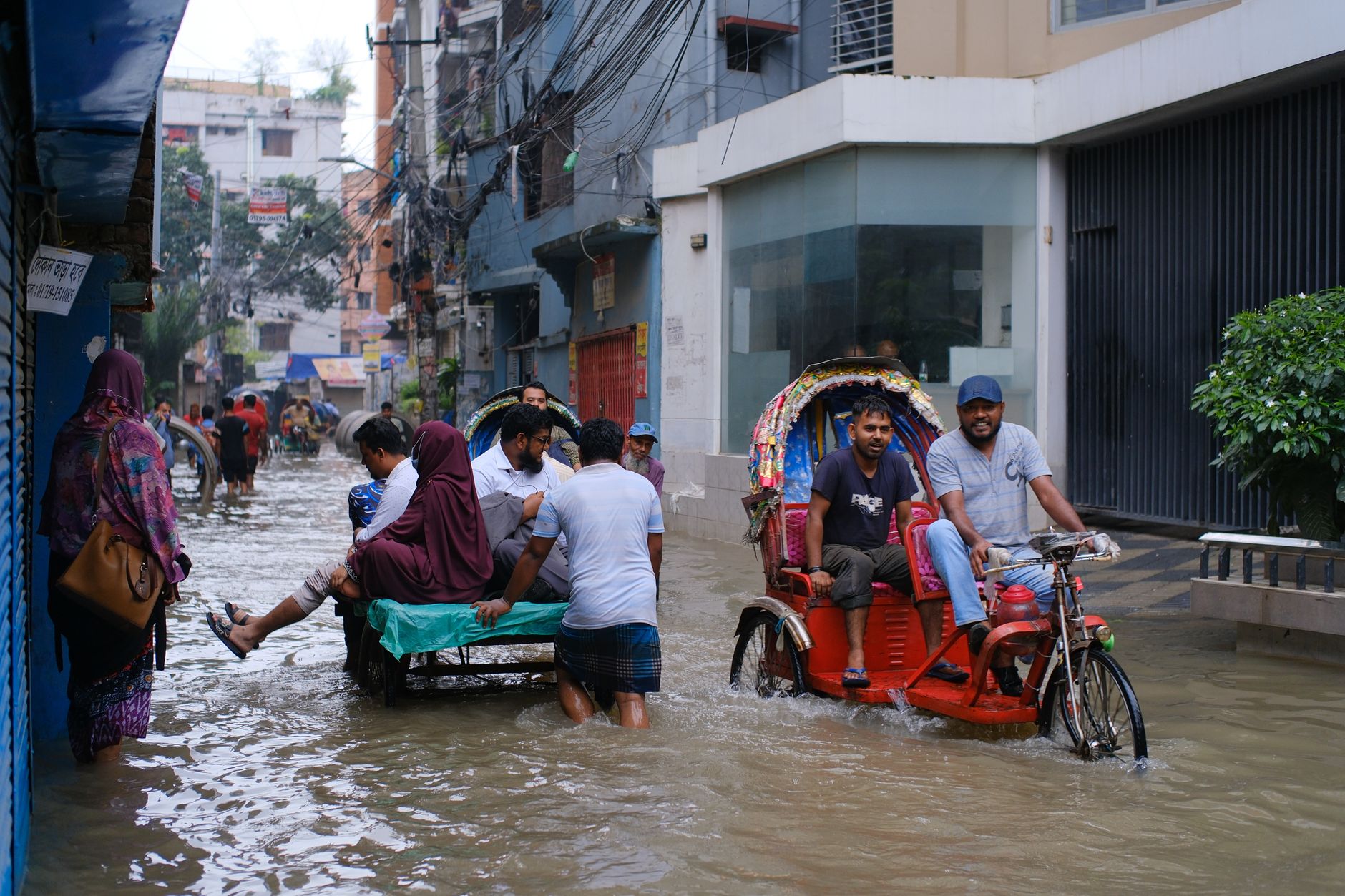
Bangladesh's Generation Z has returned to streets less than five months after the new BNP government took office, demanding education reforms following government mishandling of monsoon-affected examinations. The protests expose vulnerabilities in institutional responsiveness and threaten to undermine democratic consolidation if left unaddressed.
Less than five months after Bangladesh’s elected government took office following the historic July-August 2024 uprising, Generation Z has returned to the streets—this time demanding systemic education reforms. The reemergence of youth-led protest movements in Dhaka, Chittagong, Comilla, and at least 10 other districts signals both the volatility of Bangladesh’s post-transition political environment and the unmet expectations of the demographic cohort that catalyzed the regime change. What began as a localized grievance over examination scheduling during monsoon flooding has evolved into a broader challenge to the Bangladesh Nationalist Party (BNP) government’s administrative competence and sensitivity to public concerns.
The catalyst for the July 2024 protests was fundamentally an administrative failure compounded by poor crisis management. The Higher Secondary Certificate (HSC) examination cycle, which gates university admission for approximately 1.3 million students annually, commenced on July 2. Within two weeks, severe monsoon flooding devastated multiple regions, with Chittagong bearing the worst impact. The Ministry of Education’s decision to postpone examinations in only five Chittagong-based districts while proceeding elsewhere created an inconsistent and inequitable policy response.
Students in affected areas outside the postponement zones were forced to sit examinations while navigating knee-deep water, enduring illness, and managing psychological distress. This differentiated treatment—protecting some students while exposing others to identical hazards—generated legitimate grievances about fairness and administrative capacity. The government’s failure to implement uniform crisis protocols across all education boards demonstrated either insufficient coordination or a troubling indifference to student welfare.
The protests might have remained contained had Education Minister A. N. M. Ehsanul Hoque Milon exercised basic political judgment. Instead, an audio recording circulated on social media in which Milon allegedly dismissed student suffering with the phrase “farm chickens,” suggesting that students complaining about fever and illness after exposure to monsoon rains were fragile and unworthy of accommodation. The comment, captured during a phone conversation with a parent, revealed either contempt for student concerns or catastrophic tone-deafness at a moment requiring ministerial empathy.
The phrase became a rallying point. Students flooded streets across at least 13 districts chanting sarcastic slogans: “Who are you? Who are we? Farm chicken!” They blockaded major intersections in Dhaka, surrounded education board offices, and demanded Milon’s resignation. The protest’s rapid scaling from a discrete examination issue to a broader political challenge reflected accumulated frustration: these were the same youth who had mobilized to overthrow an autocratic regime merely months earlier, only to encounter what they perceived as bureaucratic indifference from the new government.
Prime Minister Sheikh Hasina’s successor, Tariq Rahman, recognized the political danger. On July 14, as police deployed batons against students assembled near the Parliament complex—a symbolically damaging move that evoked memories of the previous regime’s repression—Rahman convened an emergency meeting with Milon. The following day, Milon delivered a parliamentary apology, acknowledging student suffering and reversing his dismissive stance.
Mahdi Amin, the Prime Minister’s education advisor, announced five corrective measures: (1) rescheduled examinations using identical question papers for students unable to participate on July 13; (2) full marks awarded for two flawed Physics questions affecting all examinees; (3) temporary suspension of four teachers responsible for the defective examination paper; and (4) delegation of authority to local administrations to postpone exams, relocate examination centers, or adjust timings based on local conditions.
These concessions validated the students’ core demands. However, their delayed implementation—arriving only after street mobilization and police confrontation—raises a critical question: why did administrative sensitivity require public pressure rather than proactive crisis management? The government’s reactive posture suggested that institutional mechanisms for anticipating and addressing student grievances remain underdeveloped.
Home Minister Salahuddin Ahmed’s warning on July 16 that “certain groups are trying to fish in muddy waters” pointed to a secondary concern: the potential instrumentalization of legitimate student anger by banned political actors. The Awami League, which fell during the 2024 uprising and remains proscribed, and its student affiliate Chhatra League have reportedly exploited the unrest by amplifying misinformation through social media networks.
This dynamic reflects a persistent vulnerability in Bangladesh’s political transition. The interim government’s inability to fully consolidate institutional legitimacy creates space for discredited opposition forces to position themselves as defenders of youth interests. If the BNP government is perceived as indifferent to student welfare, alternative political actors—however delegitimized—may gain traction as champions of generational concerns. The government’s challenge extends beyond resolving immediate grievances to demonstrating sustained commitment to the constituencies that enabled regime change.
The July 2024 education protests represent a crucial test of Bangladesh’s post-transition trajectory. Generation Z mobilized to eliminate authoritarian rule; they now expect tangible improvements in governance quality, institutional responsiveness, and administrative competence. The BNP government’s initial stumbling—poor crisis communication, inflammatory ministerial rhetoric, delayed policy responses—risks squandering the legitimacy dividend that electoral victory provides.
Three structural vulnerabilities are exposed. First, the education bureaucracy lacks protocols for rapid, coordinated crisis response across multiple jurisdictions. Second, ministerial accountability mechanisms remain weak; Milon’s “farm chicken” comment should have triggered immediate institutional review rather than social media amplification. Third, the government has not yet internalized that Generation Z represents a permanent political force rather than a temporary protest cohort. These students will vote, organize, and mobilize across successive electoral cycles; dismissing their concerns invites sustained political friction.
The government’s corrective measures, while substantive, arrived too late to prevent escalation. A genuinely responsive administration would have anticipated monsoon impacts on examination logistics, implemented uniform postponement policies immediately, and ensured ministerial communications reflected institutional commitment to student welfare. The reactive posture signals that institutional learning from the 2024 uprising remains incomplete.
Bangladesh’s new government faces a straightforward challenge: demonstrate that it governs differently from its predecessor by translating student demands into policy reality and, more importantly, by preventing such grievances from escalating to street mobilization in the first place. The July protests subsided following the government’s concessions, but the underlying tension—between Generation Z’s elevated expectations and institutional capacity to meet them—persists.
The education system reforms that students are demanding extend beyond examination scheduling to encompass curriculum modernization, institutional transparency, and genuine student voice in decision-making processes. Unless the BNP government moves beyond damage control to structural institutional reform, Generation Z will return to the streets. The political cost of such recurrence would be substantial: each cycle of protest and government retreat further delegitimizes democratic institutions and creates openings for authoritarian alternatives or political opportunism by banned actors.
Bangladesh’s democratic consolidation depends on the government’s ability to transform a crisis into an opportunity for institutional strengthening. The window for demonstrating this commitment is narrow and closing rapidly.