Physical Address
304 North Cardinal St.
Dorchester Center, MA 02124
Physical Address
304 North Cardinal St.
Dorchester Center, MA 02124

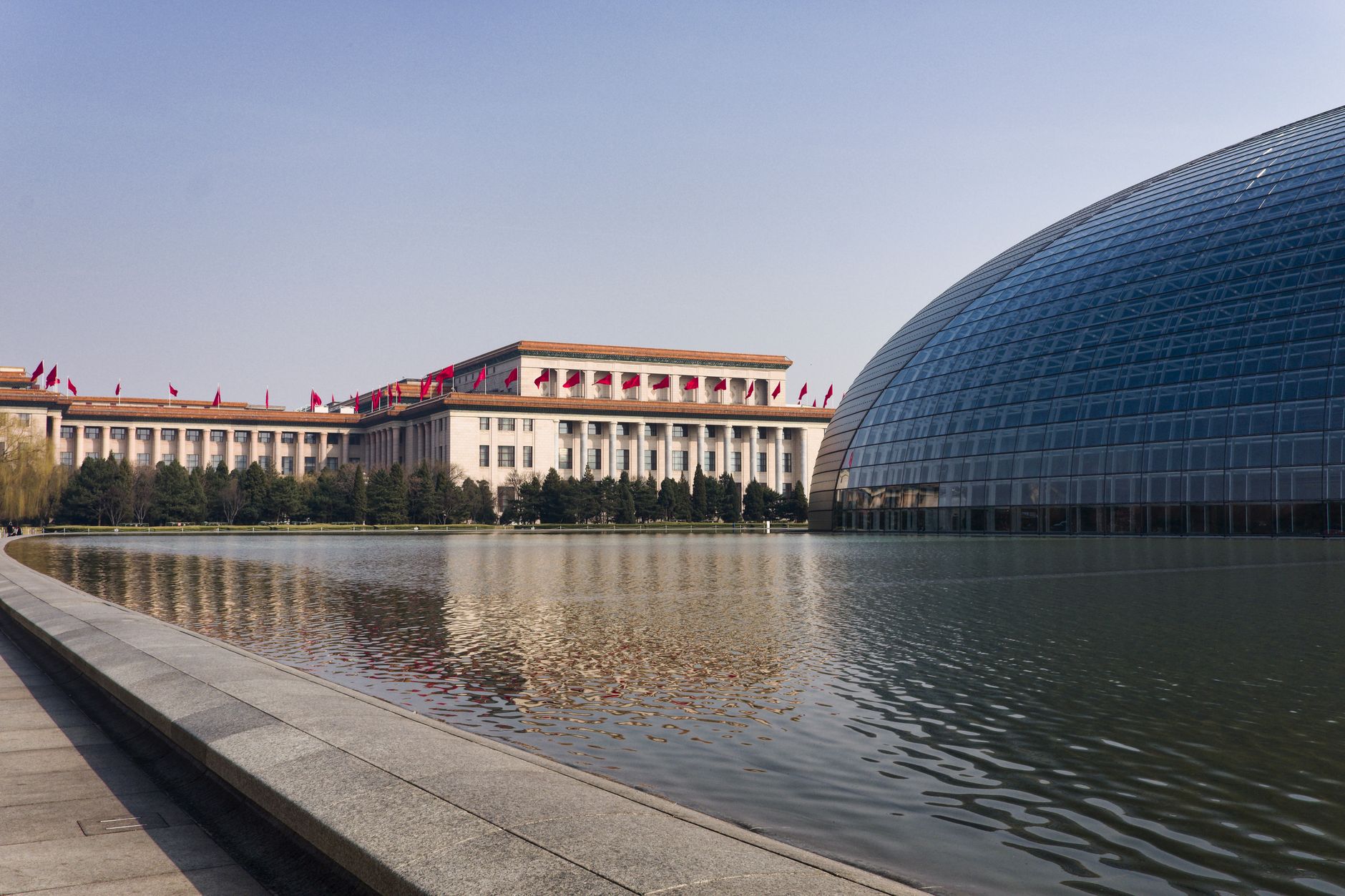
China's new ethnic unity law codifies Xi Jinping's assimilationist approach to ethnic minorities through mandatory education standardization, population mobility policies, and religious subordination. The legislation extends legal liability to foreign organizations and formalizes practices already implemented in Xinjiang and Tibet.
On July 1, 2024, China’s “Law on Promoting Ethnic Unity and Progress” came into effect, marking a significant escalation in the Chinese Communist Party’s approach to managing the country’s 56 officially recognized ethnic groups. While international attention initially focused on Article 63—which extends legal liability to foreign organizations and individuals deemed to undermine ethnic unity—the law’s true strategic significance lies in its codification of an assimilationist framework that fundamentally rejects the limited ethnic autonomy model established after the Cultural Revolution. Under Xi Jinping’s leadership, this legislation represents the legal operationalization of a decades-long shift in CCP ethnic policy toward what scholars describe as “forging” a unified national consciousness that subordinates ethnic and cultural distinctiveness to Han Chinese norms and values.
The concept of “forging” (铸牢)—drawn from the law’s original Chinese formulation—carries deliberate connotations beyond simple metal casting. As noted by scholars of Chinese policy, the term conveys both the casting of identity into a predetermined mold and the “firmness” and “enclosure” of that identity under party-state direction. This linguistic precision matters: it signals the CCP’s intention not merely to manage ethnic diversity but to fundamentally reconstruct it according to party ideology.
Chapter 2 of the law, titled “Building a New Spiritual Home,” establishes education as the primary mechanism for inculcating Han Chinese-centric national consciousness. The legislation mandates that “schools and other educational institutions at all levels and types” must “integrate the requirement of forging a strong sense of community of the Chinese nation throughout the entire education process.” This integration is to be achieved through three concrete mechanisms: nationally unified textbooks, Mandarin Chinese as the primary teaching language, and a standardized “discourse system” that explains Chinese history and civilization through the lens of multi-ethnic unity.
Critically, while the law nominally “respects and guarantees the study and use of minority languages and scripts,” this provision is subordinated to the supremacy of “the national common language.” State organs, social organizations, enterprises, and public institutions are explicitly directed to “highlight the national common language and script” in everyday operations, publications, and public signage. This represents not neutral language policy but deliberate institutional prioritization of Mandarin over Uyghur, Tibetan, Mongolian, and other minority languages—a practice already implemented extensively in Xinjiang and Tibet but now formalized as national policy.
The educational framework extends beyond curriculum to encompass the physical and social environment of learning. Provisions promoting “joint learning, living, and growth” of students from all ethnic groups suggest the normalization of integrated residential arrangements in educational institutions, effectively immersing minority students in Han-dominant environments designed to transmit Han Chinese values and norms.
Chapters 3 and 4 of the law frame economic development and “population mobility” as instruments for achieving ethnic integration. The legislation mandates that “people’s governments at or above the county level” develop “joint construction of population mobility service platforms between ethnic regions” and support “cross-regional enrolment in higher education institutions.” These provisions warrant particular scrutiny given the documented use of coerced Uyghur labor transfers in Xinjiang, where thousands of ethnic minorities have been relocated to Han-dominated industrial zones.
The emphasis on population mobility across ethnic boundaries appears designed to weaken linguistic, cultural, and religious cohesion by dispersing ethnic minority populations into Han Chinese-majority environments. This approach operationalizes what the CCP frames as “developmentalist” ethnic policy—the proposition that economic modernization and geographic integration will naturally erode ethnic and cultural distinctiveness while producing “high quality” citizens aligned with party ideology.
The law’s focus on labor mobility and economic integration directly supports this objective. By channeling ethnic minority workers into Han-dominated labor markets and subjecting them to integrated workplace environments, the legislation creates structural incentives for cultural assimilation while framing these processes as economic opportunity rather than cultural coercion.
Article 46 of the law explicitly requires that “religious organizations, religious colleges, and religious activity venues” undertake “publicity and education” to strengthen the “sense of community of the Chinese nation” and “adhere to the Sinicization of religion in China.” This provision reveals the law’s ultimate objective: the transformation of religion from an autonomous sphere of belief and practice into an instrument of party governance.
“Sinicization of religion”—already extensively implemented in Xinjiang and among Hui Muslim communities—means in practice the alignment of religious doctrine and practice with “socialist values” and the confinement of religious activity to administrative boundaries defined by party ideology. For Islam, this has translated into restrictions on mosque operations, surveillance of religious leaders, and the reinterpretation of Islamic theology to emphasize loyalty to the Chinese state. For Tibetan Buddhism, it has meant party control over the selection of reincarnate lamas and restrictions on religious practice deemed incompatible with national unity.
By embedding religious organizations within a legal framework that subordinates them to party objectives, the law transforms faith communities from potential sources of independent identity into extensions of party control, effectively eliminating religion as a countervailing source of ethnic or cultural solidarity.
Article 63, which generated initial international attention, stipulates that “organizations and individuals outside the territory of the People’s Republic of China who commit acts that undermine ethnic unity and progress or create ethnic division shall be held legally responsible according to law.” While this provision appears novel in its explicit codification, it formalizes long-standing CCP practices of transnational repression targeting Uyghur, Tibetan, and other diaspora communities.
The law provides Beijing with a legal instrument to pursue foreign-based activists, journalists, and advocacy organizations, and to pressure foreign governments to restrict the activities of diaspora groups. Given the vague definition of what constitutes “undermining ethnic unity,” the provision effectively criminalizes legitimate diaspora advocacy, human rights documentation, and cultural preservation activities conducted outside China’s borders.
The Law on Promoting Ethnic Unity and Progress represents far more than incremental policy adjustment or domestic legislative housekeeping. It constitutes the legal codification of a fundamental strategic choice by Xi Jinping’s leadership: the rejection of ethnic pluralism as compatible with Chinese national stability and the embrace of systematic assimilation as state policy.
Under previous CCP frameworks, ethnic diversity was theoretically managed through limited regional autonomy arrangements and nominal recognition of minority rights. This law discards that framework entirely. By placing education, language policy, labor mobility, economic development, and religion in explicit service of “forging” a unified national consciousness, the legislation provides comprehensive legal scaffolding for an assimilationist project already implemented in Xinjiang and Tibet and now positioned for extension across all of China’s ethnic minority populations.
For policymakers in Australia, New Zealand, and the Indo-Pacific region, this law signals Beijing’s commitment to a vision of Chinese national identity that is fundamentally incompatible with ethnic autonomy or cultural pluralism. This has direct implications for regional stability, diaspora protection, and the framing of human rights concerns in bilateral relationships with China. The law also provides a template for understanding how the CCP approaches the governance of diverse populations—an approach that may inform Beijing’s policies toward ethnic minorities in border regions and its broader vision for regional integration within its sphere of influence.