Physical Address
304 North Cardinal St.
Dorchester Center, MA 02124
Physical Address
304 North Cardinal St.
Dorchester Center, MA 02124

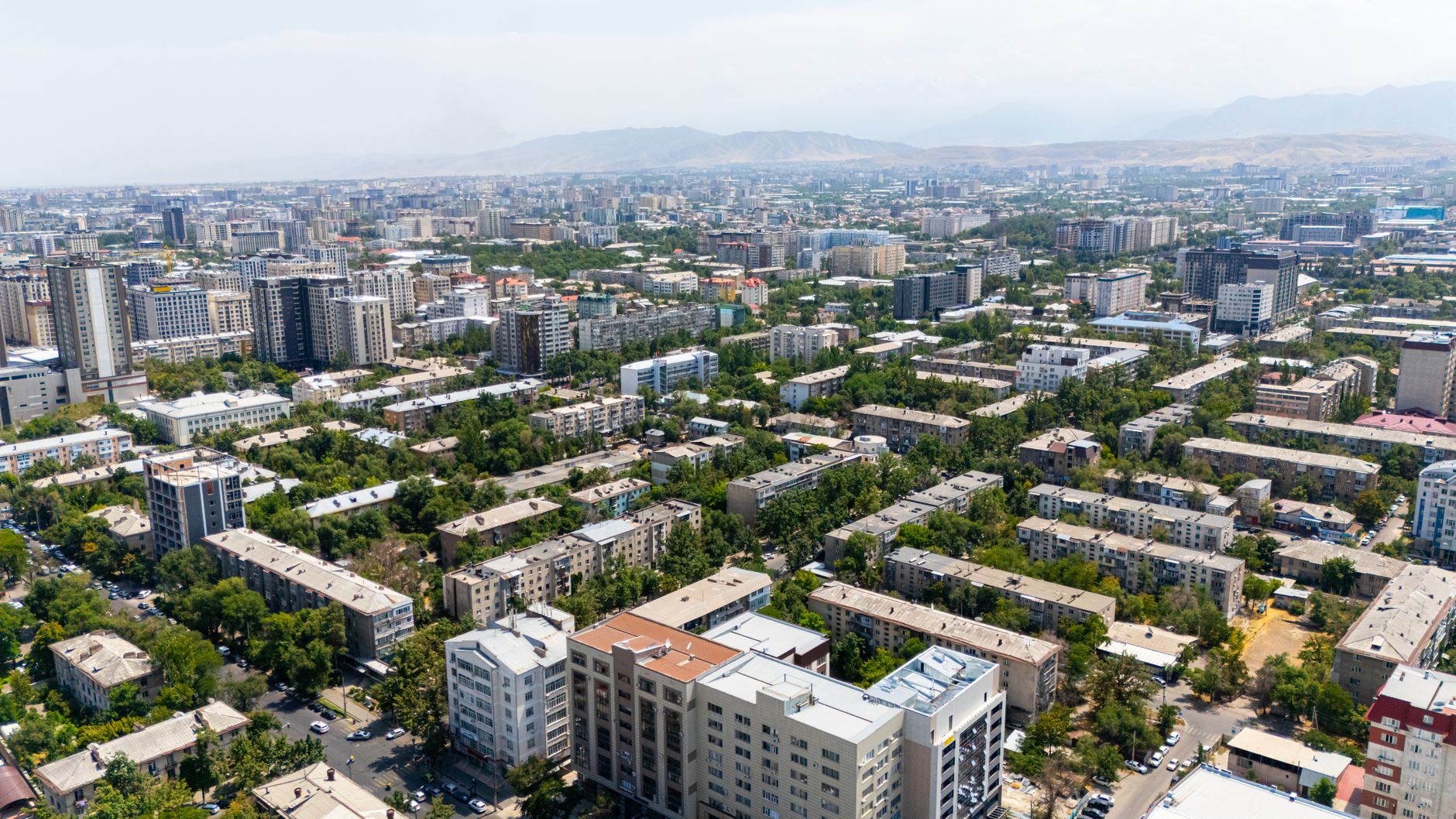
Central Asian workers now dominate Britain's agricultural sector, receiving 78.5% of seasonal visas in 2025 compared to 7.6% in 2021. This shift reflects Russia's migration crackdowns and Ukraine's labour displacement, with Kyrgyzstan unexpectedly leading recruitment despite being the region's smallest state.
Britain’s agricultural sector has undergone a dramatic labour market realignment over the past five years, driven by geopolitical upheaval in Eastern Europe and deliberate policy shifts in Russia. Central Asian workers now dominate the U.K. Seasonal Worker visa scheme, a transformation that reflects broader patterns of labour displacement and strategic repositioning across Eurasia. In 2025, Central Asian nationals received 78.5 percent of all U.K. seasonal worker visas—a striking increase from just 7.6 percent in 2021. This shift represents far more than a routine adjustment in agricultural recruitment; it signals how geopolitical crises, migration restrictions, and labour market arbitrage reshape workforce flows across continents.
The pivot away from traditional labour sources is equally instructive. Ukraine, which supplied roughly 19,900 seasonal workers in 2021, sent only 530 in 2025. Russia’s contribution collapsed from 2,276 workers to 11 over the same period. These declines directly reflect the consequences of Russia’s 2022 invasion of Ukraine, which trapped Ukrainian men in military service and severed recruitment pipelines. British agricultural operators, facing labour shortages, turned to Central Asia—a region with a young, growing population and limited employment alternatives following Russia’s tightening of migration pathways.
Russia’s restrictive turn toward Central Asian migrants has inadvertently created openings for competing labour markets. Since January 2025, Russia implemented a 90-day annual limit on visa-free migration, effectively closing off the informal labour mobility that Central Asians had relied upon for decades. This policy hardened following the January 2024 Crocus City Hall attack in Moscow, blamed on Tajik nationals. In response, Russian authorities increased deportations by 17 percent in the first half of 2025 and reduced residence permits by approximately one-third, accompanied by documented xenophobic raids across the country.
The timing is significant. Central Asia has historically served as Russia’s primary source of migrant labour, with remittances from Russian employment constituting roughly 45 percent of GDP in the region’s poorer states—particularly Tajikistan and Kyrgyzstan. Russia’s shift away from Central Asian workers represents a deliberate policy choice with profound economic consequences for labour-exporting states. Britain’s seasonal worker scheme, however generous it may appear on paper, offers only a partial hedge against this dependency. Fewer than 40,000 six-month visas are available annually across the entire region—a fraction of the millions of Central Asians still working in Russia.
The distribution of U.K. seasonal visas among Central Asian states reveals the mechanics of labour migration and the role of institutional efficiency. Kyrgyzstan, the region’s least populous state with approximately 6.5 million people, received 12,650 seasonal visas in 2025—twice as many as Uzbekistan, which has roughly 35 million inhabitants. Kazakhstan and Tajikistan, with populations of 20 million and 9.5 million respectively, received 5,767 and 5,712 visas.
This counterintuitive distribution reflects differences in labour recruitment infrastructure and government facilitation. Kyrgyzstan and Kazakhstan permit British operators to hire workers directly through bilateral arrangements, reducing bureaucratic friction. Tajikistan channels applications through a Ministry of Labor-controlled shortlist—a mechanism that has become a notorious chokepoint for alleged extortion and rent-seeking. Uzbekistan, under state direction, is actively steering its labour exports toward Europe and the Gulf through a state-backed migrant centre opened in 2025 with European Union support, deliberately reducing participation in the British scheme.
The approval rate for U.K. seasonal worker visas stands at approximately 99 percent, indicating that the real filtering mechanism operates within source countries, not at the British border. This institutional arrangement creates path dependency: operators who successfully recruit workers one season tend to rehire from the same source the following year. Kyrgyzstan’s early competitive advantage in establishing recruitment networks compounds with each successive season, creating a self-reinforcing dynamic that smaller labour pools can maintain through efficiency rather than scale.
The U.K. seasonal worker scheme offers minimal settlement prospects or family reunification pathways. Visas permit only six months of work within any ten-month period, with mandatory exit requirements. This temporary-only model deliberately prevents the accumulation of permanent resident populations, reflecting broader British immigration policy priorities. Yet the scheme is itself contracting: the annual quota fell from 45,000 to 42,900 places in 2026, suggesting government concern about labour market saturation or political pressure from restrictionist constituencies.
The scheme’s limitations have created a secondary phenomenon: asylum claims from Central Asian nationals have risen sharply. Asylum applications from Uzbekistan, Tajikistan, Kazakhstan, and Kyrgyzstan climbed from dozens in 2020 to a 2023 peak of 2,021 combined claims (832 Uzbeks, 495 Tajiks, 461 Kazakhs, 233 Kyrgyz), before declining in 2024-2025. Some workers undoubtedly overstay their visas, converting temporary agricultural work into longer-term residence through asylum claims. British government officials have flagged overstay concerns as justification for further scheme restrictions.
Britain’s reliance on Central Asian agricultural labour represents a narrow and contingent solution to labour market pressures. The U.K. is not absorbing Central Asia’s broader exodus from Russia; rather, it is recruiting a few tens of thousands of workers annually from whichever governments and recruitment networks operate most efficiently. This arrangement remains vulnerable to policy shifts in Moscow, Brussels, or London.
Kyrgyzstan’s current dominance could evaporate rapidly if Uzbekistan’s state migrant centre proves more effective at directing labour westward, or if Kazakhstan’s larger population base develops more sophisticated recruitment infrastructure. Conversely, if Russia further tightens migration restrictions or if European Union labour pathways expand, Britain’s competitive position as a destination could weaken. The scheme’s contraction from 45,000 to 42,900 places suggests the U.K. government views this labour arrangement as temporary—a crisis response rather than a permanent feature of British agricultural economics.
For Central Asian states, Britain represents a marginal alternative to Russia, offering neither the remittance volumes nor the employment scale that Russian migration historically provided. The real strategic challenge facing Kyrgyzstan, Tajikistan, Uzbekistan, and Kazakhstan is diversifying labour export markets while managing the economic dependency that remittances create. Britain’s seasonal worker scheme provides a useful pressure valve, but cannot substitute for the structural economic transformations these states require to reduce labour emigration dependency.