Physical Address
304 North Cardinal St.
Dorchester Center, MA 02124
Physical Address
304 North Cardinal St.
Dorchester Center, MA 02124

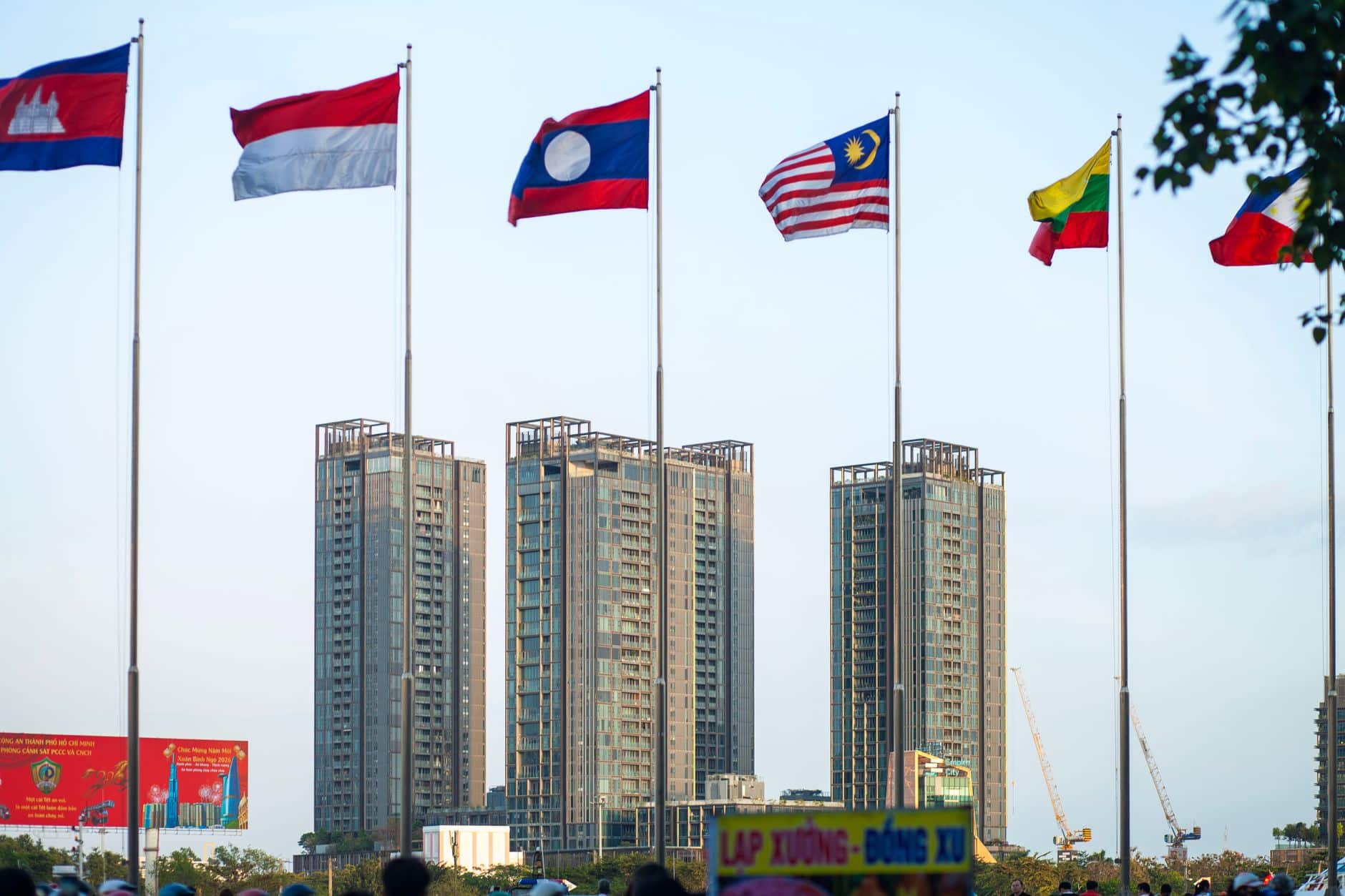
Myanmar's military junta under Min Aung Hlaing is deliberately fracturing ASEAN unity through selective diplomacy, rejecting the regional bloc's authority while consolidating alignment with China through visits to sympathetic neighbors Laos and Cambodia.
Myanmar’s military leader Min Aung Hlaing has orchestrated a calculated diplomatic maneuver that exposes deep structural fractures within ASEAN, the 10-member regional bloc that has long prided itself on consensus-based decision-making and non-interference in member states’ internal affairs. By rejecting the ASEAN chair’s request to meet with ousted civilian leader Aung San Suu Kyi and subsequently announcing an official state visit to Laos on July 3-5, 2026, Min Aung Hlaing has deliberately circumvented ASEAN’s collective authority while simultaneously legitimizing his rule through selective engagement with sympathetic neighbors. This strategy reveals not merely a diplomatic snub, but a fundamental challenge to the institutional mechanisms that have underpinned regional stability for decades.
The timing and sequencing of these moves are strategically significant. Min Aung Hlaing’s refusal to engage with ASEAN’s diplomatic initiatives—including rejection of the Philippines chair’s resurrection of the Five-Point Consensus (5PC)—demonstrates his calculation that Myanmar’s security and legitimacy no longer depend on regional institutional acceptance. Instead, his government has pivoted toward bilateral relationships with states that share Myanmar’s strategic orientation toward Beijing and its governance model based on authoritarian centralization.
The emergence of the “CLM Club”—Cambodia, Laos, and Myanmar—as a coordinated bloc within ASEAN represents a critical vulnerability in the organization’s architecture. When these three mainland states joined ASEAN in the late 1990s, they brought with them governance systems and strategic alignments fundamentally at odds with maritime ASEAN members, particularly Vietnam and the Philippines. This fault line has widened substantially since Min Aung Hlaing’s February 2021 coup, which ousted Suu Kyi’s democratically-elected government and precipitated a civil conflict that has killed approximately 100,000 people according to independent estimates.
The CLM Club’s cohesion stems from shared interests rather than shared values. All three countries have become regional havens for transnational organized crime, human trafficking networks, and large-scale scam compounds that generate substantial revenue for ruling elites. Laotian President Thongloun Sisoulith’s willingness to host Min Aung Hlaing’s first official ASEAN visit as self-proclaimed president reflects this alignment. Laos, like Myanmar and Cambodia, maintains heavy dependence on Chinese economic and strategic support, creating a de facto Beijing-aligned bloc within ASEAN that consistently undermines maritime members’ positions on South China Sea governance and the Code of Conduct negotiations.
ASEAN’s Five-Point Consensus, adopted in April 2021 as the organization’s framework for resolving Myanmar’s political crisis, has proven entirely ineffective. Philippine Foreign Affairs Spokesperson Dominic “Dax” Imperial’s recent statement acknowledging “positive steps” by the junta—including the transfer of Aung San Suu Kyi from prison to a “designated residence” and the release of some political prisoners—represents ASEAN’s desperate attempt to salvage a dead consensus. The reality is that Min Aung Hlaing has systematically ignored the 5PC for more than five years, continuing aerial bombardment of civilian areas, mass arrests of civil society activists, and the consolidation of military control over state institutions.
Even Hun Sen, the Cambodian Prime Minister who once described Min Aung Hlaing as a “brother” and genuinely attempted to mediate the conflict, has been rebuffed. The junta’s refusal to engage meaningfully with ASEAN’s diplomatic architecture signals that it no longer perceives regional legitimacy as necessary for its survival. Instead, Min Aung Hlaing has secured patronage from Beijing, which continues to provide military equipment, financial support, and diplomatic cover at the United Nations.
Thailand occupies an increasingly precarious position within ASEAN’s geography and political dynamics. Landlocked between Myanmar and Cambodia—both now firmly aligned with Beijing and hostile to ASEAN’s consensus mechanisms—Thailand has become a flashpoint for regional instability. The six-month Thai-Cambodian border war that occurred in 2025 exemplifies this vulnerability. The conflict originated when former Cambodian Prime Minister Hun Sen publicly disclosed details of a private conversation with Thai counterpart Paetongtarn Shinawatra, deliberately violating ASEAN protocols and demonstrating that even nominal commitment to regional norms has eroded among mainland states.
Thailand’s closed border with Cambodia remains a visible symbol of ASEAN’s failure to maintain even basic mechanisms of conflict prevention and resolution. For a regional organization that has marketed itself as a zone of peace and stability, the persistence of a closed international border represents a profound institutional failure that undermines ASEAN’s credibility in addressing transnational challenges including migration, disease, and organized crime.
Min Aung Hlaing’s stage-managed election to the presidency in March 2023 has received no endorsement from ASEAN, and the military regime remains banned from ASEAN summits. This formal isolation has not weakened the junta’s grip on power, but rather incentivized it to pursue legitimacy through alternative channels. The announced visit to Laos, ostensibly to commemorate the 70th anniversary of Myanmar-Laos diplomatic relations, serves primarily as a legitimacy-building exercise with a sympathetic audience. A subsequent visit to Cambodia appears likely, further consolidating the CLM Club as a Beijing-aligned sub-grouping within ASEAN that operates according to different rules and interests than the broader organization.
The junta’s isolation from ASEAN has paradoxically strengthened its reliance on China, which has positioned itself as Myanmar’s primary economic lifeline and security guarantor. This dependency has strategic implications for Indo-Pacific security architecture, as Myanmar’s effective alignment with Beijing reduces ASEAN’s collective leverage over South China Sea disputes and increases China’s ability to influence regional outcomes through control of key mainland Southeast Asian states.
Min Aung Hlaing’s calculated diplomatic moves expose a fundamental crisis in ASEAN’s institutional design. The organization’s commitment to consensus-based decision-making, non-interference in internal affairs, and the admission of authoritarian states with strategic alignments fundamentally at odds with maritime members has created an organization incapable of addressing major security challenges. The Philippines’ recent attempt to resurrect the 5PC represents a last-ditch effort to preserve the fiction of ASEAN unity, but the junta’s continued defiance demonstrates that this consensus has no enforcement mechanisms and no consequences for non-compliance.
The CLM Club’s consolidation as a Beijing-aligned bloc within ASEAN will likely accelerate. As Min Aung Hlaing proceeds with regional visits and normalizes his status as Myanmar’s leader through bilateral relationships, ASEAN’s collective authority will further diminish. The organization will continue to function as a forum for dialogue and coordination on non-controversial issues, but its capacity to influence major security outcomes—particularly regarding Myanmar’s civil conflict, South China Sea governance, and mainland Southeast Asia’s strategic orientation—has effectively collapsed. For Australia and New Zealand, this fragmentation of ASEAN’s institutional capacity requires recalibration of Indo-Pacific engagement strategies to account for the reality that regional consensus mechanisms can no longer be relied upon to constrain major power competition or address transnational security challenges.