Physical Address
304 North Cardinal St.
Dorchester Center, MA 02124
Physical Address
304 North Cardinal St.
Dorchester Center, MA 02124

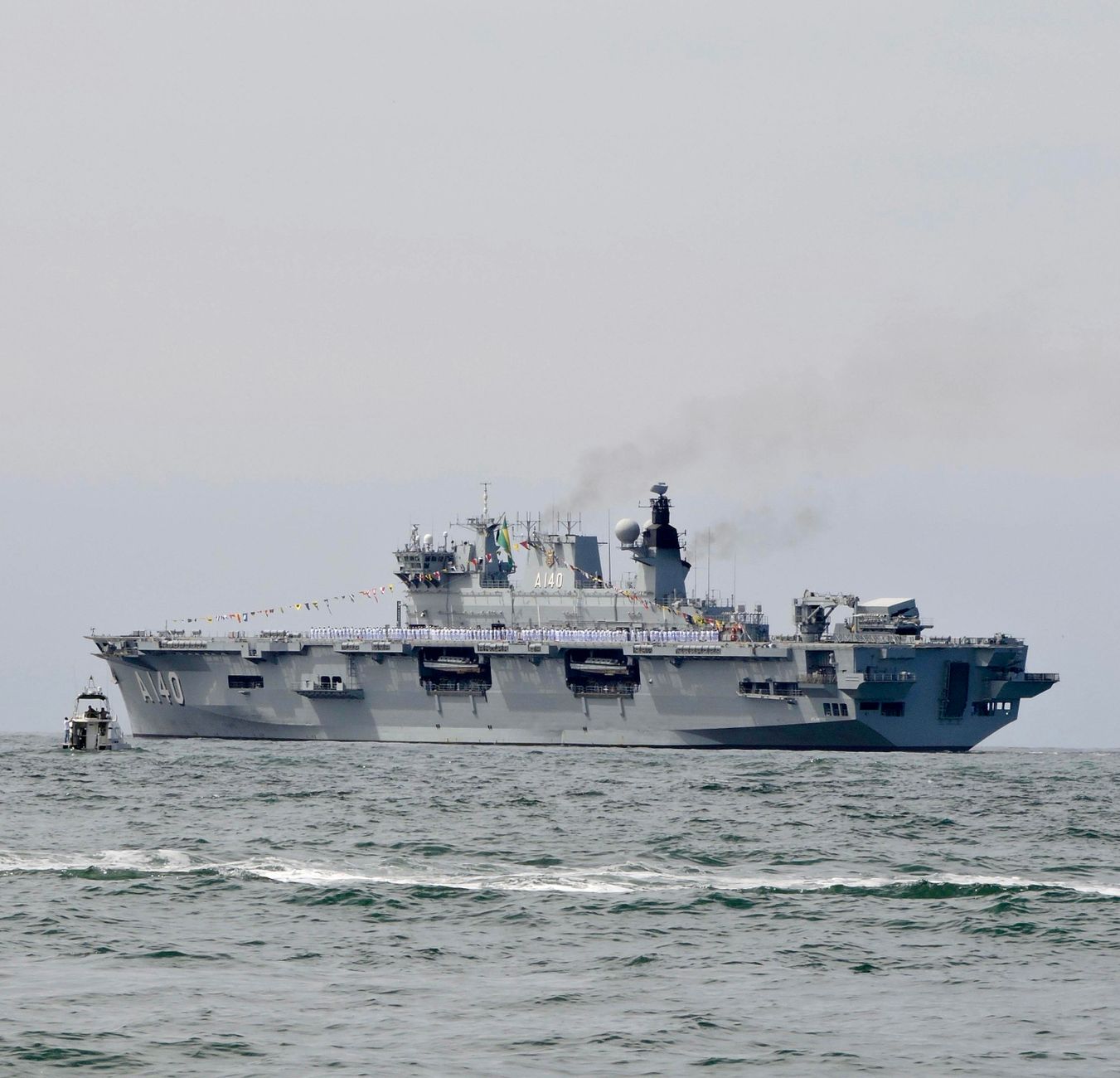
Italy is reshaping its Indo-Pacific presence through defence industrial partnerships rather than permanent military deployment. Companies like Fincantieri and Leonardo are establishing strategic footholds in Southeast Asia, exemplified by the Giuseppe Garibaldi aircraft carrier transfer to Indonesia and naval modernization partnerships with Malaysia.
Italy’s approach to Indo-Pacific engagement represents a distinct departure from traditional European security strategies in the region. Rather than establishing permanent military bases or formal security alliances, Rome is systematically leveraging its defence industrial capabilities—particularly through companies like Leonardo and Fincantieri—to establish strategic footholds across Southeast Asia. This model reflects both Italy’s structural constraints as a middle power and a calculated assessment of where European states can compete effectively against larger strategic actors.
Italian Defence Minister Guido Crosetto’s participation at the 2024 Shangri-La Dialogue in Singapore exemplified this shift. While his attendance generated minimal attention in European media, it signalled Rome’s commitment to positioning itself as a credible defence partner in Asia’s premier security forum. This visibility, combined with parliamentary approval for transferring the decommissioned aircraft carrier Giuseppe Garibaldi to Indonesia by end-2026, demonstrates that Italy’s Indo-Pacific strategy now operates across multiple institutional and commercial channels simultaneously.
Italy’s engagement differs fundamentally from traditional arms export diplomacy. At Malaysia’s DSA & NATSEC Asia exhibition in 2024, Fincantieri presented its Landing Platform Dock proposal tailored specifically to the Royal Malaysian Navy’s modernization requirements. This represents more than a transactional sale; it embodies a partnership approach that encompasses technology transfer, industrial collaboration, and long-term maintenance relationships.
The Giuseppe Garibaldi transfer to Indonesia exemplifies this strategy’s scope. The carrier, decommissioned from Italian service, will provide the Indonesian Navy with significant operational capability while establishing enduring technical cooperation between Rome and Jakarta. Such arrangements create sustained engagement opportunities extending beyond initial procurement—training programmes, spare parts supply chains, and potential future upgrades lock in bilateral relationships across decades.
Leonardo’s parallel expansion across Southeast Asia, coupled with Fincantieri’s naval platform offerings to Malaysia, reveals a coordinated industrial strategy. Italian defence companies are positioning themselves as providers of tailored solutions for regional maritime modernization, a market segment where Southeast Asian navies face genuine capability gaps. Rather than competing directly with American or Chinese military systems, Italian firms offer advanced European technology at more accessible price points and with fewer geopolitical constraints.
Italy’s timing reflects genuine regional demand. Southeast Asian nations—particularly Indonesia, Malaysia, Thailand, and Vietnam—are undertaking substantial naval modernization programmes driven by three factors: contested maritime claims in the South China Sea, expanding exclusive economic zones requiring enhanced surveillance capabilities, and growing naval traffic through critical sea lanes.
Indonesia, as the world’s largest archipelago, faces particular maritime security challenges. The Giuseppe Garibaldi provides Jakarta with a multi-purpose platform capable of power projection, humanitarian assistance, and sustained regional presence—capabilities the Indonesian Navy has lacked. Malaysia’s interest in Landing Platform Dock vessels reflects similar requirements for amphibious capability and extended operations in the Strait of Malacca and South China Sea approaches.
Italy’s defence industry can address these requirements without the political baggage attached to American, Chinese, or Russian systems. European defence technology carries implicit alignment with democratic governance standards and international law frameworks—a consideration that matters to Southeast Asian governments navigating great power competition. Italian solutions thus occupy a strategic middle ground: advanced Western technology without the hegemonic expectations accompanying American security partnerships, nor the strategic subordination implied by Chinese military dependence.
Italy’s model, however, faces significant constraints that distinguish it from France’s Indo-Pacific presence. France maintains permanent military installations across the region through overseas territories (Réunion, Guadeloupe, Martinique), permanently deployed naval assets, and decades of institutional relationships with regional governments. France’s Indo-Pacific strategy rests on tangible military infrastructure and sustained forward presence.
Italy possesses neither overseas territories nor permanent regional military deployments. Its influence depends entirely on maintaining continuous diplomatic engagement, periodic naval visits, industrial cooperation frameworks, and military exchange programmes. This places extraordinary demands on Rome’s diplomatic resources and political commitment. A single change in Italian government priorities, budget constraints, or competing European security crises could rapidly diminish Italian engagement across multiple Southeast Asian partnerships simultaneously.
Financial sustainability presents a parallel challenge. Italy’s defence budget, while substantial by European standards, remains constrained by domestic fiscal pressures and competing NATO commitments. Sustaining industrial partnerships across multiple Southeast Asian countries—including technical support, training provision, and periodic high-level ministerial visits—requires consistent resource allocation over 10-20 year timeframes. Whether Rome can maintain this commitment while managing European security challenges and defence industrial consolidation remains genuinely uncertain.
Italy’s bilateral defence initiatives operate within a strategic paradox. The European Union has repeatedly emphasized Indo-Pacific strategic importance and expanded political engagement with ASEAN through institutional channels. However, actual defence cooperation remains driven by individual member states pursuing national industrial and diplomatic objectives.
Italy’s agreements with Indonesia, Malaysia, and other Southeast Asian partners are fully compatible with EU strategic objectives. Yet they remain fundamentally national in conception and implementation, reflecting Rome’s industrial priorities rather than coordinated European defence policy. This creates a potential future conflict: if the EU eventually develops integrated defence posture toward Southeast Asia—perhaps through coordinated naval deployments or joint industrial standards—Italy may face pressure to reconcile its extensive bilateral network with common European frameworks.
Conversely, if European coordination remains limited, Italy risks accumulating security commitments it cannot sustain independently. A scenario where Italian naval visits become infrequent, industrial partnerships stall due to budget cuts, or training programmes are suspended would rapidly damage Rome’s credibility across multiple Southeast Asian relationships simultaneously. The absence of institutional EU backing means Italy alone bears reputational risk for any failure to deliver on bilateral commitments.
Italy’s Indo-Pacific strategy represents a rational adaptation to structural constraints, not a comprehensive security vision. Rome cannot replicate France’s permanent regional presence or match American security guarantees. Instead, Italy is attempting to build influence through defence industrial partnerships, naval cooperation, and sustained engagement across multiple bilateral relationships.
This approach can succeed if three conditions are met: Italy maintains consistent political commitment to Southeast Asia despite competing European priorities; Italian defence companies continue delivering advanced technology solutions that meet genuine regional requirements; and Rome develops sufficient diplomatic capacity to service multiple bilateral relationships across extended timeframes.
The Giuseppe Garibaldi transfer and Fincantieri’s Malaysian initiatives suggest these conditions currently hold. However, Italy’s success ultimately depends less on individual defence contracts than on transforming growing industrial ties into coherent regional policy. Without sustained institutional commitment and adequate resource allocation, Italy risks appearing as a transactional defence vendor rather than a strategic partner—a distinction that matters profoundly in Southeast Asian calculations about long-term alignment.
For European policymakers, Italy’s experience illustrates both the opportunities and limitations of member-state led defence engagement in the Indo-Pacific. Individual European states can establish meaningful partnerships through defence industrial cooperation. However, European influence in the region would likely increase substantially through coordinated frameworks that pool industrial capabilities, align diplomatic messaging, and distribute resource commitments across multiple member states. Whether the EU develops such coordination remains the critical variable determining whether Italian initiatives represent the beginning of sustained European defence engagement in Southeast Asia or another episode of fragmented, ultimately unsustainable national strategies.