Physical Address
304 North Cardinal St.
Dorchester Center, MA 02124
Physical Address
304 North Cardinal St.
Dorchester Center, MA 02124

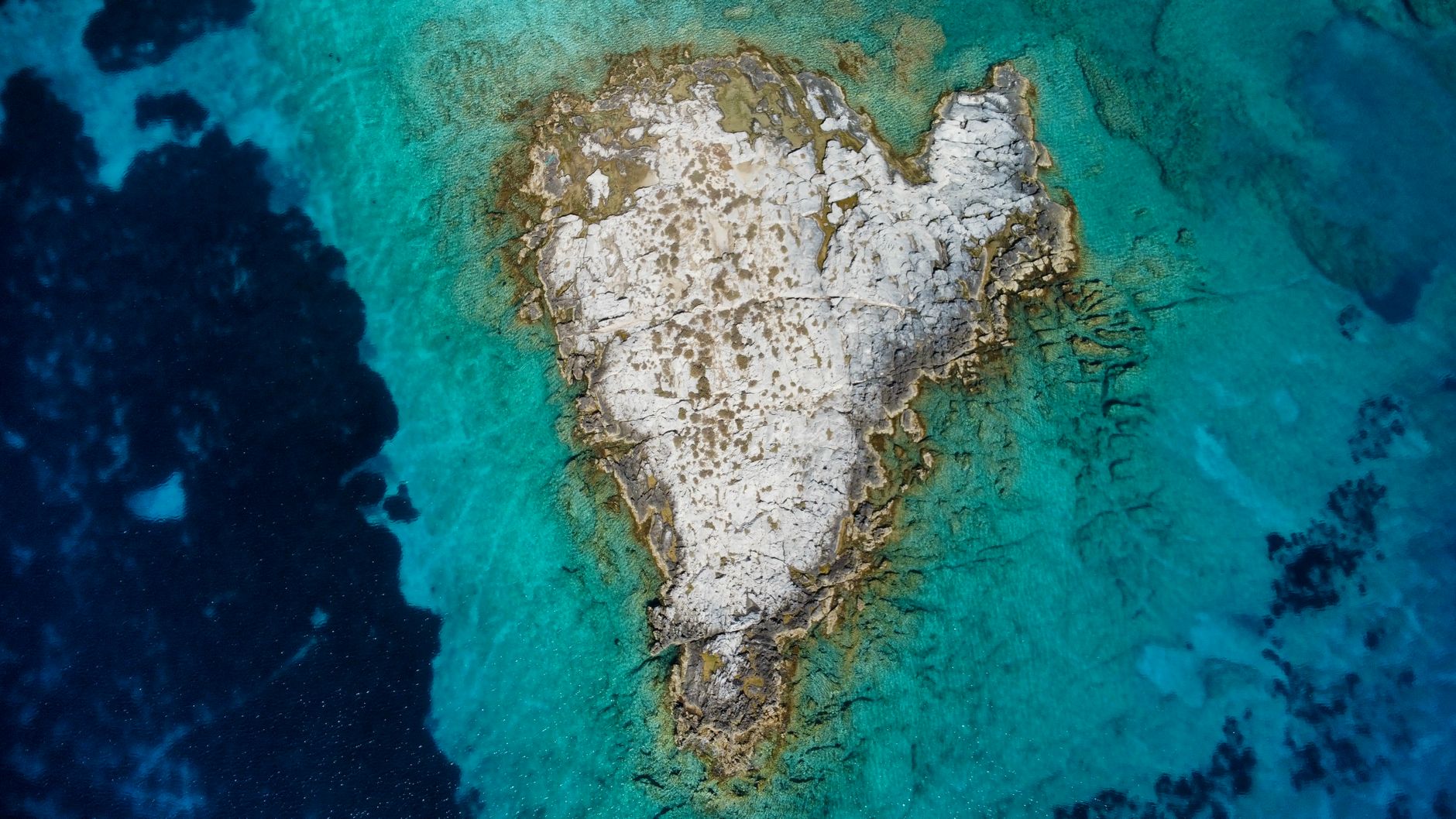
Ten years after the 2016 South China Sea Arbitration Award, the tribunal's clarification of UNCLOS maritime entitlements has fundamentally reshaped how regional states justify maritime claims. Despite China's formal rejection, Beijing has gradually realigned its legal arguments with the award's standards, while the Philippines, Vietnam, and other claimants have actively incorporated the tribunal's principles into domestic law and diplomacy.
The 2016 South China Sea Arbitration Award, delivered by the Permanent Court of Arbitration (PCA) tribunal in The Hague on July 12, 2016, has fundamentally altered how states interpret and justify maritime claims under the 1982 United Nations Convention on the Law of the Sea (UNCLOS). While the tribunal did not resolve underlying territorial sovereignty disputes or maritime delimitation between claimants, it achieved something arguably more consequential: it clarified the legal standards by which maritime entitlements are established and justified under international law. This clarification has proven far more durable and influential than many analysts initially predicted, reshaping the legal landscape of South China Sea disputes over the past decade.
Before 2016, competing interpretations of UNCLOS provisions created substantial ambiguity regarding historical rights claims and the legal status of maritime features. China’s “nine-dash line” claim exemplified this strategic ambiguity, citing vague “historic rights” to justify expansive maritime claims while deliberately avoiding precise legal definitions. The tribunal’s decision eliminated these interpretive gray areas by establishing concrete legal standards, forcing all claimant states—including China—to reframe their positions within a more transparent and legally coherent framework.
The tribunal’s first major clarification concerned the legal status of “historic rights” claims in the South China Sea. China had long asserted that it possessed historic rights over South China Sea waters based on historical use and exploitation by Chinese nationals, citing this doctrine as justification for its expansive maritime claims. However, the tribunal determined that Article 298 of UNCLOS, which permits states to exclude certain disputes from compulsory dispute resolution, could not be invoked to protect ill-defined historic rights claims.
More significantly, the tribunal ruled in paragraph 246 of the award that for states party to UNCLOS, any pre-existing historic rights incompatible with the convention are superseded by the maritime rights regime established under UNCLOS itself. This interpretation meant that historical arguments alone cannot support independent legal claims to maritime entitlements beyond those permitted by the convention. The tribunal concluded that China’s historic rights claims possessed no legal foundation under UNCLOS because they were fundamentally incompatible with the convention’s maritime rights framework.
This ruling eliminated one of the primary legal justifications for China’s South China Sea position. By subordinating historical arguments to UNCLOS’s explicit maritime regime, the tribunal effectively dismantled the theoretical underpinning of Beijing’s most expansive claims. The decision reflected a deliberate choice to prioritize clear, codified international law over ambiguous historical narratives—a choice that has proven increasingly difficult for China to challenge without appearing to reject the international legal order itself.
The award’s second major contribution involved clarifying Article 121(3) of UNCLOS, which distinguishes between islands capable of generating maritime zones and rocks or other features that cannot. Before 2016, international practice had not fully developed concrete criteria for determining whether a maritime feature could generate an exclusive economic zone (EEZ) and continental shelf. This ambiguity was particularly acute in the South China Sea, where numerous small features—many artificially enhanced or occupied by military personnel—became subjects of competing claims.
The tribunal established a clear interpretive standard: only features capable of sustaining “human habitation” or “an economic life of their own” are entitled to generate an EEZ and continental shelf. Features failing this threshold receive only a 12-nautical-mile territorial sea. Critically, the tribunal based this determination on a feature’s natural capacity to sustain human habitation and economic life, explicitly rejecting the presence of military personnel or externally-dependent economic activities as sufficient grounds for generating maritime zones.
This interpretation directly undermined China’s strategy of occupying and militarizing small features in the Spratly Islands. The tribunal’s ruling meant that even heavily fortified artificial islands could not generate the expansive maritime zones that China sought. The Philippines, Vietnam, and other claimants could now cite a clear international legal standard to challenge China’s claims based on these features. While this interpretation remains subject to academic debate, it provided the first detailed international judicial guidance on Article 121(3), establishing a concrete framework where ambiguity had previously prevailed.
Beijing’s formal response to the award has been unambiguous rejection. China adopted its “Four No’s” policy: no acceptance, no participation, no recognition, and no implementation. Chinese officials have repeatedly characterized the award as “null and void” and illegitimate. President Xi Jinping’s government refused to participate in the arbitration proceedings and has invested significant diplomatic, legal, and media resources in countering the tribunal’s findings.
Yet China’s behavior reveals a paradox: Beijing’s intensive efforts to discredit the award underscore its continuing relevance and the damage it inflicted on China’s legal position. More tellingly, China has gradually modified its maritime claims strategy in ways that align with the tribunal’s legal standards, even while publicly rejecting the award. Since 2016, Beijing has progressively reduced explicit references to the “nine-dash line” in official statements, instead emphasizing the “Four Shas” doctrine (Nanhai Zhudao, or South China Sea Islands in Chinese terminology). This reframing attempts to recast China’s maritime claims using language more compatible with UNCLOS’s explicit provisions.
Analysis of China’s official statements from 2009, 2014, 2016, 2020, and 2025 reveals a marked decline in explicit “nine-dash line” references following the award. This linguistic and strategic shift demonstrates that the tribunal’s ruling has compelled even its most vocal opponent to adjust its legal justifications. The fact that China felt obliged to undertake this costly repositioning—while simultaneously denouncing the award—indicates the tribunal’s judgment struck at the heart of Beijing’s maritime claims legitimacy.
Beyond China, other regional claimants have actively incorporated the award’s legal principles into their own positions and domestic legislation. The Philippines moved most decisively, codifying key aspects of the tribunal’s ruling into domestic law through its 2024 Maritime Zones Act. This legislation explicitly recognizes that high-tide features in the Spratly Islands are entitled only to a 12-nautical-mile territorial sea, directly implementing the tribunal’s interpretation of Article 121(3). This legislative step ensures continuity in applying the award’s standards regardless of future Philippine political changes or diplomatic pressures.
Vietnam has similarly leveraged the award’s legal framework. During the arbitration proceedings, Vietnam submitted a statement of position in December 2014 reaffirming its rights under UNCLOS. Over the past decade, Vietnam has actively applied the tribunal’s legal principles to support its South China Sea position, particularly through diplomatic notes exchanged with China at the United Nations between 2019 and 2020. Vietnam has explicitly acknowledged the award’s finding that submerged features and low-tide elevations cannot be subject to territorial sovereignty claims and cannot generate maritime zones, using this principle to establish strong legal grounds for asserting its sovereign rights and jurisdiction.
Malaysia adopted a more cautious approach, partly because some tribunal findings potentially affected its own claims. However, Malaysia’s December 2019 submission to the Commission on the Limits of the Continental Shelf (CLCS) regarding extended continental shelf in the northern South China Sea demonstrates that Kuala Lumpur determined its continental shelf entitlements using baselines drawn from its mainland coast in accordance with UNCLOS—an approach entailing significantly fewer legal uncertainties than asserting extended continental shelf rights from disputed Spratly features.
Indonesia has employed legal arguments grounded in the award to reject China’s vague “historic rights” claims, strengthening its own position in disputed areas. Collectively, these regional responses indicate that the award has become the de facto legal framework structuring South China Sea disputes, regardless of China’s formal rejection.
A decade after its delivery, the 2016 South China Sea Arbitration Award remains the most significant clarification of UNCLOS maritime entitlements in international practice. Its primary achievement was not resolving the South China Sea disputes—a task beyond its mandate—but rather establishing clear legal standards where ambiguity had enabled strategic obfuscation. By clarifying the treatment of historic rights and the criteria for maritime feature classification, the tribunal transformed maritime disputes in the region from contests of competing historical narratives into disputes structured by explicit international legal rules.
The award’s impact extends beyond the South China Sea. Its interpretations of UNCLOS have influenced maritime disputes globally, establishing precedents that other coastal states and tribunals reference. The tribunal’s approach of prioritizing the convention’s explicit provisions over ambiguous historical claims has become the international standard, constraining the legal arguments available to any state seeking to justify expansive maritime claims.
For Australia and New Zealand, the award’s significance lies in its reinforcement of rules-based maritime order. Both nations depend on UNCLOS-based maritime regimes for their own maritime interests and have consistently supported the award’s principles. The award’s durability despite China’s rejection demonstrates that international legal rulings can establish binding normative frameworks even without universal acceptance, provided sufficient regional and global actors accept and implement them.
China’s inability to overturn or substantially undermine the award—despite a decade of diplomatic and legal effort—suggests that the international legal order has proven more resilient than pessimists anticipated. However, the award’s effectiveness depends on continued regional commitment to its principles. Should major claimants abandon the legal framework it established, or should external powers cease supporting rules-based maritime governance, the award’s practical impact could erode. For the foreseeable future, however, the 2016 South China Sea Arbitration Award remains the foundational legal instrument structuring maritime disputes in one of the world’s most strategically significant regions.