Physical Address
304 North Cardinal St.
Dorchester Center, MA 02124
Physical Address
304 North Cardinal St.
Dorchester Center, MA 02124

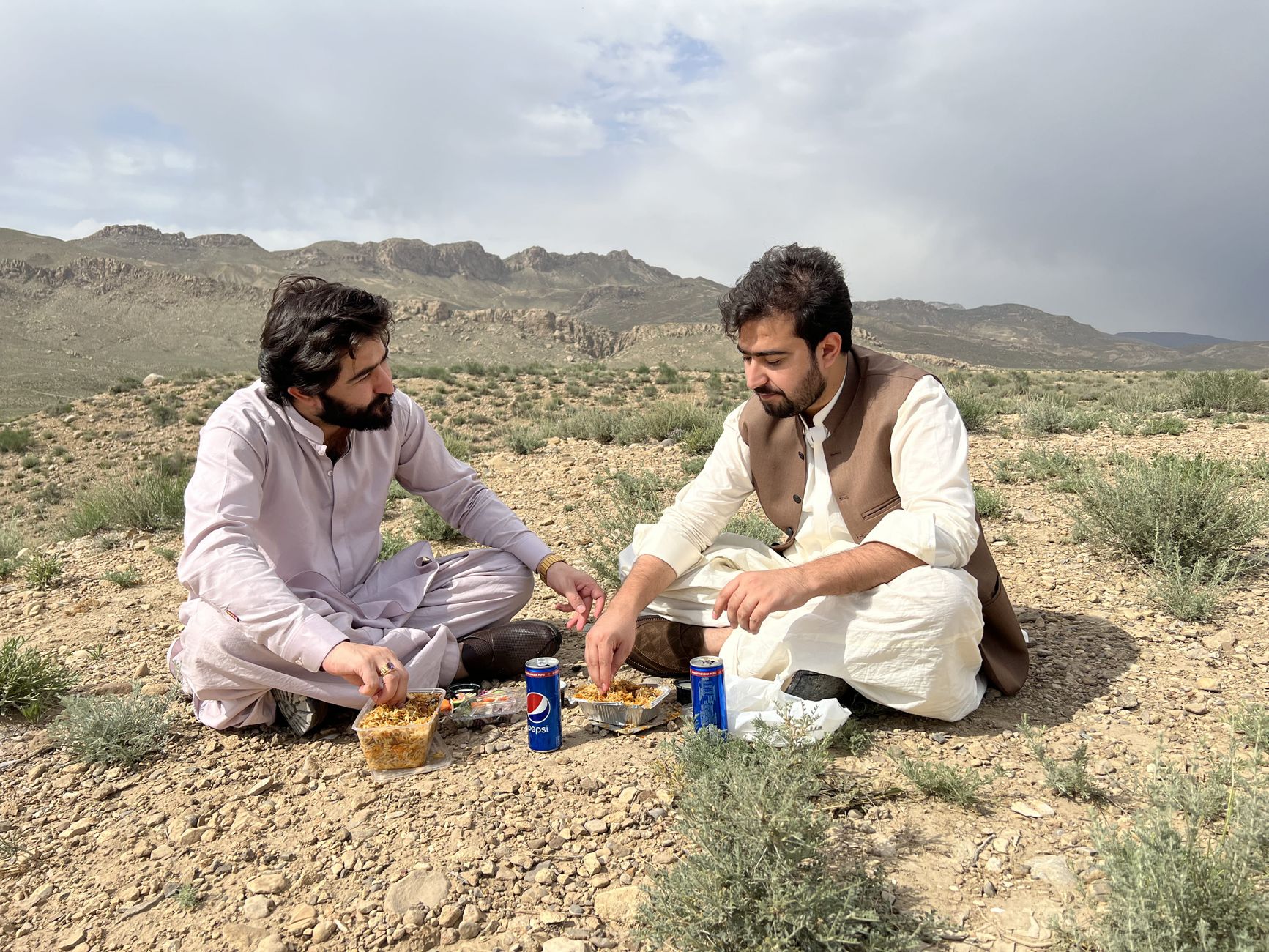
Pakistan's role as a U.S.-Iran mediator has elevated its international standing, yet systematic enforced disappearances and extrajudicial killings in Balochistan persist unchecked. The state's diplomatic credibility masks a documented human rights crisis affecting thousands of families seeking accountability for missing relatives.
Pakistan’s emergence as a diplomatic intermediary between the United States and Iran has earned international praise for its mediation efforts, yet this elevated geopolitical profile masks a persistent and systemic human rights catastrophe within its own borders. The contradiction between Islamabad’s cultivation of a peacemaker image and its documented pattern of enforced disappearances, extrajudicial killings, and suppression of human rights activists reveals a fundamental disconnect between Pakistan’s international positioning and its domestic governance record—particularly in Balochistan province, where security operations have generated thousands of cases of forced disappearances since 2000.
This analytical assessment examines how Pakistan’s strategic interests in regional diplomacy have coincided with intensified security crackdowns that criminalize peaceful dissent, rendering families of the disappeared invisible within a framework where national security concerns supersede accountability and rule of law.
Enforced disappearances in Balochistan represent one of South Asia’s most severe ongoing human rights violations. Since 2000, when armed insurgency escalated in the province, thousands of individuals—including students, political activists, healthcare workers, and ordinary citizens—have been forcibly taken by Pakistani security agencies. The documentation by the Baloch Yekjehti Committee (BYC), a civil rights monitoring organization, recorded 403 cases of enforced disappearances and 117 extrajudicial killings in the first six months of 2026 alone, demonstrating that this is not a historical problem but an accelerating contemporary crisis.
The fate of the disappeared varies: some are eventually released after months or years in undisclosed detention; others are discovered dead with evidence of torture; and hundreds remain missing for decades with no official information regarding their whereabouts or status. This systematic uncertainty creates cascading administrative and social consequences for families. Women whose husbands have disappeared exist in legal limbo—neither confirmed widows nor wives—creating barriers to inheritance, guardianship, remarriage, and independent economic participation. Children cannot obtain school admissions, national identity cards, or passports without a father’s documented status. The Commission of Inquiry on Enforced Disappearances, established by the Pakistani government in 2011, has failed to produce meaningful accountability or systematic resolution.
Pakistan’s response to the Balochistan insurgency has increasingly conflated peaceful human rights activism with militant activity. Following the March 2025 hijacking of a train by Baloch militants, security forces arrested dozens of human rights defenders and charged them under terrorism statutes—a pattern that reflects how security operations deliberately blur distinctions between armed opposition and civilian protest.
Over 1,000 human rights activists, journalists, and families of the disappeared have been placed on Pakistan’s Fourth Schedule—a domestic anti-terrorism watchlist that imposes travel bans, blacklisting from financial services, and restrictions on basic services including SIM card registration, home rental, and domestic air travel. This administrative weaponization effectively criminalizes grievance-seeking and transforms the act of demanding accountability into a terrorism-adjacent offense. Human rights defenders who organize protests, attend rallies, or march for information about missing relatives face arrest, physical assault, and imprisonment under the same legal framework used against armed insurgents.
The trajectory is instructive: in March 2025, human rights activists were arrested in Karachi while peacefully protesting against crackdowns on Baloch rights advocates. This represents not an aberration but a systematic pattern of state suppression of civil society, executed through counter-terrorism legislation that provides legal cover for the criminalization of dissent.
Pakistan’s political leadership has demonstrated a consistent pattern of acknowledging enforced disappearances when in opposition, then abandoning reform commitments upon assuming power. Opposition figures including Rana Sanaullah, Maryam Nawaz Sharif, and Imran Khan publicly condemned enforced disappearances and promised action when outside government. Once in power, these same leaders failed to implement substantive reforms or hold security agencies accountable. This cycle reveals that enforced disappearances function as an embedded feature of Pakistan’s security apparatus rather than a policy aberration susceptible to electoral correction.
Field Marshal Asim Munir, who commands Pakistan’s military and holds significant influence over security operations in Balochistan, has faced domestic criticism for jailing opposition leaders and undermining democratic institutions. Yet Munir has received explicit international validation: U.S. President Donald Trump has publicly praised him as an “exceptional man,” a “great fighter,” and “my favorite field marshal.” This international endorsement of a military leader overseeing documented human rights abuses illustrates how Pakistan’s diplomatic utility to Western powers can insulate its security establishment from accountability pressure.
Pakistan’s positioning as a mediator between the United States and Iran represents a deliberate diplomatic strategy to enhance its international standing and strategic relevance. Diplomatic engagement in Islamabad between U.S. and Iranian representatives generated international media coverage praising Pakistan’s role in reducing tensions. Simultaneously, families of the disappeared traveled to Islamabad multiple times carrying photographs of missing relatives, seeking intervention from those with authority to compel accountability. These families encountered arrests, intimidation, and deliberate institutional invisibility rather than dialogue.
This juxtaposition exposes a fundamental principle: states cultivating international peacemaker credentials while systematically violating human rights domestically gain reputational advantage precisely because international attention privileges diplomatic outcomes over internal governance. Pakistan’s international image as a stabilizing force in U.S.-Iran relations provides diplomatic capital that can be deployed to deflect scrutiny of domestic violations. The state can simultaneously claim to promote dialogue on the international stage while suppressing dialogue with its own citizens demanding accountability.
The concern articulated by families of the disappeared is not that Pakistan pursues international peace, but that international recognition of Pakistan’s diplomatic role may provide political cover for continued domestic repression. A state gains geopolitical credibility through mediation without corresponding pressure to resolve internal injustices, creating perverse incentives to maintain security operations that generate the disappearances and extrajudicial killings that families are seeking to address.
Pakistan’s case illustrates a structural problem in contemporary geopolitics: states with strategic value to major powers can accumulate diplomatic legitimacy and international partnerships despite severe internal human rights violations. The Trump administration’s public praise for Field Marshal Munir, coupled with Pakistan’s utility in U.S.-Iran diplomacy, creates a geopolitical environment where accountability for enforced disappearances and extrajudicial killings becomes a secondary consideration relative to strategic alignment.
For families of the disappeared in Balochistan, the practical consequence is that international attention to Pakistan’s diplomatic role does not translate into pressure on the Pakistani state to resolve cases of enforced disappearance. The 17-year disappearance of Dr. Deen Mohammed Baloch and thousands of similar cases remain administratively unresolved and legally unaccountable precisely because Pakistan’s international strategic position does not depend on resolving them.
The fundamental assessment is that enforced disappearances in Balochistan will persist as long as Pakistan’s security apparatus faces no meaningful accountability mechanism and as long as international actors prioritize Pakistan’s geopolitical utility over pressure regarding internal governance. Meaningful change would require either: (1) sustained international pressure linking Pakistan’s diplomatic partnerships to human rights performance, or (2) domestic political transformation that subordinates security agency autonomy to civilian rule and judicial accountability. Neither appears imminent given current geopolitical alignments and Pakistan’s strategic value to the Trump administration and other international actors.
The families of the disappeared will continue their activism and documentation efforts, but without corresponding changes in international diplomatic prioritization or domestic institutional accountability, their cases will remain suspended in the administrative and legal limbo that characterizes Pakistan’s approach to enforced disappearances: acknowledged when politically convenient, ignored when strategically inconvenient.