Physical Address
304 North Cardinal St.
Dorchester Center, MA 02124
Physical Address
304 North Cardinal St.
Dorchester Center, MA 02124

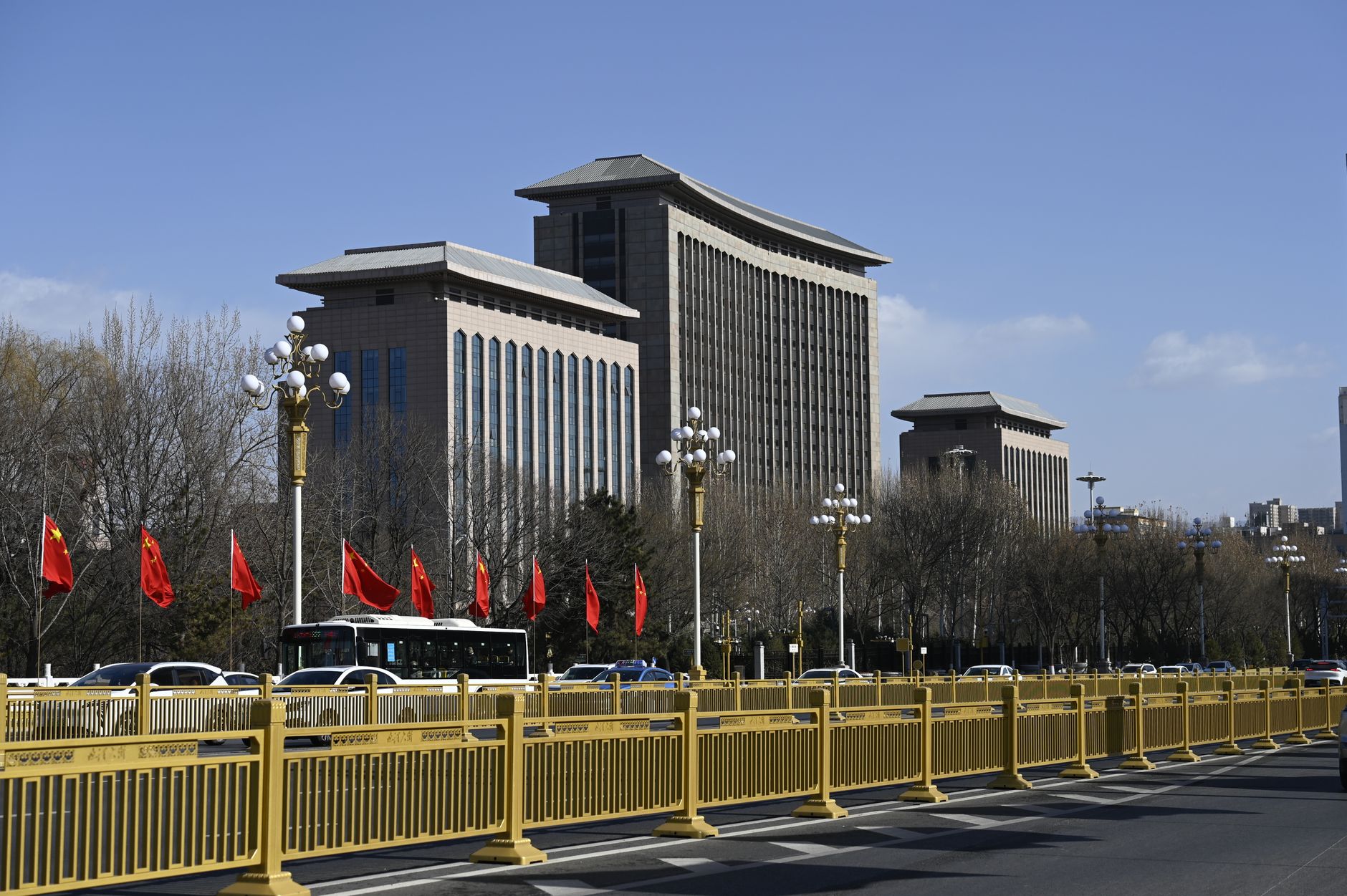
The CCP's 2024 performance campaign redefines how local officials are evaluated, shifting from GDP growth metrics to welfare outcomes and political loyalty. This reflects China's structural economic slowdown and represents a critical test of regime legitimacy beyond quantitative growth.
The Chinese Communist Party’s (CCP) February-to-July 2024 campaign to establish a “correct view of performance” (政绩观) signals a fundamental restructuring of how China evaluates and incentivizes local governance. This is not merely ideological rhetoric but a structural adaptation to sustained economic constraints and evolving public expectations. For nearly four decades, the CCP’s performance legitimacy rested on a narrow metric: rapid GDP growth and visible infrastructure expansion. That model is no longer tenable. With GDP growth declining from double digits to 5.3 percent in 2023, fiscal pressures mounting, and local government debt exceeding 14 trillion yuan, Beijing must redefine what constitutes bureaucratic success or risk eroding public confidence in state capacity.
The campaign explicitly targets the distortions endemic to growth-obsessed governance: data falsification, wasteful “image projects,” excessive risk-taking, and short-termism. Linyi County in Shandong Province exemplifies the problem Beijing seeks to correct—officials misappropriated agricultural training funds to construct recreational facilities, a practice the central authorities now frame as symptomatic of distorted performance incentives disconnected from public welfare. By reorienting performance evaluation toward political loyalty, social welfare delivery, and long-term policy execution, Xi Jinping’s leadership is attempting to sustain state legitimacy through what might be termed “quality-based performance”—outcomes that benefit citizens and withstand public scrutiny rather than merely inflating headline statistics.
China’s economic trajectory has fundamentally shifted. The property sector, which accounted for approximately 30 percent of GDP and 60 percent of local government revenue through land sales, is in structural decline. Youth unemployment exceeded 21 percent in 2023 before the government stopped publishing the figure. Against this backdrop, the CCP’s 15th Five-Year Plan (2026-2030) pivots toward “high-quality development,” technological upgrading, and financial risk management—objectives that require consistent policy execution across provinces and municipalities rather than the decentralized competition that characterized the reform era.
The performance campaign serves as an enforcement mechanism to align local behavior with these national strategic priorities. Local officials historically pursued debt-driven expansion and infrastructure duplication because the evaluation system rewarded visible, quantifiable outputs. A county party secretary could advance through rapid construction of highways, industrial parks, and administrative centers—regardless of whether these projects generated returns or served genuine economic needs. This system produced redundant capacity, unsustainable debt, and misallocated resources. By redefining performance to penalize debt accumulation, financial risk-taking, and wasteful prestige projects, Beijing aims to discipline local investment patterns and redirect capital toward sectors aligned with long-term national development goals.
The campaign also incorporates mechanisms to enhance state responsiveness and perceived legitimacy. Online feedback surveys, citizen hotlines, and public opinion polling are now formally integrated into performance evaluation. While these mechanisms do not constitute democratic accountability, they provide the CCP with feedback channels to identify local governance failures and demonstrate responsiveness to public concerns. This represents a strategic concession to rising societal expectations: citizens increasingly expect governance outcomes beyond infrastructure construction—healthcare access, pension adequacy, environmental quality, and rule of law protections. By incorporating public satisfaction metrics into official evaluation, the CCP attempts to present governance as more participatory while maintaining centralized control over performance standards.
The performance redefinition extends beyond economic governance into the ideological and cultural domains. The 2023 Ethnic Unity Law and related policy initiatives signal that local officials are now evaluated on their ability to advance CCP-defined narratives of national identity and social cohesion. Museums, cultural centers, and public messaging must align with state-prescribed nation-building objectives rather than serving primarily as symbols of local prestige or development achievement.
This represents a significant shift in how the CCP instrumentalizes cultural institutions. Previously, local officials competed to construct the largest museums, cultural complexes, and heritage sites as visible markers of administrative achievement. The central leadership now emphasizes the ideological function of these institutions—their role in promoting narratives of Chinese civilization, ethnic unity under CCP leadership, and the superiority of the socialist system. Cultural projects remain encouraged, but their evaluation depends on ideological alignment rather than scale of investment. This integration of cultural policy into the performance evaluation system reflects Xi Jinping’s broader emphasis on “cultural confidence” and the CCP’s civilizational narrative as sources of regime legitimacy alongside economic performance.
The campaign’s enforcement structure reveals a fundamental shift from the decentralized experimentation that characterized the reform era toward tighter top-down supervision. Central guidance groups—deployed across provincial and local government bodies, state-owned enterprises, banks, ministries, and universities—function as both supervisors and instruments of rectification. These groups identify deviations from CCP directives and enforce compliance, reinforcing hierarchical accountability and limiting opportunities for symbolic compliance or local adaptation.
Enforcement is integrated with existing mechanisms including inspections, audits, and anti-corruption investigations. This integration is deliberate: data falsification, formalism, and vanity projects are now classified as systemic governance failures rather than isolated incidents. The anti-corruption campaign, which has ensnared over 540,000 officials since 2013, becomes a tool for enforcing performance redefinition. Officials who pursue distorted performance metrics face not merely administrative censure but potential criminal investigation.
The operational enforcement framework employs a “learning, checking, and rectifying” (学查改) methodology that replaces target-driven evaluation with continuous problem identification and correction. Officials must compile problem lists, implement time-bound solutions, and demonstrate compliance through measurable outcomes. Anhui Province exemplifies this approach, institutionalizing project-based rectification across farmland construction and rural asset management, targeting “petty corruption” (微腐败) in livelihood areas. This approach recovers misallocated funds and strengthens oversight of grassroots projects, directly linking official performance to problem resolution and public welfare.
The performance campaign produces contradictory implications for local governance. On one hand, it addresses genuine pathologies: the campaign’s emphasis on durable outcomes over short-term visibility should reduce wasteful infrastructure duplication and encourage more prudent fiscal management. By penalizing data falsification and vanity projects, the CCP aims to improve policy coherence and align local actions with national strategic objectives.
However, the tightening of political and disciplinary scrutiny creates perverse incentives. Officials operating under increasingly stringent oversight may become risk-averse, preferring procedural compliance to policy innovation. The decentralized experimentation that generated China’s most successful governance innovations—from special economic zones to village elections—depended on officials having discretionary space to take initiative. The performance campaign’s emphasis on hierarchical control and continuous problem identification may suppress this innovative capacity. Local officials, fearing disciplinary consequences for deviations from central directives, may default to conservative implementation of prescribed policies rather than adapting them to local conditions or experimenting with novel approaches.
The campaign also reflects deeper structural challenges in the CCP’s governance model. In the absence of electoral competition, performance legitimacy remains the primary basis for regime authority. As economic growth slows and fiscal constraints tighten, the CCP must demonstrate that state capacity delivers meaningful welfare outcomes. The performance campaign is an attempt to maintain legitimacy through “quality-based” governance rather than quantitative growth. The success of this recalibration depends on whether local officials can effectively redirect resources toward welfare outcomes and whether citizens perceive these outcomes as adequate compensation for slower economic growth. If the campaign merely produces bureaucratic compliance without improving welfare delivery, legitimacy erosion will likely accelerate.
The CCP’s performance redefinition represents a necessary but potentially fragile adaptation to structural economic and fiscal constraints. The campaign correctly identifies pathologies in the growth-driven governance model and attempts to redirect incentives toward sustainable outcomes. However, the enforcement architecture—based on hierarchical control, continuous oversight, and disciplinary consequences—may prove counterproductive by suppressing local initiative and innovation. The campaign’s success ultimately depends on whether the CCP can simultaneously maintain central strategic control and preserve sufficient local discretion to permit adaptive governance. For Indo-Pacific policymakers, the campaign signals that China’s domestic governance model is undergoing significant stress and recalibration. A CCP increasingly focused on internal discipline and welfare legitimacy may be less inclined toward aggressive external expansion but more vulnerable to domestic instability if the performance campaign fails to deliver improved welfare outcomes.