Physical Address
304 North Cardinal St.
Dorchester Center, MA 02124
Physical Address
304 North Cardinal St.
Dorchester Center, MA 02124

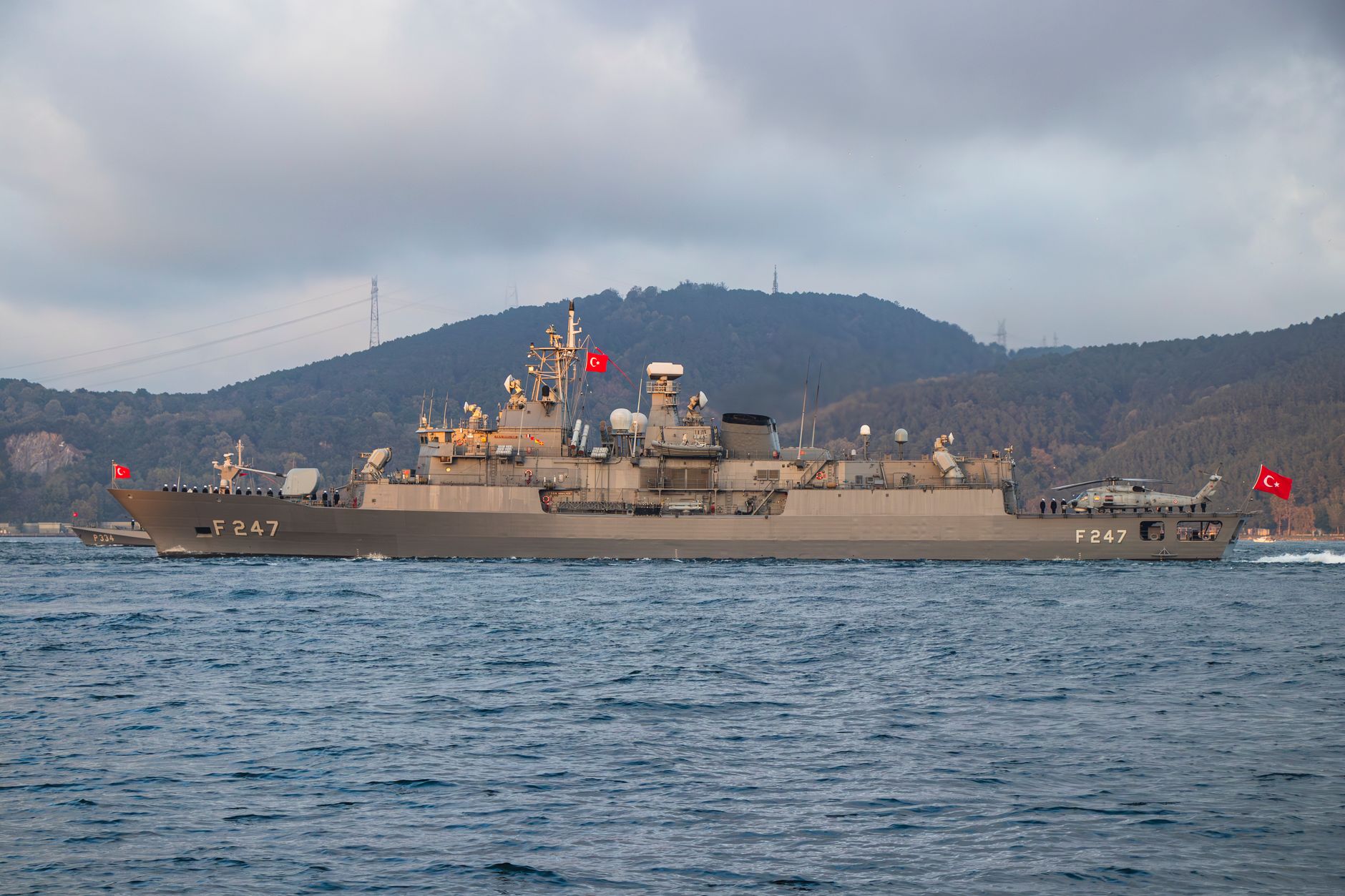
China's Type 054B frigate Luohe deployed with the Liaoning carrier strike group in the Western Pacific in May 2026, marking the first confirmed integration of this advanced platform into far-seas operations. The deployment signals the PLAN's transition from fleet expansion toward integrated carrier operations and sustained blue-water capability.
The People’s Liberation Army Navy (PLAN) achieved a significant operational milestone in May 2026 when the Type 054B frigate Luohe (hull number 545) deployed alongside the aircraft carrier Liaoning in the Western Pacific. Japan’s Ministry of Defense confirmed on May 26 that Chinese naval forces had conducted carrier operations approximately 880 kilometers southwest of Okinotorishima on May 25-26, with repeated fighter jet and helicopter sorties observed from the Liaoning. While PLAN carrier deployments beyond the First Island Chain have become increasingly routine, this particular operation marked the first confirmed integration of China’s newest frigate class into a carrier strike group formation beyond the First Island Chain—a development with substantial implications for regional maritime power dynamics.
The deployment reflects a fundamental shift in Chinese naval strategy. Rather than concentrating on fleet expansion alone, the PLAN is now prioritizing the development of integrated, operationally coherent carrier strike groups capable of sustained blue-water operations. This transition from a near-seas defensive posture to a genuine oceanic navy represents one of the most consequential military transformations in the Indo-Pacific over the past decade.
The Type 054B, designated by NATO as Jiangkai III-class, represents a substantial advancement over the Type 054A frigate that has served as the PLAN’s primary multirole escort vessel since the early 2010s. The Luohe entered service in January 2025, meaning the PLAN integrated it into carrier strike group operations within approximately sixteen months of commissioning—a notably aggressive operational tempo that underscores Beijing’s confidence in the platform’s maturity.
Chinese military sources have highlighted several key improvements in the Type 054B design. The frigate features enhanced phased-array radar systems with reportedly improved detection and tracking capabilities, upgraded sonar suites optimized for anti-submarine warfare (ASW), and more advanced combat management systems. Critically, Chinese military media have emphasized the integration of artificial intelligence-assisted battle management systems designed to reduce air defense blind spots and accelerate response times during complex multi-unit fleet operations—a capability that would substantially improve coordination within carrier strike groups.
The Type 054B’s compatibility with the Z-20F anti-submarine warfare helicopter represents a particularly significant upgrade for carrier escort operations. Anti-submarine protection remains one of the most demanding and strategically critical missions in carrier strike group operations, particularly given the proliferation of advanced submarine platforms throughout the Indo-Pacific. The improved ASW capability addresses a historical weakness in earlier PLAN surface combatants and demonstrates Beijing’s recognition that modern carrier operations demand sophisticated undersea threat mitigation.
The composition of the May 2026 deployment illuminates the PLAN’s evolving operational doctrine. The strike group included the Liaoning, the Type 055 Renhai-class destroyer, the Type 054B frigate Luohe, and the Type 901 fast combat support ship Hulunhu. This layered structure increasingly mirrors the organizational architecture of U.S. Navy carrier strike groups, with distinct roles assigned to each platform class.
The Type 055 destroyer—China’s most powerful surface combatant—functions as the primary air defense and command platform, providing integrated air defense systems (IADS) and serving as the strike group commander’s flagship. The Type 054B frigate assumes specialized anti-submarine and close-escort missions, leveraging its enhanced ASW systems and moderate air defense capabilities. The inclusion of the Type 901 replenishment vessel indicates that the PLAN was preparing for sustained operations far from mainland bases, rather than conducting short-duration exercises. This logistical sophistication represents a critical capability gap that the PLAN has only recently begun closing.
The PLAN currently operates three aircraft carriers: the Liaoning (in service since 2012), the Shandong (commissioned 2019), and the Fujian (commissioned November 2025). The Fujian represents a qualitative leap in Chinese carrier capability, featuring electromagnetic catapult-assisted takeoff and landing (EMALS) systems analogous to those deployed on the U.S. Navy’s Gerald R. Ford-class carriers. EMALS technology enables the launch of heavier, more capable aircraft and reduces launch cycle times—capabilities that will substantially enhance the operational flexibility of future PLAN carrier strike groups.
On May 19, 2026, Japan confirmed for the first time that the Luohe had transited the Miyako Strait, the strategic maritime chokepoint separating Okinawa and Miyako Island. This transit marked the first confirmed deployment of a Type 054B beyond the First Island Chain and underscores the PLAN’s expanding operational reach.
The Miyako Strait has emerged as the PLAN’s primary gateway into the Pacific Ocean. Chinese naval transits through the waterway have accelerated substantially over the past decade, reflecting Beijing’s deliberate strategy to normalize blue-water operations and challenge the geographic constraints historically imposed by the First Island Chain. The deployment of one of China’s newest frontline surface combatants through this chokepoint signals that the PLAN now views advanced warships as suitable platforms for routine far-seas operations, not merely as specialized assets reserved for homeland defense.
For Tokyo, these movements carry immediate strategic significance. Japanese defense planners have long regarded the First Island Chain as a critical maritime boundary, and the increasing frequency of advanced PLAN warships operating beyond it represents a gradual but consequential erosion of Japan’s traditional strategic geography. The Miyako Strait transits, conducted with apparent regularity, suggest that the PLAN has effectively neutralized one of Japan’s historical geographic advantages.
The timing of the Liaoning deployment warrants analytical attention. The operation occurred amid intensified Japanese-U.S. and Philippines-U.S. military exercises around the First Island Chain and in Taiwan’s surrounding waters. Taiwanese military analysts have speculated that Beijing deliberately timed the Liaoning deployment to demonstrate counter-pressure against growing allied military coordination in the region. Whether this interpretation reflects Beijing’s actual strategic calculus remains uncertain, but the deployment clearly signaled Chinese resolve to maintain operational presence and demonstrate naval capability during a period of elevated allied military activity.
The deployment also occurs within the broader context of China’s accelerating naval modernization and the PLAN’s systematic integration of next-generation platforms into operational service. Unlike previous modernization cycles that emphasized quantitative fleet expansion, the current phase emphasizes qualitative improvements, integrated operations, and sustained blue-water capability. This represents a maturation of Chinese naval strategy and a transition from coastal defense toward genuine oceanic power projection.
The Luohe deployment represents a threshold event in PLAN modernization. For the first time, China has deployed a next-generation frigate as an integral component of a carrier strike group operating in the Western Pacific. This integration will almost certainly accelerate as additional Type 054B hulls enter service and operational crews accumulate experience with the platform’s advanced systems.
The PLAN’s emerging carrier strike group architecture—combining the Liaoning or Shandong, Type 055 destroyers, Type 054B frigates, and Type 901 replenishment ships—represents a qualitatively different naval capability than the PLAN possessed five years ago. The integration of AI-assisted combat management systems, enhanced ASW capabilities, and improved logistical support creates a more coherent, responsive, and capable force structure. As the Fujian enters full operational service and additional Type 055 and Type 054B hulls join the fleet, the PLAN will possess multiple carrier strike groups capable of sustained far-seas operations.
For Japan and the United States, the normalization of Chinese carrier operations in the Western Pacific presents an evolving strategic challenge. The increasing frequency of PLAN carrier deployments, combined with the sophistication of escort platforms and the demonstrated capability to maintain operations far from mainland bases, suggests that Chinese carrier strike groups will become a permanent feature of the regional security environment. Tokyo and Washington must adjust force posture, operational concepts, and alliance coordination to account for this transformation.
The deployment also underscores how the PLAN’s modernization now emphasizes integrated multi-platform operations rather than isolated platform capabilities. The success of the Liaoning deployment depended not merely on the Luohe’s technical specifications, but on the integration of the frigate’s systems with those of the carrier, destroyers, and support vessels. This operational integration represents the true measure of PLAN modernization and the most significant indicator of China’s transition toward genuine blue-water naval power.




