Physical Address
304 North Cardinal St.
Dorchester Center, MA 02124
Physical Address
304 North Cardinal St.
Dorchester Center, MA 02124

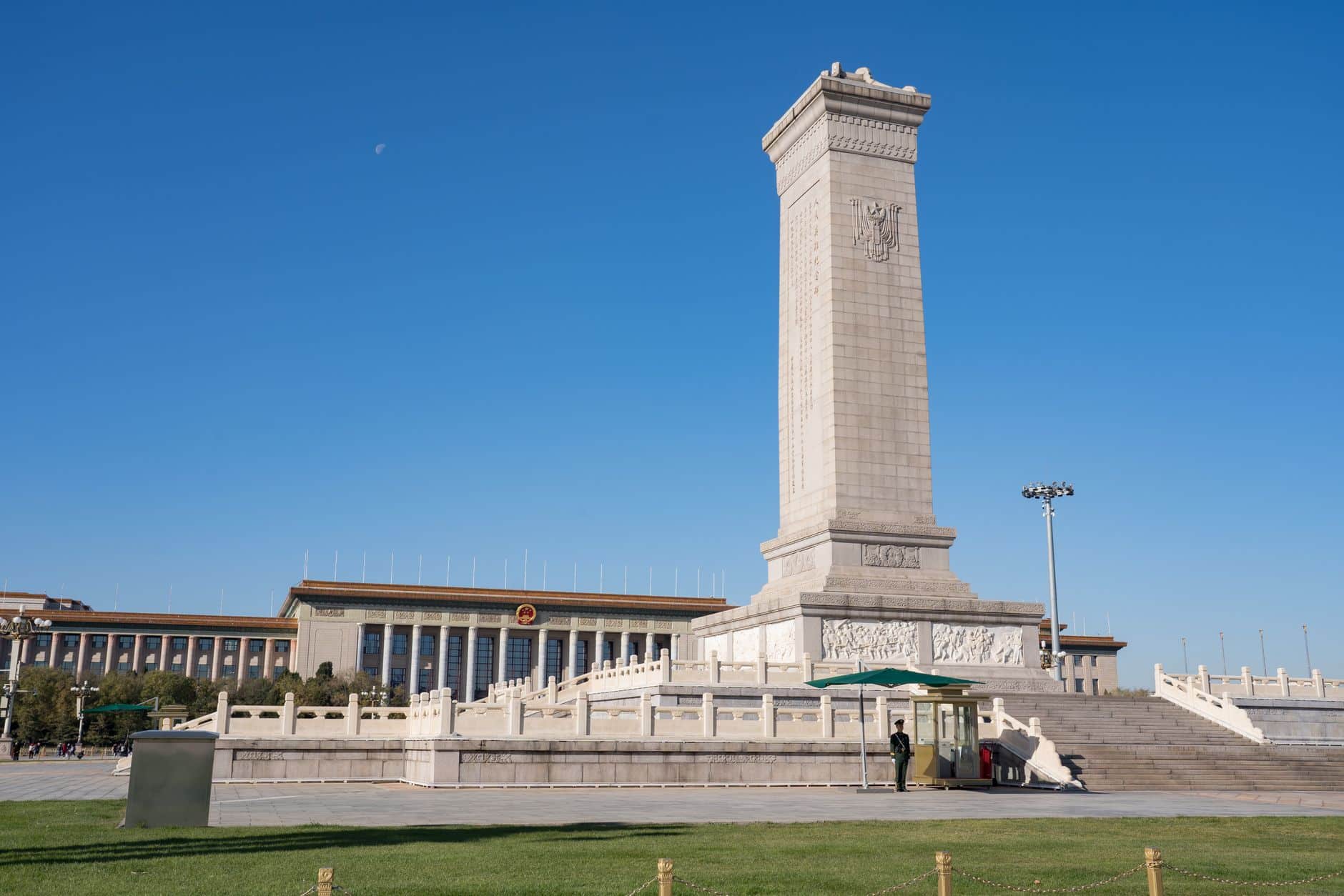
The May 2026 US-China summit's emphasis on a "constructive and stable" relationship masks Beijing's hardening position on Taiwan, creating significant pressure on Japan. As China positions Taiwan stability as central to great power management, Tokyo faces narrowing policy flexibility and uncertain US backing.
The May 2026 US-China summit in Beijing, where President Donald Trump and President Xi Jinping agreed on a “constructive and stable strategic relationship,” marks a significant recalibration of great power competition in the Indo-Pacific. This formulation differs materially from the Biden administration’s framing of US-China ties as a “competitive relationship” structured around conflict avoidance and selective cooperation. The shift in language reflects not a return to cooperation, but rather a managed competition framework that prioritizes stability over the confrontational trajectory that characterized Trump’s first term. For Japan and other Indo-Pacific stakeholders, this recalibration carries profound implications for regional security architecture.
The trajectory of US-China relations over the past decade reveals the volatility underlying great power diplomacy. Under the Obama administration, China proposed a “new type of major-country relationship” predicated on mutual respect for core interests—a concept that gained traction before deteriorating in the latter years of that presidency. During Trump’s first term (2017-2021), bilateral relations became notably unstable, characterized by tariff escalation and strategic ambiguity. The Biden administration attempted to reset ties through the “competitive relationship” framework, which achieved limited success in areas such as climate cooperation and defense dialogue, but failed to revive the strategic partnership Beijing had sought. The return of Trump to office in 2025 has now produced a third iteration: the “constructive and stable” formulation that emerged from the May 2026 summit.
The most consequential aspect of the Beijing summit was Xi Jinping’s statement on Taiwan, in which he asserted that “Taiwanese independence” and peace in the Taiwan Strait are “fundamentally incompatible,” while positioning the maintenance of Taiwan Strait stability as “the greatest common denominator between China and the United States.” This rhetorical move represents a significant hardening of China’s public position on the issue. Rather than employing the traditional language of “red lines” or “bottom lines,” Xi’s formulation treats Taiwan stability not as a negotiable interest but as a prerequisite for the entire US-China relationship.
The strategic calculation underlying this statement is transparent: by anchoring the “constructive and stable relationship” to Taiwan Strait stability, Beijing has effectively made Taiwan the primary metric by which the entire bilateral relationship will be evaluated. Any perceived movement toward Taiwanese independence or external support for such movement becomes, by Xi’s logic, a violation of the foundational premise of US-China stability. This is not merely rhetorical positioning—it represents a constraint on US policy flexibility regarding Taiwan and signals to regional actors, particularly Japan, that Beijing views the Taiwan question as non-negotiable within the framework of great power management.
For Japan under Prime Minister Sanae Takaichi, the May 2026 summit creates a strategic bind. Japan’s Taiwan policy has remained consistent since the normalization of Sino-Japanese relations in 1972—maintaining diplomatic recognition of the People’s Republic of China while preserving unofficial but substantive ties with Taiwan. However, Takaichi’s public remarks on November 7, 2025, regarding Taiwan triggered sharp Chinese objections, with Beijing accusing the Japanese prime minister of interfering in Chinese internal affairs through suggestions of armed force. These comments appear to have catalyzed Beijing’s decision to elevate Taiwan rhetoric at the US-China summit.
The timing and targeting of China’s response to Takaichi’s November 2025 statements reveal Beijing’s strategic intent. With Taiwan’s presidential election scheduled for January 2028, China is applying sustained pressure on both Taiwan’s President Lai Ching-te and Japan’s leadership to constrain pro-independence sentiment and external support for Taiwan’s Democratic Progressive Party government. Xi’s summit statements should be understood not merely as bilateral messaging to Washington, but as directed pressure on Tokyo as well. By anchoring the US-China “constructive and stable” relationship to Taiwan Strait stability, Beijing has created diplomatic leverage over Japan—any Japanese statement or action perceived as supporting Taiwanese autonomy can now be framed as destabilizing the US-China relationship itself.
Japan’s formal position remains unchanged: Tokyo has made clear it has not altered the Taiwan policy established in 1972. Yet this declaratory stance offers limited protection against the trajectory of Chinese policy. Takaichi’s government faces a widening gap between its stated commitments to the 1972 normalization framework and Beijing’s increasingly stringent expectations regarding Japanese restraint on Taiwan-related matters.
The deterioration of Japan-China bilateral relations in recent years has centered overwhelmingly on the Taiwan issue. Beyond trade disputes, historical grievances, and maritime tensions in the East China Sea, the Taiwan question has emerged as the primary driver of Sino-Japanese friction. Beijing’s reaction to Takaichi’s November 2025 remarks demonstrates that Japan’s room for maneuver on Taiwan-related statements has contracted significantly. Even rhetorical support for Taiwan’s democratic system or implicit suggestions of Japanese willingness to support Taiwan’s defense invites severe Chinese pushback.
The strategic reality is that Chinese policy toward Japan is likely to intensify in severity, particularly as Beijing pursues its Taiwan objectives in the lead-up to the January 2028 presidential election. This intensification will be premised on the relative stability achieved in the US-China relationship through the “constructive and stable” framework. In other words, Beijing appears confident that Trump’s second administration will not intervene strongly to defend Japanese interests if those interests conflict with US-China stability on Taiwan. This represents a fundamental shift in the security assumptions underlying the US-Japan alliance.
Japan cannot rely on Washington to constrain Beijing’s pressure on Tokyo regarding Taiwan policy. The May 2026 summit demonstrates that the Trump administration has prioritized managing great power competition with China over reinforcing allied interests in the Indo-Pacific. Secretary of State Marco Rubio’s prior exclusion from China during his Senate tenure was eventually overcome through incremental ministerial-level engagement beginning around 2025, signaling that the Trump administration prioritizes diplomatic channels and bilateral management over confrontation. This posture leaves Japan exposed to Chinese pressure without reliable great power backing.
The May 2026 US-China summit has clarified the contours of great power competition in the Indo-Pacific for the remainder of Trump’s second term. The “constructive and stable strategic relationship” framework represents neither a return to Cold War-style confrontation nor a genuine partnership, but rather a managed competition in which both powers seek to prevent escalation while preserving their strategic interests. Within this framework, Taiwan has been explicitly positioned as the central issue around which stability will be measured.
For Japan, this creates a policy dilemma with no optimal solution. Maintaining the 1972 normalization framework requires restraint on Taiwan-related statements, yet the regional security environment—particularly the rise of Chinese military capability and the unpredictability of the Trump administration’s commitment to Indo-Pacific security—incentivizes closer coordination with Taiwan on security matters. Takaichi’s government must navigate this contradiction without triggering Chinese retaliation that could further damage Japan-China relations or provoke Beijing to take more assertive actions in the East China Sea or other domains.
The most likely trajectory is one of continued Japanese restraint on Taiwan public statements, combined with quiet deepening of unofficial security cooperation with Taipei. This approach minimizes the risk of provoking Beijing while preserving Japan’s strategic flexibility. However, such a strategy offers only temporary relief from the underlying structural tension: as China’s military capabilities grow and its confidence in managing the US-China relationship increases, Beijing’s expectations for Japanese compliance on Taiwan-related matters will only intensify. Japan’s long-term strategic position depends on either a significant shift in US commitment to Indo-Pacific security or a fundamental reassessment of the 1972 normalization framework—neither of which appears imminent.