Physical Address
304 North Cardinal St.
Dorchester Center, MA 02124
Physical Address
304 North Cardinal St.
Dorchester Center, MA 02124

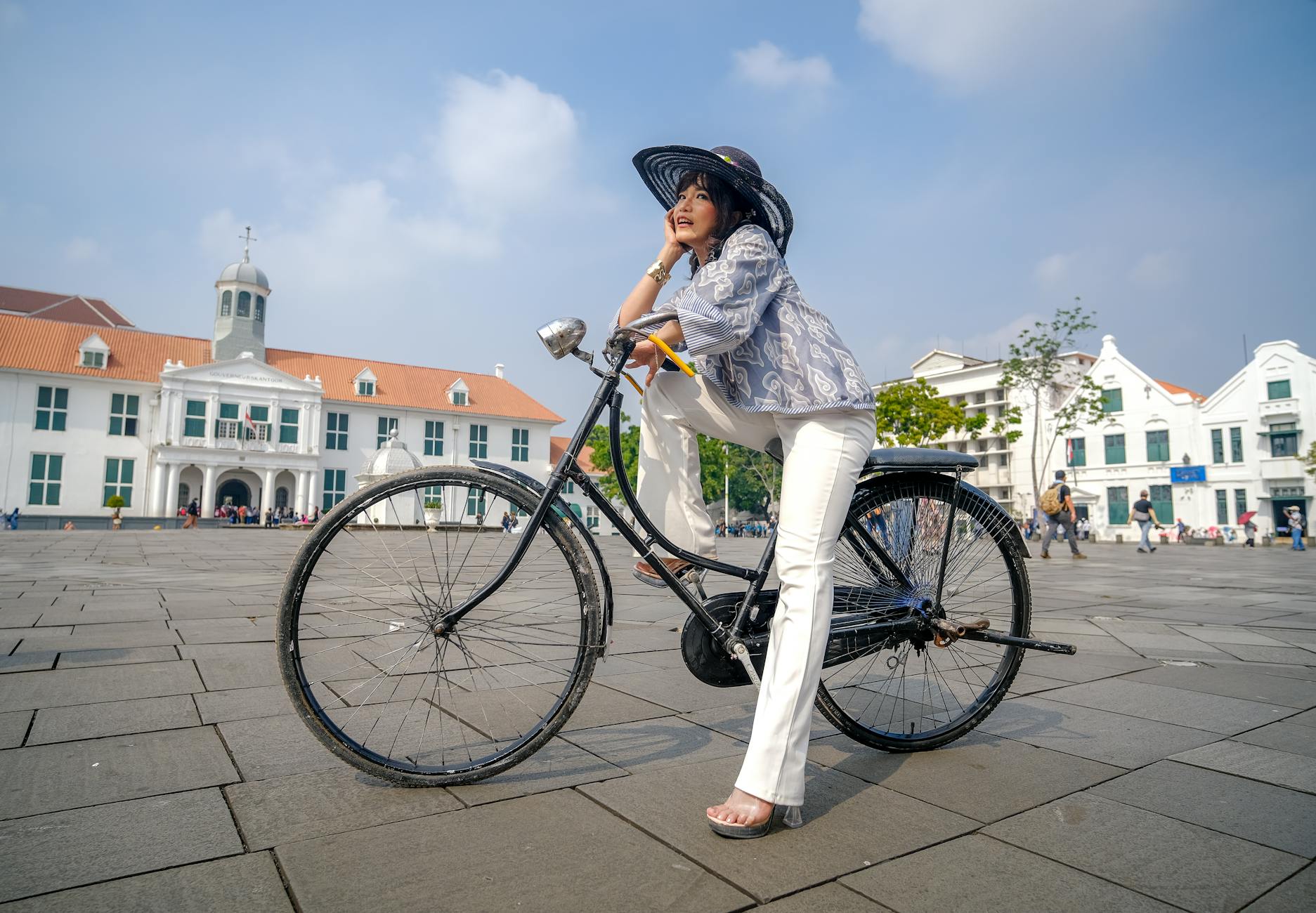
Indonesia's foreign policy operates in unprecedented quiet under President Prabowo Subianto, as political realignment has muted public scrutiny and media criticism. This erosion of democratic oversight poses risks to Indonesia's traditional system of checks on executive power in international relations.
Indonesia’s foreign policy landscape has undergone a significant transformation under President Prabowo Subianto. Where his predecessor Joko Widodo faced intense public scrutiny, media criticism, and vocal opposition over China engagement, Prabowo’s administration operates in a markedly quieter public sphere. This silence is not evidence of improved policy or reduced controversy—rather, it reflects a troubling realignment of political incentives that has muted the democratic mechanisms traditionally constraining executive overreach in Indonesia’s international relations.
The shift is consequential. Prabowo’s November 2024 joint statement with Beijing, which included language on “joint development in areas of overlapping claims” in the South China Sea, passed with minimal public protest or sustained media examination. This stands in sharp contrast to the firestorm that surrounded similar initiatives under Widodo. Understanding why requires examining both the structural constraints on Indonesian media and the political calculations that have neutralized traditional sources of foreign policy criticism.
Between 2014 and 2024, Joko Widodo’s administration elevated China into one of Indonesia’s top three sources of foreign direct investment, with particular emphasis on large-scale infrastructure projects. This deepening economic partnership triggered sustained public anxiety and media amplification that transformed diplomatic choices into matters of domestic political contention.
The most emblematic moment came in August-September 2015, when Tempo magazine published a cover depicting Widodo with exaggerated slanted eyes alongside the headline “Welcome Chinese Laborers.” The image encapsulated a broader wave of racialized narratives that dominated Indonesian public discourse. The arrival of Chinese construction workers—often perceived as living in segregated, insulated communities at project sites—sparked local fears about job displacement and cultural displacement that media outlets amplified with disproportionate intensity.
These concerns intensified during the COVID-19 pandemic. In April 2020, The Jakarta Post reported extensively on local distrust toward Chinese workers, framing the sentiment as a potential diplomatic flashpoint. Yet the scale of media coverage consistently outmatched the actual policy complexity or economic significance of the issue. Widodo was repeatedly branded a “Chinese puppet” by opposition forces, a characterization that stuck in public consciousness despite the economic rationale underlying his China strategy.
What made this backlash particularly striking was its selective nature. Widodo’s predecessor, Susilo Bambang Yudhoyono (2004-2014), had laid equally extensive groundwork for closer China ties. His administration upgraded bilateral relations twice—from a Strategic Partnership in 2005 to a Comprehensive Strategic Partnership in 2013—and actively courted Chinese investment. Yudhoyono even issued a Presidential decree replacing the official term “Cina” with “Tiongkok,” a symbolic gesture designed to normalize relations. Yet these moves generated minimal public backlash. Yudhoyono was never subjected to the “puppet” accusations that plagued Widodo.
The disparity between Yudhoyono’s and Widodo’s experiences with public criticism reveals that foreign policy controversy in Indonesia is fundamentally shaped by domestic political alignment rather than policy substance. Under Yudhoyono, Islamist movements and hardline nationalist groups—traditional sources of anti-China rhetoric—were accommodated within the governing coalition. Their inclusion in power structures dampened their incentive to mobilize opposition. By contrast, these same actors were largely excluded from Widodo’s political coalition, transforming them into vocal critics. Islamist organizations and nationalist hardliners weaponized anti-China narratives as part of a broader strategy of political contestation against an administration that had marginalized them.
This pattern demonstrates that Indonesian foreign policy debates are rarely purely about international relations. They function as proxies for domestic political struggles. When opposition groups lack institutional access, they exploit foreign policy controversies to mobilize public opinion and delegitimize the governing administration. Media outlets, particularly those with ownership ties to opposition-aligned business interests, amplify these narratives, creating the appearance of widespread public concern that may not reflect genuine consensus.
The anti-communist and anti-atheism rhetoric frequently deployed against Widodo’s China engagement exemplified this dynamic. Islamist organizations framed Chinese investment as a threat to Islamic values, despite the fact that Chinese companies operating in Indonesia were primarily motivated by commercial returns rather than ideological expansion. Yet this framing resonated with media narratives and public anxiety, creating a political liability for the administration.
Prabowo Subianto’s presidency has fundamentally altered this political calculus. His administration commands an overwhelming parliamentary majority through the Koalisi Indonesia Maju Plus, controlling approximately 80 percent of legislative seats. More significantly, Prabowo has successfully consolidated support among Islamist groups and nationalist organizations that were once Widodo’s most vocal critics. This political realignment has produced a demonstrable contraction in public scrutiny of foreign policy.
The evidence is unmistakable. Prabowo’s November 2024 state visit to Beijing and the subsequent joint statement—which included language on “joint development in areas of overlapping claims”—generated minimal sustained media examination or public protest. The Jakarta Post adopted a measured, pragmatic framing, presenting Prabowo’s approach as a rational balancing act amid anticipated shifts in U.S. foreign policy under the Trump administration. Academic observers and policy analysts raised concerns about the statement’s implications for Indonesia’s South China Sea posture, yet these critiques failed to catalyze broader public mobilization.
Equally striking is the disappearance of anti-communist rhetoric that once dominated discourse. The narrative linking China to atheism and cultural threat—weaponized extensively against Widodo—has largely vanished from mainstream media coverage. Islamist organizations that mobilized public opinion against previous administrations now offer only muted statements, even on issues of direct concern to Indonesia’s Muslim majority. When Prabowo engaged with Trump’s “Board of Peace” initiative, the Majelis Ulama Indonesia (Indonesian Council of Ulama) initially raised concerns but subsequently softened its position following direct presidential engagement.
This pattern reveals a troubling reality: Prabowo’s political coalition includes the very actors who weaponized foreign policy criticism against his predecessor. Their accommodation within power structures has eliminated their incentive to mobilize opposition. The result is not genuine consensus on foreign policy but rather the suppression of dissent through coalition politics.
The diminished public scrutiny of Prabowo’s foreign policy cannot be attributed solely to political realignment. Structural constraints on Indonesian media independence have intensified over the past decade. Media ownership remains highly concentrated among business and political elites with vested interests in particular policy outcomes. Reporters Without Borders has documented how these same elites exploit Indonesia’s inadequate legal protections for press freedom, using defamation suits and other legal mechanisms to intimidate critical reporting.
Simultaneously, public attention has shifted inward. Domestic economic challenges, post-pandemic recovery pressures, and flagship government programs such as the Makan Bergizi Gratis (Free Nutritious Meal) initiative have captured media and public focus. International relations, once a reliable source of political controversy, now competes for attention in an already-crowded information landscape. This combination of structural media constraints and shifting public priorities creates an environment where foreign policy can be conducted with minimal critical oversight.
The current trajectory represents a departure from Indonesia’s democratic strengths. Indonesia’s political system has historically derived resilience from its capacity for open, contested debate. Even when messy and polarized, this debate has functioned as a safeguard against executive overreach and demagoguery. The muting of foreign policy scrutiny under Prabowo creates conditions for precisely the kind of personalized, elite-driven decision-making that democratic systems are designed to constrain.
Prabowo’s approach to China engagement illustrates the risks. His administration has adopted a pragmatic, transactional stance toward Beijing that prioritizes economic engagement while avoiding explicit alignment. This posture may be rational given anticipated shifts in U.S. foreign policy and Indonesia’s economic interests. However, without sustained public debate and media scrutiny, the administration lacks the democratic legitimacy that comes from deliberative consensus. Future administrations may face public backlash if Prabowo’s China engagement produces economic or strategic costs that become apparent only after agreements are implemented.
The absence of critical media coverage also eliminates an important information function. Investigative journalism and analytical reporting expose potential conflicts of interest, corruption, and policy flaws that might otherwise remain hidden. When media outlets retreat into episodic, descriptive coverage, they forfeit their capacity to provide the contextual analysis necessary for informed public judgment.
Restoring meaningful public scrutiny of Indonesian foreign policy requires action on multiple fronts. Media diversity must be actively nurtured through policies that reduce ownership concentration and strengthen legal protections for press freedom. Media institutions themselves must move beyond episodic coverage toward sustained, analytical reporting that contextualizes policy decisions and engages academic expertise. This requires investment in specialized foreign policy reporting and resistance to both sensationalism and complacency.
Political actors across Indonesia’s ideological spectrum bear responsibility for maintaining the democratic norms that constrain executive discretion. The fact that Islamist organizations have been neutralized as foreign policy critics through coalition inclusion suggests that opposition groups must develop institutional mechanisms for maintaining independence even when accommodated within governing coalitions. Civil society organizations and academic institutions should assume greater responsibility for independent foreign policy analysis that can inform public debate.
Prabowo’s foreign policy may be less contentious than Widodo’s, but quieter does not necessarily mean better. Without sustained public critical engagement, silence risks permitting flawed decisions to pass unchecked. Indonesia’s democratic resilience depends on restoring the balance between executive discretion and public scrutiny that has traditionally characterized its foreign policy debates.