Physical Address
304 North Cardinal St.
Dorchester Center, MA 02124
Physical Address
304 North Cardinal St.
Dorchester Center, MA 02124

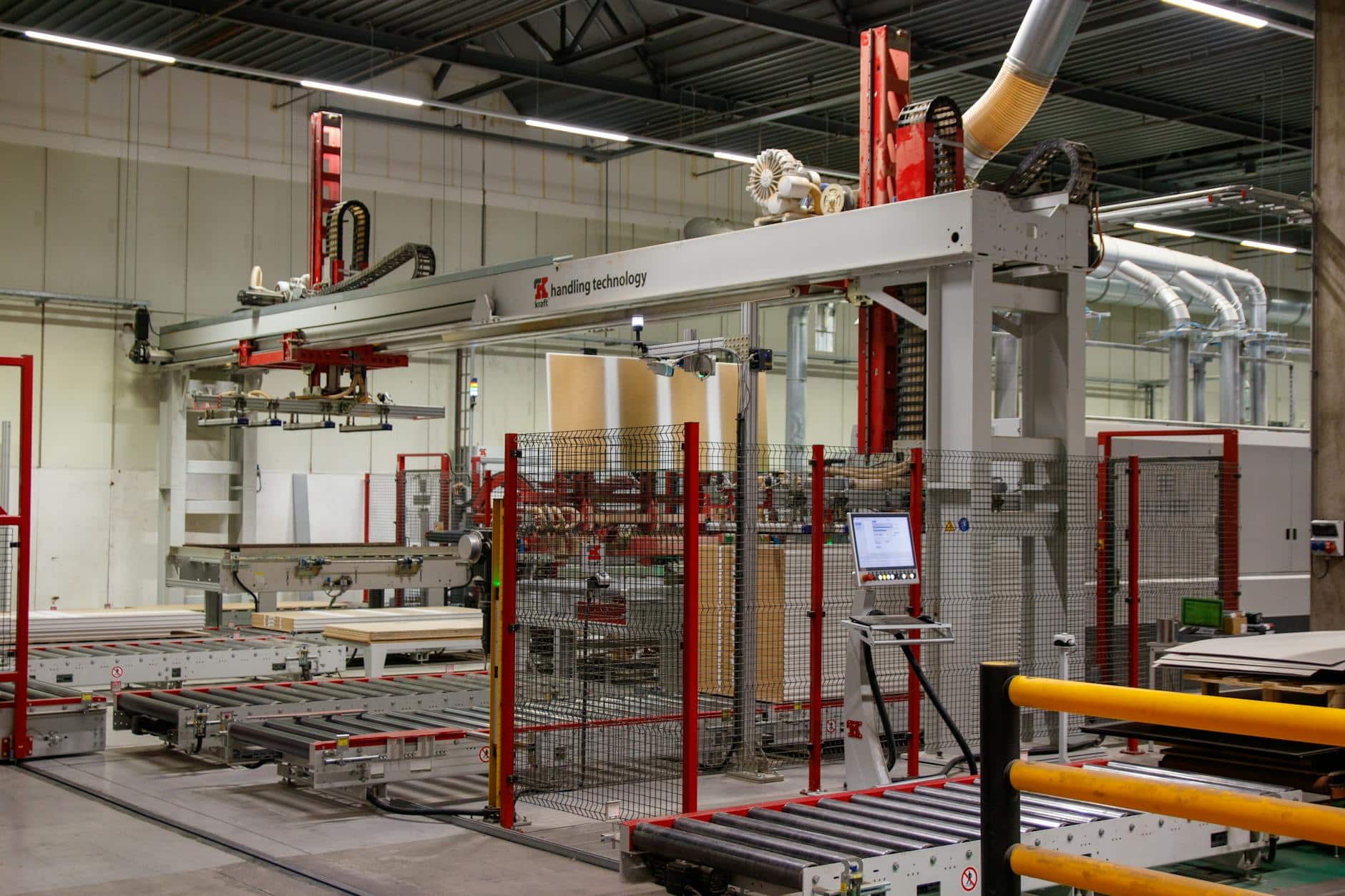
China's shift from cloud-based AI to embodied intelligence—physical robots operating autonomously in real-world environments—has significant implications for Indo-Pacific manufacturing, military capability, and regional technological competition. This development could reshape supply chains, accelerate defence modernisation, and deepen technological decoupling across the region.
China’s technology sector is undergoing a strategic pivot that carries significant geopolitical consequences for the Indo-Pacific region and beyond. The transition from cloud-based artificial intelligence systems to what researchers term “embodied intelligence”—AI integrated into physical robots and autonomous systems operating in real-world environments—represents a fundamental shift in how Beijing approaches technological competition and industrial capability.
This evolution reflects a deliberate policy choice by Chinese technology firms and government planners to move beyond software-centric AI development. While cloud AI remains important for data processing and analysis, embodied intelligence systems combine perception, decision-making, and physical action in manufacturing, logistics, construction, and defence-adjacent applications. This represents a more comprehensive form of automation than previous generations of robotics, as these systems can adapt to unstructured environments without constant human intervention.
China’s investment in embodied AI directly supports its existing manufacturing ecosystem. The country currently accounts for approximately 50% of global industrial robot installations and has maintained this dominance through continuous technology upgrades. Embodied AI systems promise to enhance productivity across sectors where China already holds competitive advantages: electronics manufacturing, automotive production, semiconductor assembly, and supply chain logistics.
The strategic advantage lies not merely in efficiency gains but in the ability to sustain manufacturing leadership as labour costs rise. By deploying AI-powered robots that can perform complex assembly tasks, quality control, and inventory management, Chinese manufacturers can maintain cost competitiveness against Southeast Asian competitors while simultaneously reducing dependence on migrant labour. This has direct implications for regional supply chains and trade patterns across ASEAN economies.
Chinese companies including Unitree Robotics, Boston Dynamics’ Chinese counterpart DeepRobotics, and state-backed enterprises are actively developing quadruped robots, humanoid systems, and specialized industrial automation platforms. These are not theoretical projects—they are being deployed in pilot facilities and tested in real production environments.
The advancement of embodied AI carries unmistakable dual-use implications. Autonomous systems capable of navigating complex physical environments, making real-time decisions, and executing tasks without continuous human control have obvious military applications. China’s People’s Liberation Army has explicitly identified robotics and autonomous systems as priority technologies in its modernisation agenda.
Embodied AI systems could enhance China’s capabilities in several defence domains: autonomous surveillance platforms for border security and maritime patrol, robotic systems for logistics and supply chain management in military operations, and potentially autonomous platforms for asymmetric warfare scenarios. The integration of AI perception and decision-making with physical platforms creates systems that are more resilient to jamming and communication disruption than purely remote-controlled alternatives.
For Indo-Pacific security analysts, this is particularly significant given China’s expanding military footprint in the region. Enhanced autonomous capabilities could amplify China’s ability to project power in contested areas, particularly in maritime domains where autonomous underwater vehicles and surface platforms could perform reconnaissance, interdiction, and potentially offensive operations with reduced crew requirements and lower political costs.
China’s embodied AI development occurs within a context of intensifying technological competition with the United States and its allies. While American companies like Boston Dynamics have pioneered humanoid robotics research, China is pursuing parallel development paths with government support and integration into state-owned enterprises. This mirrors Beijing’s strategy in semiconductor manufacturing, where state investment and forced technology transfer have enabled domestic alternatives to Western products.
The implications for Australia and regional partners are substantial. As China advances embodied AI capabilities, Western technology companies may face pressure to restrict exports of critical components—sensors, processors, actuators—to Chinese entities. Simultaneously, Chinese alternatives may become sufficiently capable to reduce Western technological leverage. This could accelerate broader technological decoupling in the Indo-Pacific, with separate technology ecosystems emerging based on geopolitical alignment.
Australia’s technology sector, including robotics research at universities and defence contractors, will need to position itself strategically in this competition. Collaboration with allied nations through frameworks like AUKUS becomes more important as embodied AI systems become critical infrastructure rather than commercial novelties.
Embodied AI deployment will reshape economic relationships across the Indo-Pacific. Countries reliant on manufacturing exports to China—including Vietnam, Thailand, and Indonesia—may experience reduced demand for labour-intensive assembly work as Chinese factories automate. Conversely, countries with advanced robotics and AI capabilities may benefit from exporting systems and expertise to China and other Asian economies.
The technology also has implications for China’s Belt and Road Initiative. Autonomous construction robots, logistics systems, and infrastructure maintenance platforms could reduce the labour requirements for BRI projects, potentially shifting the employment and development benefits that host countries expect from Chinese-financed infrastructure. This could alter the political economy of China’s engagement with Pacific Island nations and Southeast Asian partners.
China’s transition to embodied intelligence represents a maturation of its technology strategy, moving from imitation and incremental improvement toward systems integration and real-world deployment. This is not merely a commercial or industrial development—it carries strategic implications for military capability, economic competition, and regional power dynamics.
For Australia and Indo-Pacific partners, the strategic challenge is multifaceted. First, there is a need to understand and monitor the actual capabilities of Chinese embodied AI systems rather than extrapolating from theoretical potential. Second, there is a requirement to identify vulnerabilities in supply chains for critical robotics components and develop domestic or allied alternatives. Third, policymakers must consider the implications for military planning, particularly in scenarios involving autonomous systems operating in contested environments.
The window for shaping the development of embodied AI governance—through export controls, technical standards, and international norms—remains open but is narrowing. Decisions made over the next 18-24 months regarding technology partnerships, research collaboration, and supply chain resilience will substantially influence the regional technology landscape for the next decade.